
Somewhere in November, walking outside stops being automatic and starts being a decision.
Most people make that decision by looking at the thermometer. That is the wrong number to start with.
The cold that ends a walk badly is usually wet, not freezing. A damp fleece and a steady breeze at 40°F can do more harm than a dry, still morning at 20°F.
Wind and moisture decide how a cold walk goes. The temperature alone does not.
Hypothermia does not wait for freezing weather
Hypothermia begins when the body’s core temperature drops below 95°F.
That is the National Institute on Aging definition, and the agency adds the part that matters on a trail.
Hypothermia can also happen at cool temperatures above 40°F, if you get chilled by rain, sweat, or cold water.
Rain, sweat and cold water are ordinary features of an autumn walk.
So the risk is not confined to the days you would call cold. An October drizzle with a breeze behind it sits squarely inside the range.
Why age changes the math
The NIA is direct about why this lands harder after 50.
Changes that come with aging make it harder to notice your own body getting too cold.
What ages is the ability to notice the cold, not only the ability to hold heat.
Several common conditions push the same way. Diabetes can keep blood from flowing normally to provide warmth. Thyroid problems affect the body’s ability to hold a normal temperature.
Arthritis and Parkinson’s disease make it harder to put another layer on at all.
Poor circulation, which is common in older adults, also raises the risk of frostbite on hands, feet, nose and ears.
Medications count too, prescription and over the counter alike. Some cold remedies are on that list.
What wind chill actually does
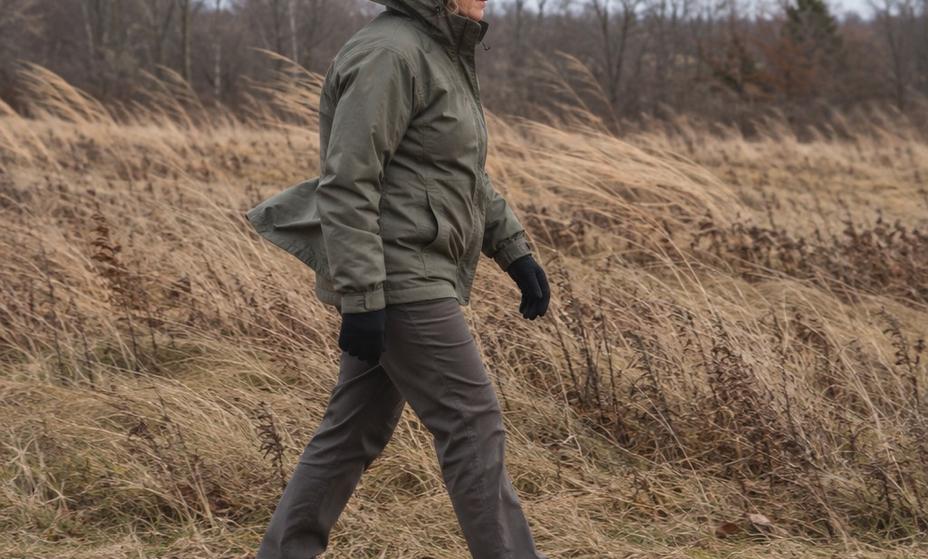
Wind chill is the most misread number in a winter forecast.
The National Weather Service defines it only for air temperatures at or below 50°F, with wind above 3 mph. It describes how fast exposed skin loses heat.
It is not a second air temperature, and one consequence of that gets applied backwards more than any other.
Frostbite needs the actual air temperature to be below freezing. Wind chill cannot produce it on a 40°F day, and the National Weather Service says so plainly.
Hypothermia is a different matter. Wind will take you there at temperatures well above freezing.
When the air is genuinely cold, the numbers sharpen fast. At 0°F with a 15 mph wind, the agency puts the wind chill at -19°F. Exposed skin can freeze in 30 minutes at that level.
Sunshine works the other way. Bright sun may raise the wind chill temperature by 10°F to 18°F.
Wind chill is the most misread number in a winter forecast.
The signs that mean turn around
The early warning list is worth knowing by heart, because the later signs arrive too late to act on.
Early symptoms of hypothermia, per the NIA:
- Cold hands and feet
- A puffy or swollen face
- Pale skin
- Shivering or shaking
- Slowed or slurred speech
- Feeling sleepy, angry, or confused
That last line is the one to take seriously on a trail.
Hypothermia affects the brain and makes clear thinking difficult, so the person in trouble often does not notice it.
That means the call to turn back is frequently somebody else’s to make.
If you walk alone once the weather turns, tell someone your route before you go and carry a charged phone.
Wet is the thing to manage
Most winter walkers overdress, then sweat, then cool down at the first stop.
The American Hiking Society calls overheating a real threat, because moisture that cannot escape can freeze and cause hypothermia.
The fix for cold is layers you can open and shed, not a bigger coat. Shedding one before you sweat beats adding one after.
That is why layering beats one thick coat in almost any conditions. The society recommends a base layer of wicking fabric, which moves sweat off the skin instead of holding it there.
What to have on, and in the pack:
- A base layer that is not cotton
- A mid layer you can open at the neck
- A shell that blocks wind
- One dry spare layer, sealed in a bag
The NIA gives the same instruction from the other end: change out of damp clothes as soon as you can.
Carry the spare even on a short loop. Delays happen.
Footing, which is the other half
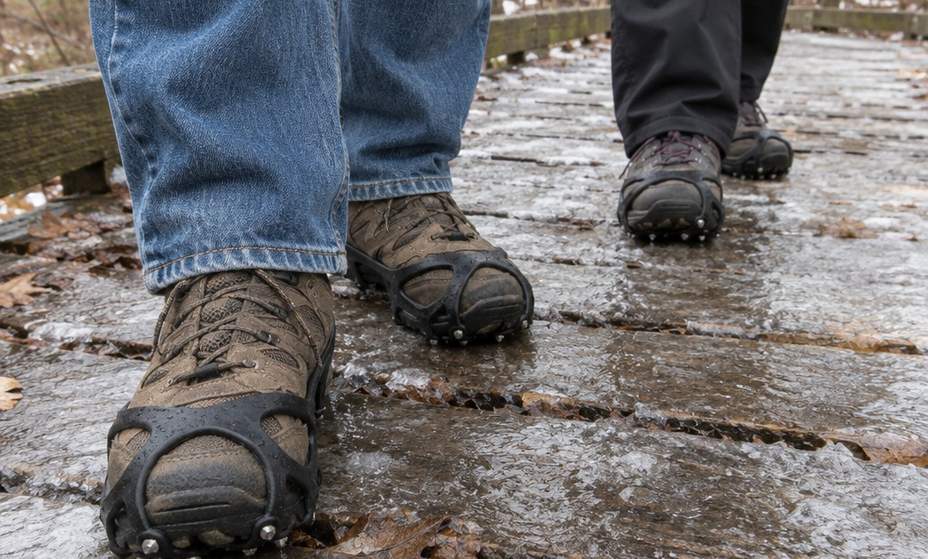
Cold ground is the bigger hazard, not cold air.
Frozen mud, black ice on a boardwalk and wet leaves over ice all arrive before winter looks like winter.
The NIA’s footwear advice is plain. Nonskid, rubber soled, low heeled.
For packed snow and ice, the American Hiking Society points to traction devices that slip over an ordinary shoe.
It also recommends poles, which add two more points of contact with the ground.
That is the same reasoning behind what poles do on a descent, and it applies harder when the surface is slick.
Traction costs less than any jacket and prevents the injury that actually ends a season.
Footing is a skill as much as a surface, and balance is trainable after 60.
When to ask your doctor first
A few situations genuinely warrant a conversation before winter walking becomes routine:
- A heart or lung condition
- Diabetes, thyroid problems, or Parkinson’s disease
- Balance problems, or a fall in the last year
- Any medication you take daily, including cold remedies from the pharmacy shelf
The NIA suggests asking your doctor directly whether anything you take affects how your body handles heat and cold.
Several everyday medications change how the body holds heat, including ones bought without a prescription.
It is a short question, and the answer changes what you plan.
The first cold walk of the season is the one that needs the thinking.
By February, the same loop that felt like a risk in November is just the walk you take.