
Balance is not something you either have or don’t. It’s a skill, and like any skill, it responds to practice.
The trail puts that skill to work on every root, sloping surface, and loose patch of gravel. It’s also one of the best places to build it.
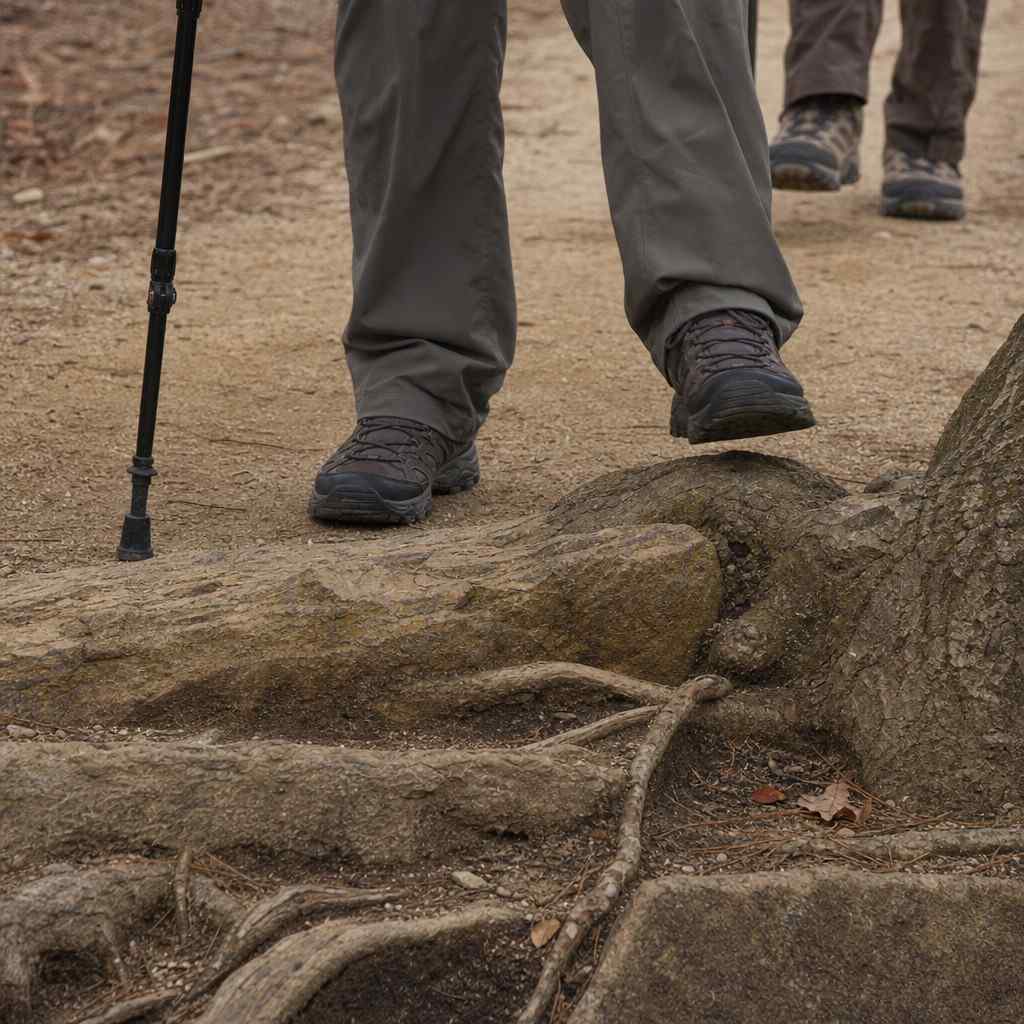
You can hear it happen, too: the double click of a pole tip finding rock just before your foot does.
That’s the real story behind fall prevention.
It’s less about being careful and more about being trained.
How common trail falls really are
More than one in four people age 65 or older fall each year, according to the National Institute on Aging. The risk rises with age, not just with terrain.
That number surprises people who picture falls as rare accidents.
On a trail, they’re common enough to plan around.
The same source is clear that plenty of falls can be prevented. Exercise, managing medications, and getting your vision checked all make a real difference.
None of those steps are dramatic. They’re ordinary maintenance, the same category as an eye exam or a medication review.
Falls are common, and the National Institute on Aging says many of them are preventable.
What quietly affects your balance
Balance isn’t only about strength or attention. Several ordinary health factors shape it too, often without much warning.
The National Institute on Aging points to several conditions that can affect balance. Diabetes, heart disease, and problems with the thyroid, nerves, feet, or blood vessels are all on that list.
None of these are rare in adults over 60.
Footing depends on seeing the ground ahead as much as feeling it underfoot, which is part of why an eye check belongs on the same list as exercise.
Footwear matters just as much. According to the same source, unsafe shoes and foot pain both raise fall risk, on a trail or a sidewalk.
Footwear counts for as much as any condition on this list.
Vision plays a quiet role too. Footing depends on seeing the ground ahead as much as feeling it underfoot, which is part of why an eye check belongs on the same list as exercise.
Some medications add to the picture as well. The National Institute on Aging notes that certain drugs carry dizziness or confusion as a side effect.
That’s worth flagging to whoever prescribes them.
If joint pain is also part of your routine, the same footing awareness that helps with hiking with arthritis applies directly to balance and falls.
Habits that keep you steady on the trail
None of this calls for new gear or a training plan. A few small habits do most of the work.
- Carry trekking poles and use them as a third point of contact, especially on roots and loose rock.
- Wear shoes with real tread, not smooth soles, and check the fit against general injury prevention guidance.
- Shorten your stride on uneven ground instead of stepping over it at full length.
- Keep your eyes on the next few steps, not the view, when the footing gets rough.
- Slow down on descents, where most missteps happen.
A trekking pole turns two points of contact into three, which is most of what stability is.
The exercise type most people skip
Trail habits handle the moment. Training handles the rest of the week.
The National Institute on Aging groups exercise into three types: aerobic, muscle-strengthening, and balance. Research shows all three matter.
Doing one type consistently often helps you get better at the others too.
Balance is the type most people skip entirely. Walks cover aerobic work, and yard chores cover some strength, but few routines include balance on purpose.
It doesn’t take a special class to fix that gap, just a couple of minutes of intentional practice added to what you already do.
Simple balance holds you can do at a counter
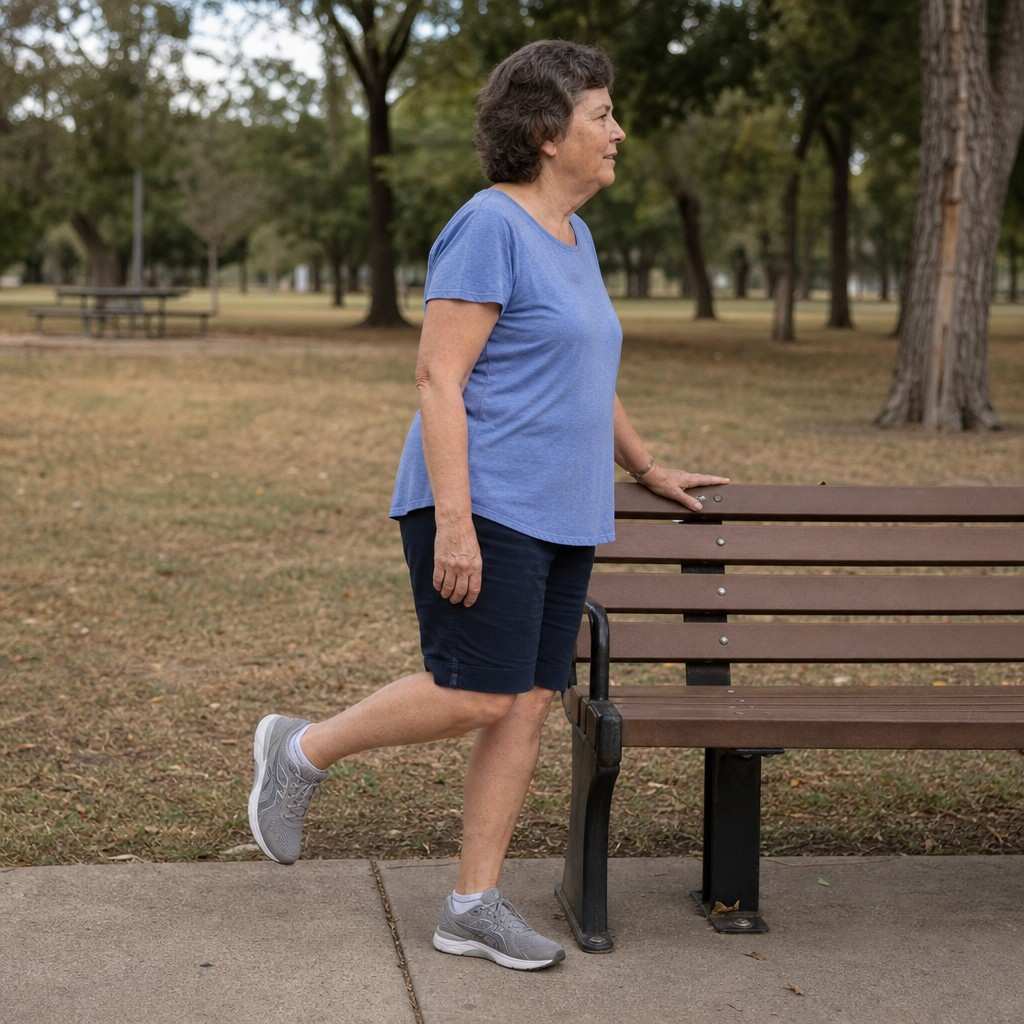
Balance training doesn’t need a gym or a class, just a sturdy counter or a bench. Keep something solid within reach for every hold, since the point is training balance, not testing it.
- Stand on one foot near a counter, holding on lightly, for as long as feels steady.
- Shift weight slowly from foot to foot while standing at a bench.
- Rise onto your toes and lower down, holding the counter for support.
- Add a few gentle stretches before or after.
The whole routine takes under five minutes, short enough to actually stick with.
If dizziness, a new medication, or an existing balance problem is part of your picture, talk with your doctor before starting.
It’s a skill, and like any skill, it responds to practice.
Bring poles the next time the trail gets uneven. Pick one moment a day, maybe right after brushing your teeth, for a one-minute balance hold at the counter. That’s the whole plan.