
Stiffness rarely shows up all at once.
It arrives as a knee that takes a moment to loosen in the morning, a shoulder that no longer reaches the top shelf easily, a stride that feels a little shorter than it used to.
A short stretching routine pushes back against that slow drift, and it asks for almost nothing. No gym, no floor mat, no special clothes.
A few easy minutes outdoors, near a bench or a tree, is enough to keep the everyday range of motion you actually use.
Why Gentle Mobility Matters More With Age
Muscles and connective tissue naturally lose some elasticity over the years. That is normal, and it is also slow enough that regular movement keeps a lot of it.
The point of stretching after 60 is not athletic flexibility. It is the practical kind: bending to tie a shoe, turning to check traffic, keeping a steady stride on uneven ground.
Balance is part of the same picture. The National Institute on Aging points to regular flexibility and balance work as a way to help older adults stay steady and lower the risk of falls.
Staying limber is less about touching your toes and more about staying confident on your feet.
There is a reassuring side to this too.
The Arthritis Foundation has long noted that gentle, regular movement tends to ease stiff joints rather than wear them out, which matters for anyone who has been told to rest a cranky knee or hip.
Why Doing It Outdoors Helps
A stretching routine you do outside tends to be one you actually keep. A park bench, a low wall, or a sturdy tree gives you something to hold for balance, and steady, level ground underfoot does the rest.
There is a quiet bonus, as well.
Pairing a stretch with time outside layers in the broader health benefits of walking and being active outdoors, so a few minutes of mobility becomes part of a larger, gentle habit rather than a chore on its own.
The outdoors turns a routine into an outing. A bench in a quiet park asks far less of your willpower than a corner of the living room floor.
A Simple Outdoor Routine, Described
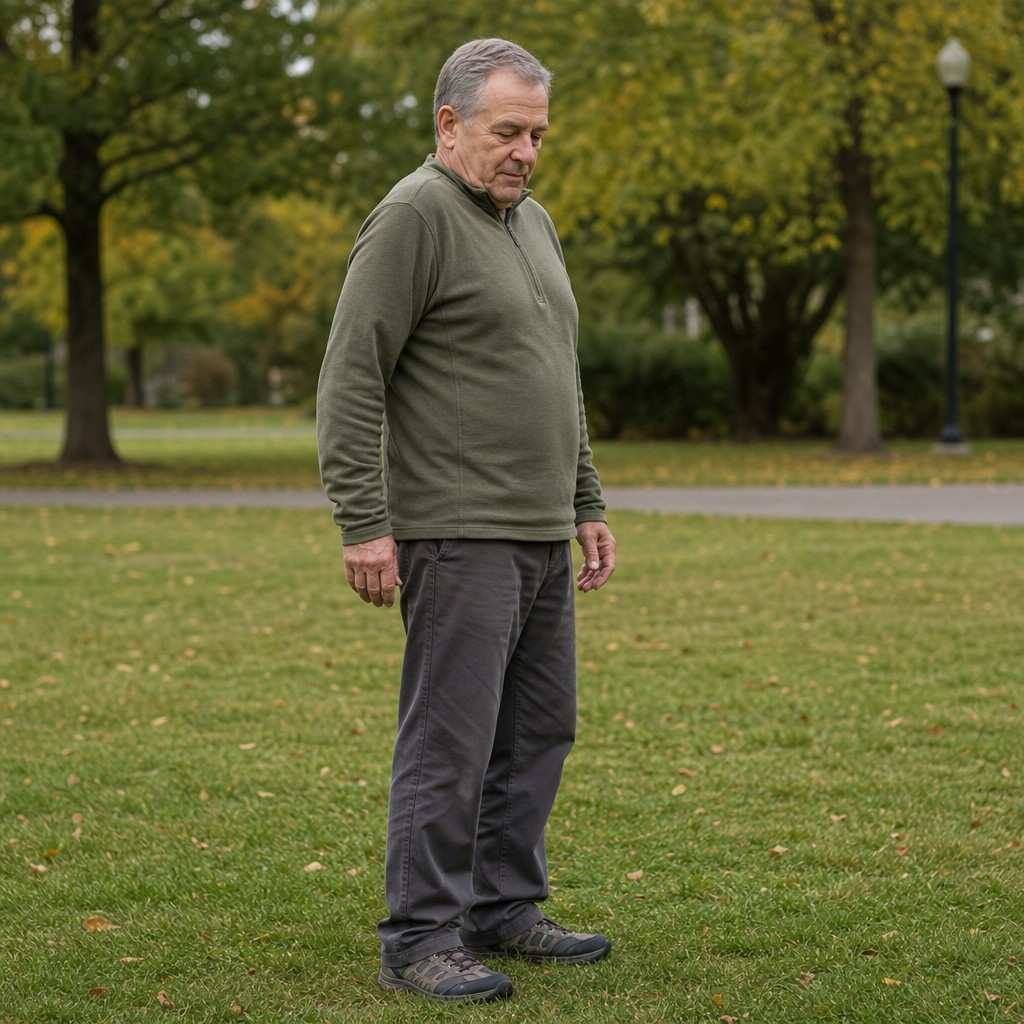
You do not need to memorize a sequence. The idea is to move each major area gently through its comfortable range, never forcing the end of a stretch.
Ease in slowly, breathe, and stop at the point of mild tension, never pain. A good rule covers nearly all of it: move into a stretch, never bounce or force it, and hold steady for a slow count.
Here is an easy order to follow, standing on level ground:
- Neck and shoulder rolls. Drop your chin gently and roll your head slowly side to side, then circle the shoulders backward a few times to loosen the upper back.
- Gentle side bends. With feet hip-width apart, reach one hand down the side of your leg and lean slightly to that side, feeling a mild stretch along the ribs. Switch sides.
- Supported hamstring stretch. Rest one heel on a low bench or step, keep that leg fairly straight, and hinge forward a little from the hips until you feel the back of the thigh ease.
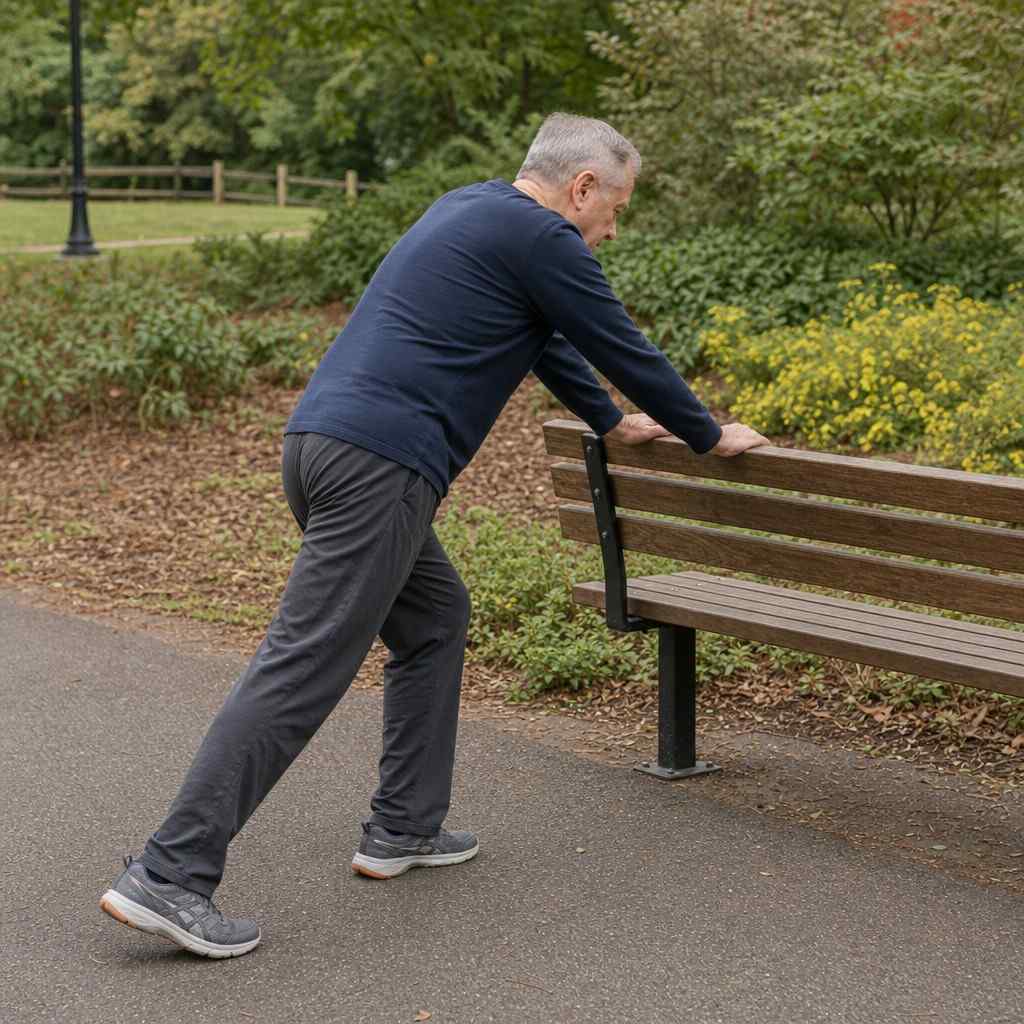
- Calf stretch against a bench. Place both hands on the back of a park bench, step one foot back with the heel down, and lean gently forward until the lower calf lengthens.
- Ankle circles. Holding the bench, lift one foot and slowly trace circles with the toes, both directions, to keep the ankles mobile for uneven paths.
- Easy hip and back openers. Holding support, lift one knee slowly toward your chest, then lower it; a slow, small twist of the torso afterward gently loosens the lower back.
Move through it once, unhurried. The whole thing takes only a few minutes, and gentle progress beats a hard session you dread repeating.
Balance-Friendly Cautions
Standing stretches are simple, but balance can be the weak link, especially on grass or a slope. A little caution keeps the routine safe, so keep these in mind every time:
- Keep a hand on a bench, rail, or sturdy tree for any single-leg or reaching movement.
- Choose flat, even ground without loose gravel, roots, or a downhill tilt.
- Wear the everyday supportive shoes you already walk in, not slick soles or sandals.
- Slow down on cold or windy days, when muscles are tighter and footing can be less sure.
If any stretch feels wobbly, there is no shame in doing it seated on the bench instead. A stretch you can do safely beats a deeper one that risks a fall.
Warming Up and Cooling Down
These gentle stretches double nicely as the two ends of a walk. A short warm-up before you set off and an easy cool-down after fit naturally around any outing.
Before a walk, a minute of shoulder rolls, side bends, and ankle circles wakes the body up.
The same logic applies whenever you are preparing your body before a hike, where loosening up first makes the first mile feel kinder.
Afterward, a slow hamstring and calf stretch helps the legs settle.
This pairs well with any low-impact outdoor activity, from a gentle paddle to a flat nature walk, since the same easy mobility keeps you comfortable for whatever you choose.
Gentle and consistent beats hard and occasional, especially after 50. A few minutes most days does far more over a year than one ambitious session now and then.
A Calm Note on Talking to Your Doctor
Gentle stretching is about as safe as movement gets, and that is part of why it is recommended so widely for older adults. Still, bodies differ, and a quick check is sensible.
If you have joint or back problems, balance concerns, a heart condition, or are recovering from an injury or surgery, it is worth a calm word with your doctor before starting. That is a normal step, not a warning sign.
Your doctor or a physical therapist can also point out which movements to favor or skip for your particular situation.
With that small bit of guidance, an easy routine on a park bench is a simple, low-risk way to stay limber and keep moving with confidence.