
Most outdoor activities ask something of your body. You walk, you paddle, you climb a little. Stargazing asks almost nothing at all.
You sit in a chair, tip your head back, and look up. That is the whole activity, and it may be the most accessible way there is to spend an evening outside.
Why Stargazing Is So Easy to Start
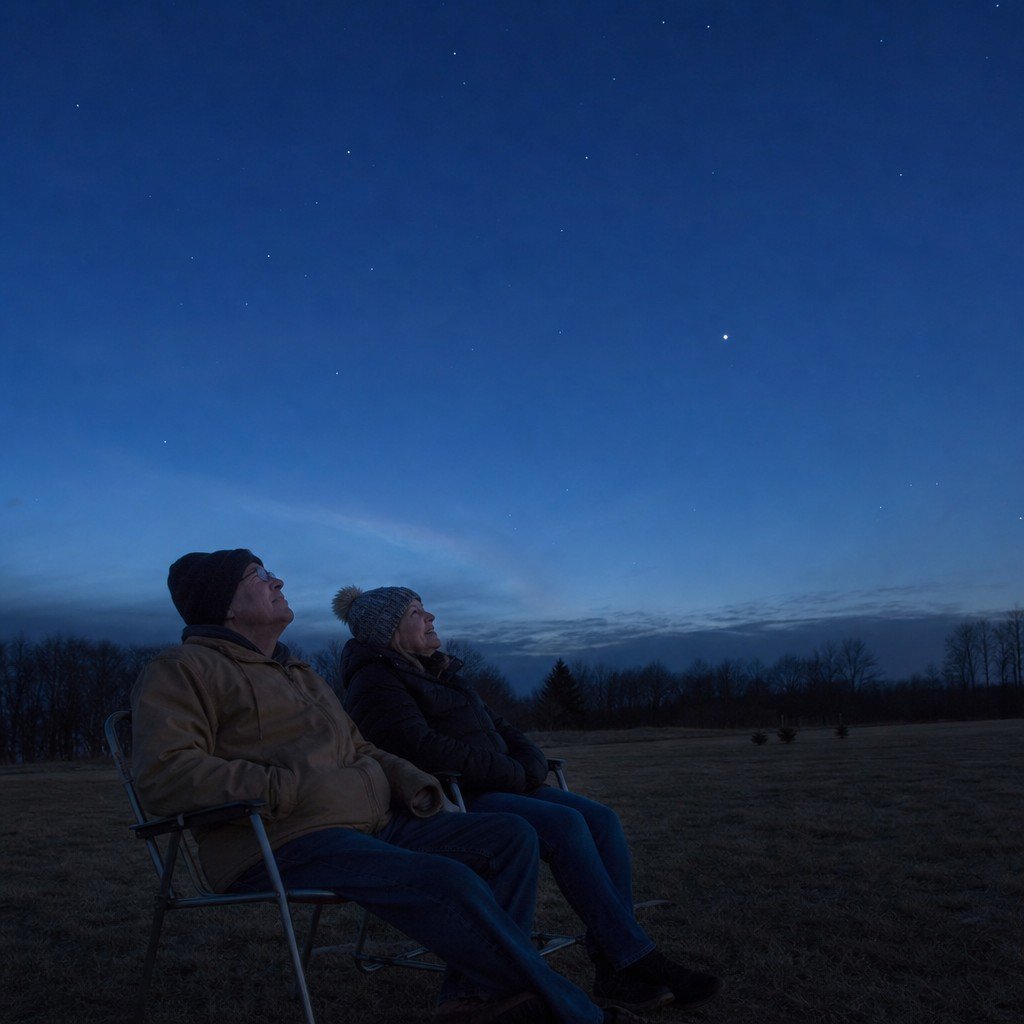
There is no trail to finish and no distance to cover. You can do this from a folding chair in your own backyard, and you can stop the moment you feel like going in.
It’s never too late to start, and you don’t need to be an athlete. Stargazing asks for patience and a clear sky, not fitness.
That makes it a rare outdoor activity that stays open to you regardless of joints, balance, or how far you can walk.
It also shares something with the slow, unhurried time outside that many people find quietly steadying.
There is real value in the calming effect of unhurried time spent outdoors, and looking up at a dark sky is one of the simplest ways to find it.
Start With Just Your Eyes
You do not need a telescope, and buying one first is the most common beginner mistake. Your eyes are enough for your first several nights, and learning to use them well is the real skill.
The first step is to let your eyes adjust. Give your eyes about twenty minutes in the dark before you judge how much you can see.
NASA notes that this dark adaptation takes time, and even a quick glance at a phone screen sets it back, so keep the bright screen tucked away.
Once your eyes settle, plenty is waiting up there:
- The Moon, the easiest target of all, with shadows and craters that shift night to night
- Bright planets like Venus, Jupiter, and Mars, which shine steadily rather than twinkling
- The Big Dipper, a reliable starting point that helps you find other stars
- The Milky Way, a faint band of light you can see only well away from city glow
Knowing what you are looking at makes the whole evening more rewarding. A simple free star-map app, held with the brightness turned all the way down, can name what you are seeing.
Finding a Darker Spot Safely
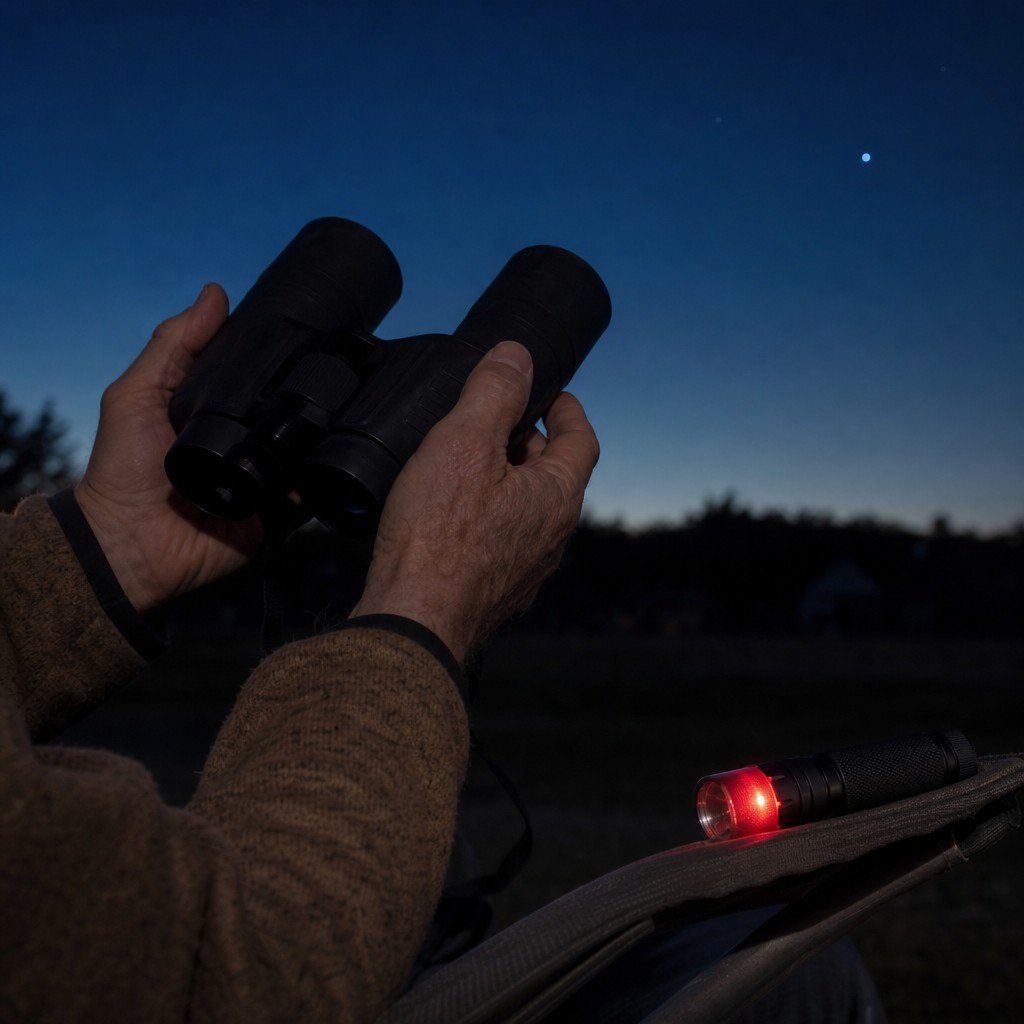
Light is the thing standing between you and the stars. The further you get from streetlights and house lights, the more the sky opens up, and even a modest change helps.
You do not have to travel far. A back corner of your own yard, a quiet local park, or an open field away from direct lighting will all show you more than a porch under a bright bulb.
The National Park Service shares dark-sky information for many parks, since several protect some of the darkest skies left in the country.
A dark spot is wonderful, but the dark itself calls for a little care. A few gentle notes keep the evening easy:
- Dress warmer than you think you need, since sitting still outdoors gets cold fast
- Carry a red flashlight, which lights your footing without ruining your night vision
- Choose steady, even ground and a stable chair, because the dark hides trip hazards
- Tell someone where you are going and roughly when you will be back
None of this is meant to worry you. The point is to make a dark, quiet evening comfortable rather than risky, and a few minutes of planning does exactly that.
A Low-Key Note on Binoculars
If your eyes have started to feel familiar with the sky and you want a little more, you do not need to jump to a telescope.
A pair of ordinary binoculars is the gentler next step, and many people already own a set.
Binoculars are lighter, simpler, and far less fussy than a telescope, with nothing to assemble or aim precisely.
Point them at the Moon and the craters leap closer; sweep them slowly across the Milky Way and faint stars appear that your eyes alone could not catch.
A telescope can come much later, if ever, and plenty of people never feel the need for one. Starting small here is not a compromise. It is the most enjoyable way in.
Making It a Calming Evening Habit
A single clear night is lovely. The deeper reward comes from making it a small, repeatable thing, the way an easy outdoor activity like a gentle walk becomes a habit when you keep it simple.
The trick is to lower the bar. Leave the chair and a warm layer near the door, and step out for even ten minutes when the sky is clear. There is no quota and no goal beyond looking up.
The sky also keeps things interesting on its own.
The Moon changes nightly, the planets drift across the seasons, and a meteor shower turns up a few times a year, all of it tracked and shared freely by organizations like NASA for anyone who wants to know what is overhead.
A quiet evening under the stars settles the mind, costs nothing, and asks no more of your body than a comfortable seat.
For an outdoor habit that stays open to you for the rest of your life, it is hard to find an easier place to begin.