
The best afternoons with a grandchild rarely involve a big plan. A slow walk, a pond full of ducks, a handful of stones to skip.
That suits grandparents well, because the easy pace that keeps a four-year-old happy also keeps the outing kind to your knees. You don’t have to be an athlete to give a child a good day outside.
Why Simple Shared Time Outside Matters
It counts for you, too. The National Institute on Aging lists helping care for grandchildren among everyday activities, and notes that even small amounts of activity count toward the weekly goal.
The company counts as well. According to the CDC, people with stronger social bonds are more likely to live longer, healthier lives.
A Range of Easy, Low-Cost Activities
None of these needs a ticket or a long drive. The basics are a hat, sunscreen, water and maybe a blanket.
- A short nature walk on a flat, paved loop, turning back whenever the child tires
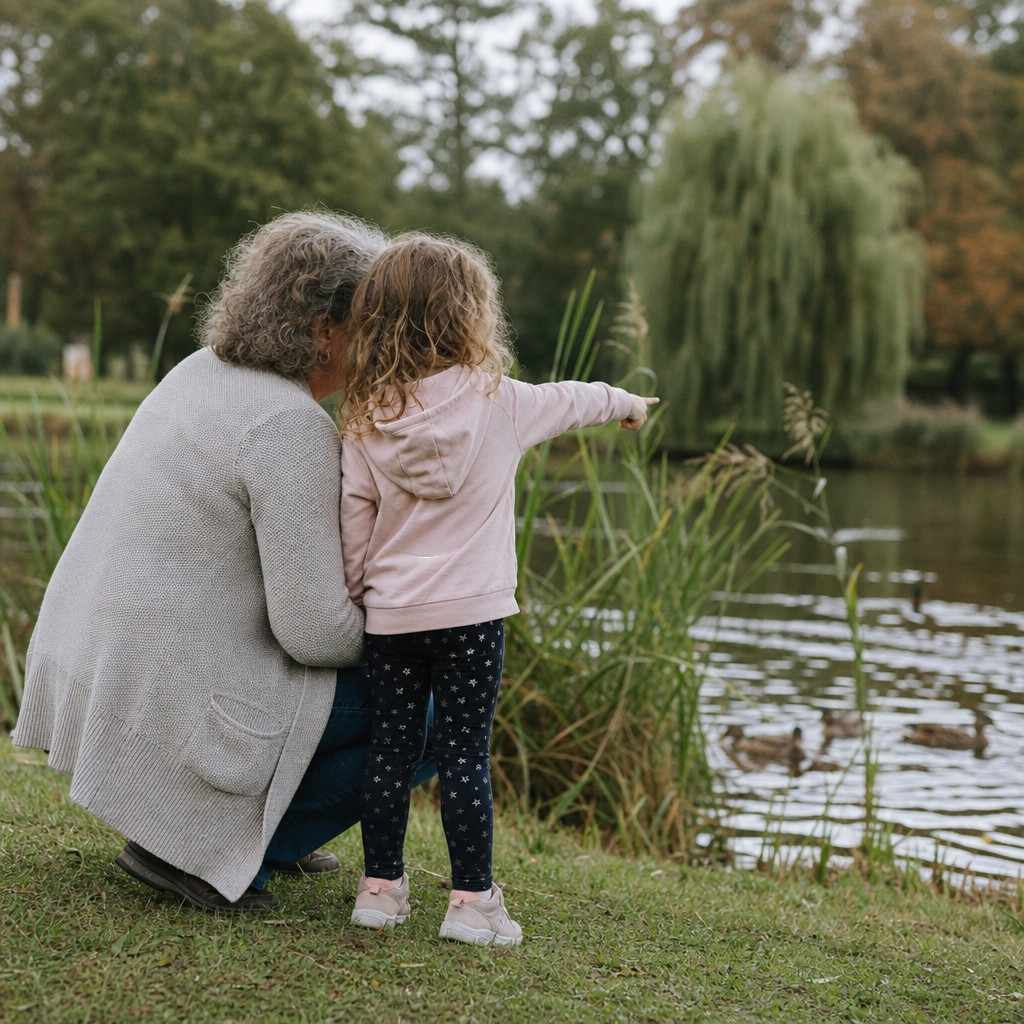
- Watching ducks and birds at a local pond
- A simple scavenger hunt: a red leaf, a smooth stone, something round
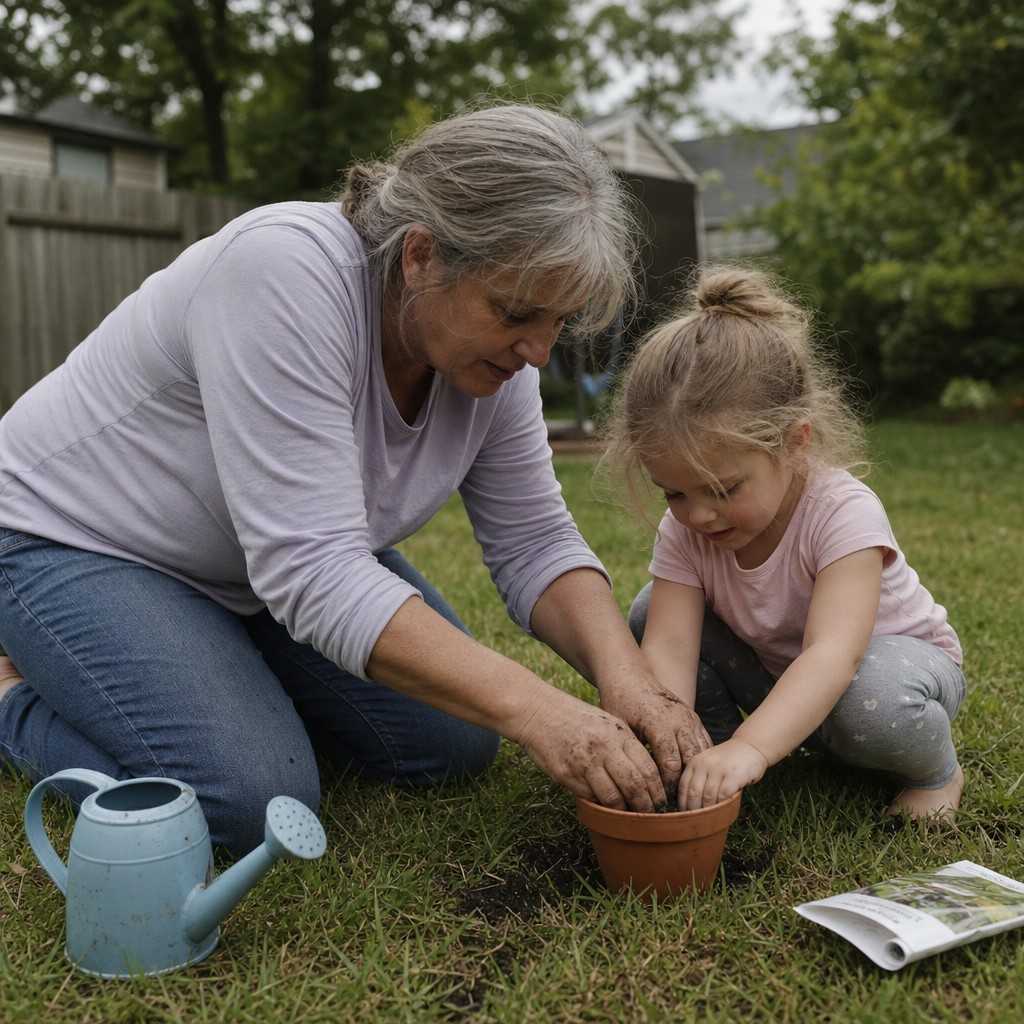
- Planting something together, a few seeds in a pot or a corner of the yard
- A picnic on a blanket, where the food is half the fun
- Skipping stones at the edge of a calm lake, with the water rule below
- Stargazing in the backyard on a clear night, best for children old enough to stay up
Watch the ducks rather than feed them. Virginia’s wildlife agency asks people not to feed waterfowl, and says bread doesn’t give them proper nutrition. Check the park’s own rules too.
Before a leaf hunt, learn what poison ivy looks like in every season, so the red leaf in the bag isn’t one of its leaflets.
For the walk itself, the guide to easy nature walks for beginners covers finding flat, paved routes and benches.
Bird watching asks a child to slow down and look. The tips in bird watching while hiking work at a pond edge too.
Planting gives the child a reason to come back and check on it. The guide to gardening for older adults shows how to start small and keep it easy on your joints.
Matching the Activity to Your Pace and Theirs
Plan around two limits: your joints and the child’s attention span.
If you have a heart condition, a balance problem or another health concern, check with your doctor before taking on anything new.
For your own comfort, pick flat, even ground with benches, and keep the loop short enough that turning back is easy.
Pace yourself by conversation: if you can’t talk easily, slow down. The CDC’s talk test puts it simply: at a moderate effort you can talk, but not sing.
For the child, match the activity to their age rather than your ambition:
- Toddlers and preschoolers do best with very short, sensory outings: ducks, leaves, a sandbox.
- Early school age can handle a scavenger hunt, a real picnic, or a short, flat loop.
- Older children enjoy a bit of challenge, like stone skipping, birdwatching with a checklist, or stargazing with just your eyes.
Two children of different ages at once
A scavenger hunt works for both. Give the older child the list to read out and the younger one the bag to fill.
Pick a spot with a bench, a restroom and no open water if you’re the only adult. The CDC suggests assigning a specific adult to watch each child when they have access to water.
Pack once and leave it in the car: water, snacks, sunscreen, hats, a blanket, a written hunt list and a charged phone.
Stop while both are still having fun. If rain spoils the plan, a covered porch or a short puddle walk in rain gear keeps the outing alive.
Safety Basics, Kept in Proportion
A few basics cover water, sun and footing.
- Water. The CDC says children near water need close and constant supervision, even if they’ve had swimming lessons. That includes a confident eight-year-old.
- No phone at the water’s edge. The CDC advises adults watching kids near water to avoid distractions like the phone, because drowning happens quickly and quietly.
- Sun. The CDC recommends broad-spectrum sunscreen, SPF 15 or higher, and a hat with a brim all the way around.
- Babies. The CDC says sunscreen isn’t recommended for babies 6 months old or younger, so keep them in shade and covered.
- Footing. Choose smooth, even ground so neither generation has to worry about a stumble.
- Drinks. Bring water for everyone, even on a cool day.
Keeping It Relaxed, Not a Big Production
Overplanning is an easy mistake. A packed itinerary can tire you out and overwhelm the child.
Aim for one simple activity and a loose hour. If it ends after twenty minutes because a puddle beat the trail, that counts as a success.
Keep a blanket in the car, pick one or two nearby spots you already like, and let the child set the pace. A short, easy outing you both enjoy is one you’ll actually repeat.