
Gardening counts as real exercise for older adults, and studies link it to less depression and anxiety.
Plenty of people with a sore back still wonder whether it will help or make it worse. How you garden typically decides how much it hurts afterward.
Back pain is a common complaint after a long day of yard work.
If you live with back pain, a heart condition, balance trouble or a recent surgery, check with your doctor before you start. Then set the garden up to come to you, and work in short stretches.
Why Gardening Counts as Real Outdoor Activity
The CDC’s guidance for older adults lists raking leaves as aerobic activity and digging in a garden as muscle-strengthening. It also names gardening among the activities that combine more than one type of physical activity.
You’re outside in daylight, moving, reaching and carrying, just in short bursts. Like the health benefits of hiking, the payoff adds up when it happens most days.
What Gardening Does for an Older Body
A gardening session can cover more than one kind of activity:
- Gentle cardio, from steady raking and moving around the beds
- Light strength work, from digging and carrying a watering can
- Joint-friendly movement, since the CDC counts light gardening as low-stress on the joints
None of this requires pushing through pain. Heavy bags of soil aren’t part of the benefit; leave those to a cart or a helper.
For people with arthritis, the CDC says physical activity can reduce joint pain and improve function and mood. A garden is one more way to get that movement in.
The Mental Side: Calm, Routine, and Purpose
A meta-analysis of 22 gardening studies found it linked to less depression and anxiety. It was also linked to more life satisfaction and a stronger sense of community.
Part of the appeal is simply being outdoors, the same calm that comes from unhurried time outside in a green space. Part of it is rhythm: something to check on, water and watch grow.
A garden is also easy to share. A raised bed or a few pots can be a simple way to get grandchildren involved.
A garden gives you a reason to step outside on the days you might otherwise stay in.
Making It Easier on Your Back and Joints
Sore backs, knees and hands keep a lot of people away from gardening. The trick is to bring the garden up to you instead of getting down to it.
A few setups do most of the work:
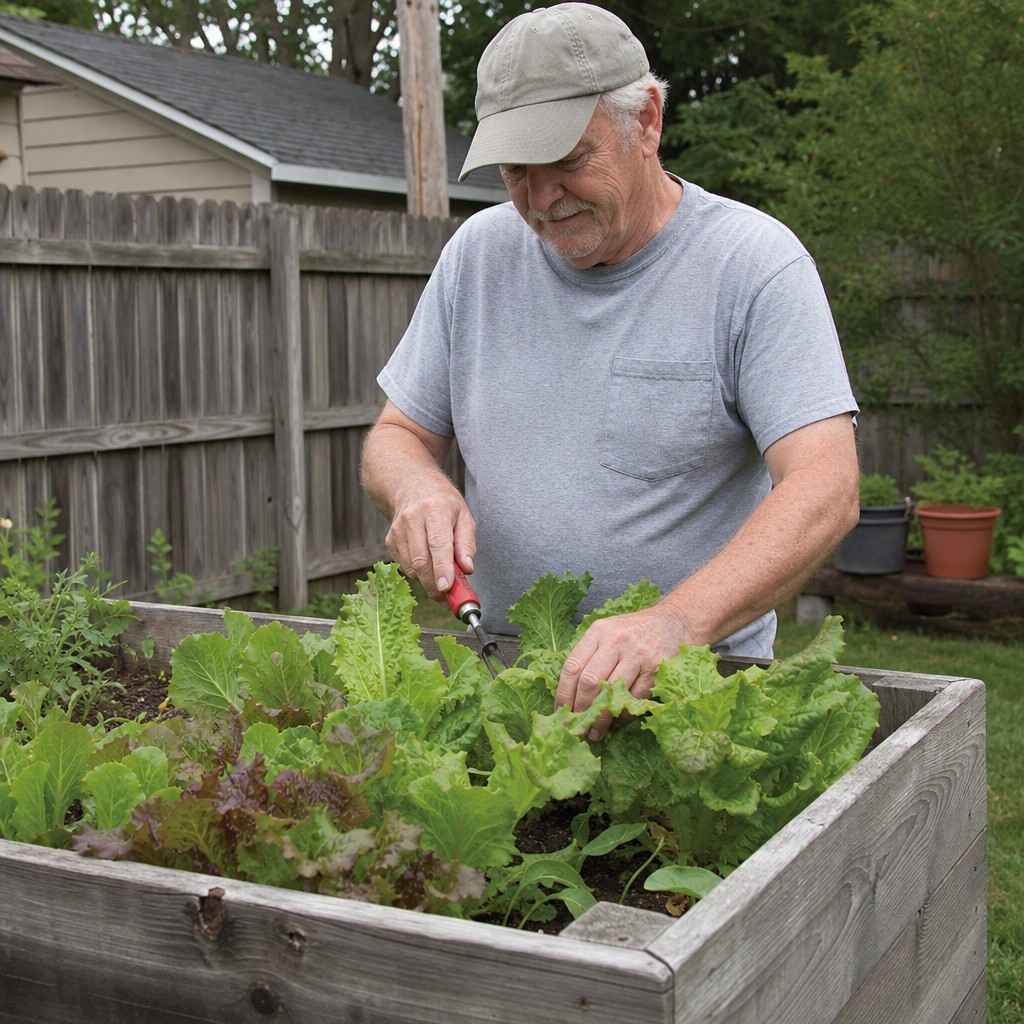
- Raised beds or planters that let you tend plants standing or seated
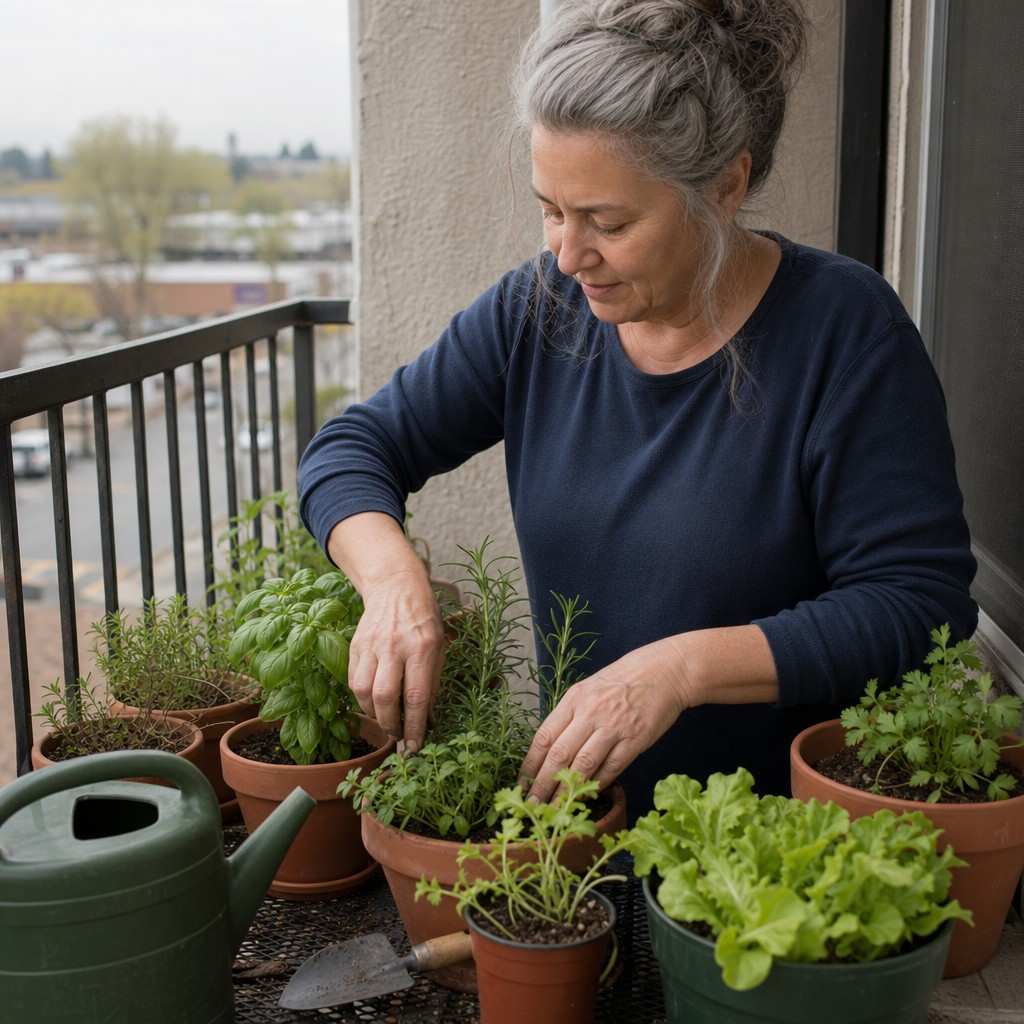
- Container and balcony gardening, so a few pots on a patio count as a full garden
- A garden stool or bench for planting and weeding, which keeps your back more upright
- A cushioned kneeler for the jobs that still need you low
- Larger or curved-handled tools, so you don’t hunch over
- A wheelbarrow or garden cart for soil, mulch and anything heavy
With a sore back, the moves to avoid are the ones that combine load and twist. MedlinePlus and Cleveland Clinic advise:
- Don’t twist while you bend to reach, lift or carry something.
- Bend at your knees, not your waist, and hold the load close to your body.
- Get help with anything too heavy or awkward.
- Keep movements smooth, without sudden twisting or reaching.
Switch tasks about every 20 minutes. If your back starts to ache, Cleveland Clinic’s advice is to stop for the day rather than push through.
How to Start Small
A common mistake is starting too big. A full vegetable plot on day one means hours of work your back isn’t conditioned for.
Begin with almost nothing and let it grow:
- Pick one or two easy plants, like herbs, lettuce, or marigolds.
- Use a single container or one small raised bed.
- Keep the tools to a trowel, a watering can, and gloves.
- Garden in the cooler part of the day, early or late, not at noon.
Heat deserves respect too. The CDC notes that older adults don’t adjust as well to sudden temperature changes.
Drink more water than usual, before you feel thirsty. If your doctor limits your fluids or you take water pills, ask how much to drink in hot weather.
Muscle cramps, headache or nausea in the heat mean it’s time to get medical care right away.
Like other low-impact outdoor activities for adults over 50, gardening asks only that you show up and do a little. The small efforts add up over a season.