
Stress doesn’t always announce itself. It shows up as a tight jaw, a short fuse, a night of broken sleep, or a low hum of worry that never quite switches off.
What surprises many people is how much a little time outside can soften all of that. Not a workout. Not a hike. Just unhurried time in a green or open space.
This article is about that quieter effect, the calming side of being outdoors, and the small ways to fold it into an ordinary week.
What Unhurried Time Outside Actually Does
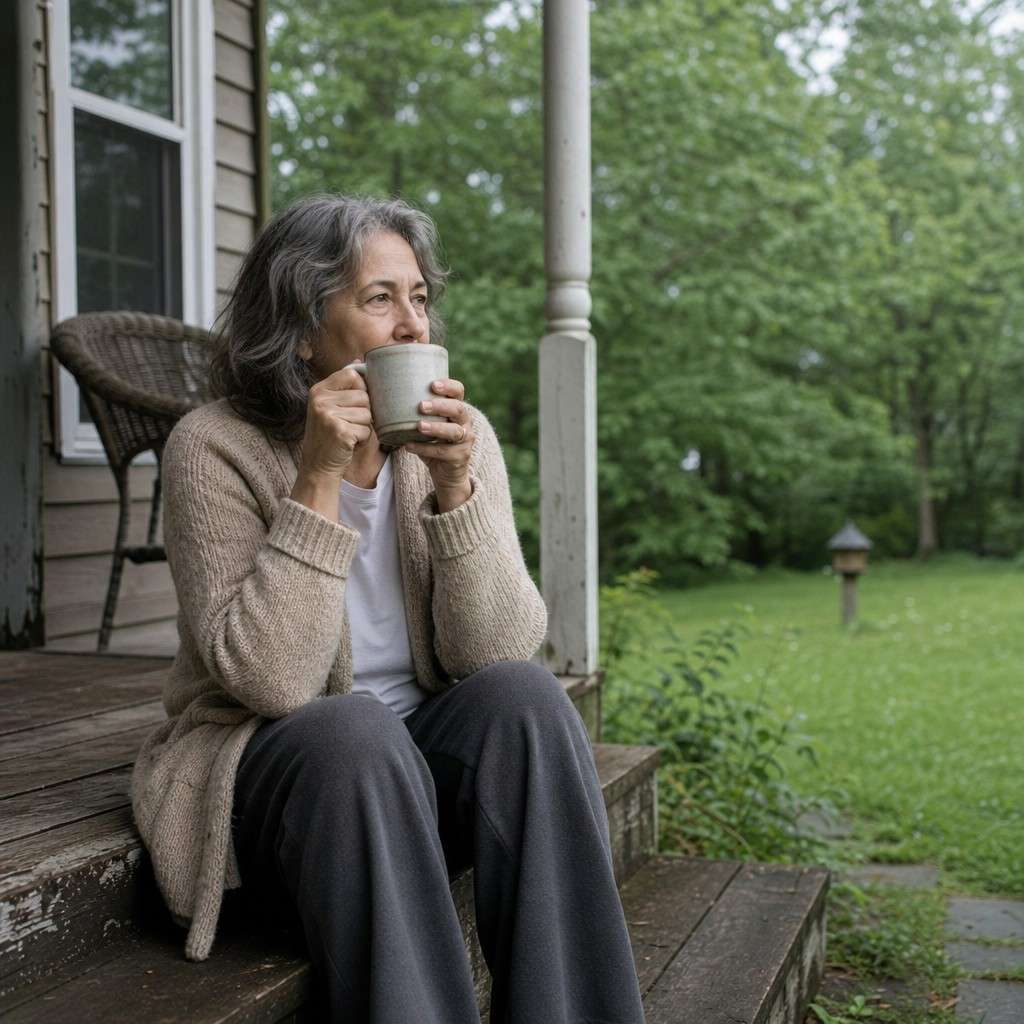
When you sit or move slowly outside, your body tends to settle. Breathing slows. The shoulders drop. The mind stops racing quite so hard.
Researchers who study this have looked across hundreds of studies, and the pattern is consistent: spending time in nature is linked with lower stress, less anxiety, and a brighter mood.
US health bodies like the CDC, the federal public health agency, and the NIH, the national medical research agency, point to outdoor time as a simple support for mental wellbeing at any age.
The effects people notice most often are practical ones. A calmer mind during the day. A steadier mood. Easier, deeper sleep at night.
You don’t have to do anything strenuous to feel this. The benefit comes from the setting and the slowness, not from exertion.
You Don’t Need Fitness, Gear, or a Plan
This is the part that stops many people before they start. They picture trails, boots, and a level of fitness they don’t have.
None of that is required here. A park bench counts. A backyard counts. A bus stop with a tree near it counts.
You can get the calming effect of nature while sitting completely still. The point isn’t to push your body; it’s to give your mind somewhere gentler to rest.
Gentle movement is still a quiet bonus when it happens. A slow stroll outdoors layers in the broader physical and mental health benefits of walking on top of the calm, with no pressure to go far or fast.
Simple, Low-Effort Ways to Get It
You don’t need a project. You need a few easy options you can reach for on any given day.
- Take your morning coffee or tea outside and drink it slowly.
- Sit on a bench by water, a pond, a creek, or a lakeshore, and just watch it.
- Walk one slow loop of a park, with no distance goal.
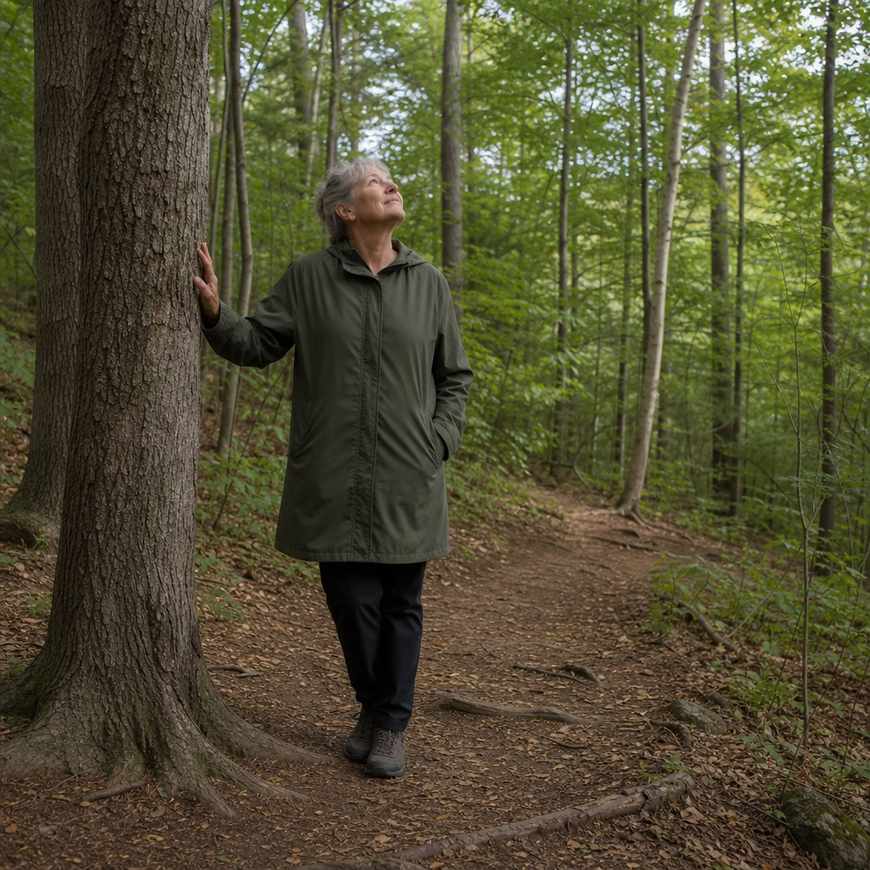
- Spend a few minutes among trees, paying attention to what you see and hear.
- Tend a garden, a few pots on a balcony, or pull a couple of weeds.
Notice that none of these has a finish line. The aim is presence, not performance.
If you want a little more, easy outdoor activities like a short paddle on calm water or a gentle nature walk add the same well-documented benefits of low-impact outdoor activity without demanding much from your body.
Doing It With Someone
Time outdoors is good for the body and mind. Time outdoors with another person reaches something else: the loneliness that quietly wears people down, especially later in life.
Staying socially connected protects long-term health and independence, which is why a shared walk often does double duty. You get the calm of the outdoors and the lift of company in one outing.
You don’t need a crowd. One neighbor, one friend, one family member is plenty.
If your own circle is thin right now, that’s common and fixable.
Many areas have casual walking groups that welcome beginners and move at an easy pace, and there are simple ways to find a local walking group or club without committing to anything strenuous.
Making It a Small Daily Habit
A single afternoon outside feels nice. The real change comes from small, repeated doses.
The trick is to make it almost too easy to skip. Tie it to something you already do, like your first coffee or a regular errand, so it doesn’t depend on motivation.
A few minutes most days does more than one long outing now and then. Consistency is what lets your nervous system learn that there’s a reliable place to settle.
Some gentle ways to keep it going:
- Pick a fixed time, such as right after breakfast.
- Keep the bar low; five minutes still counts.
- Put a chair by a window or door so the outdoors feels close.
- Pair it with a person once or twice a week.
Gentle and consistent beats hard and occasional, especially after 50.
A Gentle, Honest Note on Mental Health
Time outdoors genuinely helps. It is calming, accessible, and costs almost nothing, which is part of why it’s recommended so widely.
It is also not a cure. Nature supports mental health; it doesn’t replace medical care for anxiety, depression, or grief that won’t lift.
If low mood, persistent worry, or trouble sleeping has been hanging on, that is worth a calm conversation with your doctor.
Reaching out isn’t a sign of weakness or of doing something wrong; it’s the same sensible step as seeing a doctor for any other part of your health.
Think of outdoor time as something that works alongside good care, not instead of it.
You can start the easy part today, on a bench, in a garden, or under a tree, and ask for more help whenever you need it.
If you manage a health condition, check with your doctor before taking on new distance.