
Ticks aren’t a wilderness problem.
They wait at the frayed edge of a mowed path and in tall grass past the last trim. They wait in low brush that brushes your ankle on an ordinary walk.
A local park loop counts as tick country just as much as any backcountry trail.
The tick doesn’t read the trailhead sign.
The same easy nature walks that make an open meadow so pleasant are exactly where ticks wait, too.
Starting shorter and flatter than you think you need to is still good advice, and confidence still builds faster than fitness. The easy loop deserves the same few habits as any other walk.
None of those habits take long. Most of the work happens before you ever reach the trailhead.
Before you head out the door
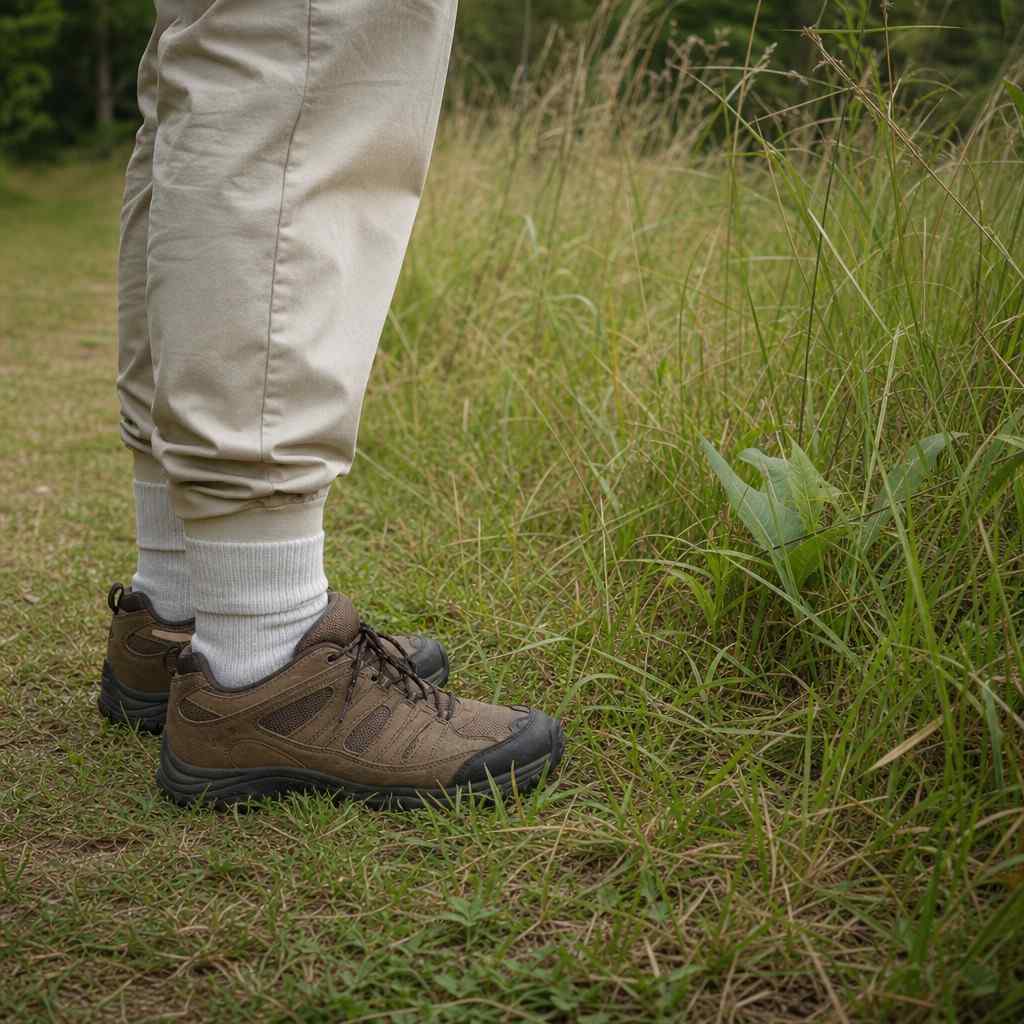
A few small choices at home do most of the job. The University of Rhode Island’s TickEncounter program focuses on prevention education. Its core idea holds for any walk: know where ticks wait, and avoiding them gets easy.
Knowing a route before you trust it matters here too. A quick look at a trail map for tall grass or brushy edges is worth the minute it takes.
Ticks are most active from spring through fall, which is exactly when grass and brush grow tallest and walking is most appealing.
That overlap is the whole reason a few habits are worth building now rather than saving for later.
Four things help most:
- Light colored clothing, so a tick shows up against the fabric before it reaches skin
- Pants tucked into socks, closing the gap ticks use to climb
- A hat, since it gives a tick one less place to climb unnoticed
- A repellent registered with the EPA, America’s environmental regulator, chosen for your skin and your walk
Picking what to wear for the day’s weather is also your first tick defense. Light fabric does the spotting for you before a tick ever reaches skin.
The U.S. Environmental Protection Agency offers a free tool to find the repellent that is right for you. It’s matched to your skin, the length of your walk, and how long you need it to last.
While you’re on the trail
Once you’re moving, stay to the center of the path rather than the edges.
Ticks don’t jump or fly.
They wait on grass and brush and grab hold when you brush past.
Staying off the brush is the single most effective habit on the trail. It costs nothing and takes no extra time.
If you like to pause and watch birds near a hedge line, take that stop a step back from the brush. Lean back, not into it.
The same instinct that pulls you in for a closer look is what puts bare skin against tall grass.
A trekking pole or walking stick can nudge tall grass aside before your leg does. It’s a small habit, and it means your leg never has to touch the brush directly.
The two minute check after every walk
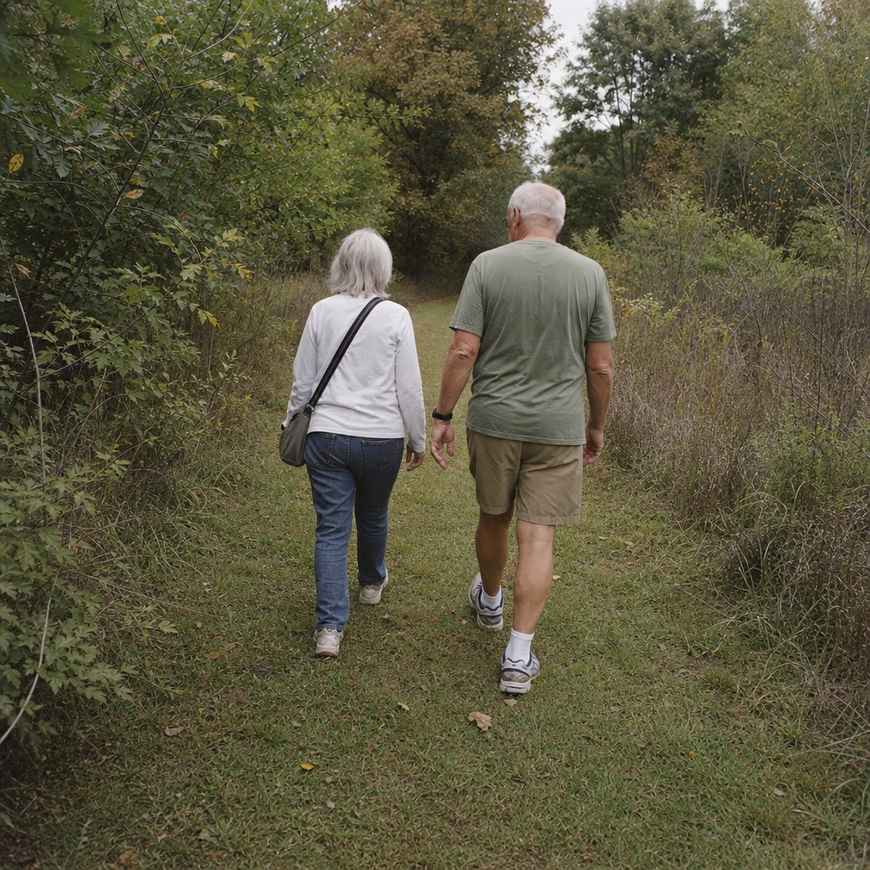
The habit that matters most happens after the walk, not during it. Ticks often ride along for a while before settling in, so a prompt check catches most of them first.
Check the places ticks favor:
- Behind the knees
- Around the waistband
- Along the hairline and behind the ears
- The check takes about two minutes, and most of the time it turns up nothing at all. A shower within a couple of hours rinses off anything that hasn’t yet attached.
- Clothes tossed in the dryer on high heat for about ten minutes finish the job.
- If a dog came along, check its coat and ears too. A tick that rides home on fur can just as easily end up on you later.
- If you do find one attached, use fine tipped tweezers and pull straight out with steady, even pressure, gripping close to the skin. Don’t twist, and skip the old advice about a match or petroleum jelly; neither helps. Note the date you found it. A quick photo before you dispose of it gives you something to describe later, if you ever need to.
Keep an eye on the area over the next few days, and call your doctor if a rash, fever, or anything else concerns you.
Most walks end with nothing to report, and that’s exactly what the habit is for: two minutes, then back to the rest of your evening.