
You’ve probably noticed that what works on one trail completely fails on another. Temperature swings, sudden rain, intense sun: they’ll all test your gear choices.
The difference between a comfortable hike and a rough one often comes down to one thing: wearing the right combination of clothes.
Understanding Trail Conditions and Outfit Choices
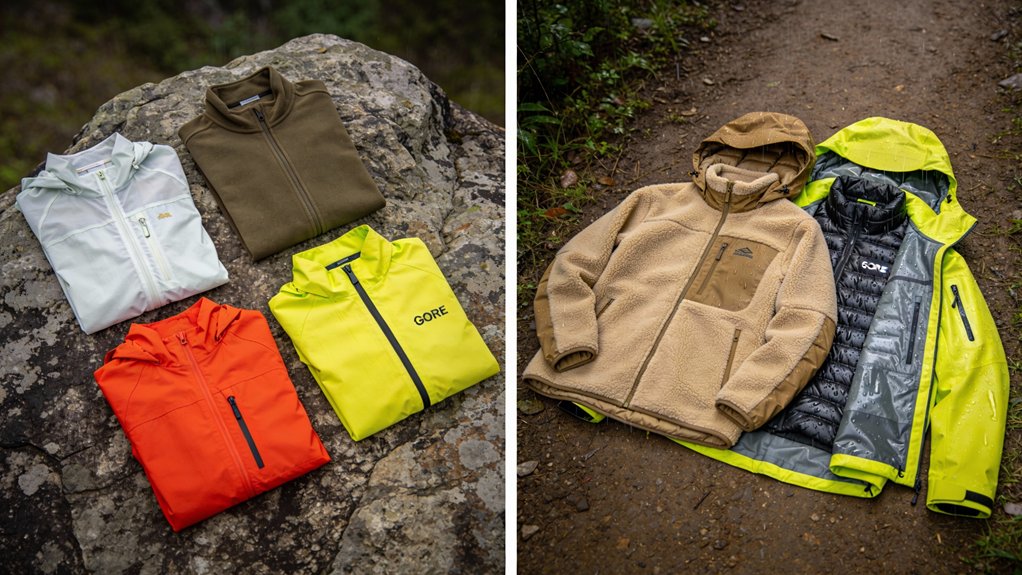
Before you head out, match your clothing to what the environment will throw at you.
Sunny trails call for lightweight, breathable fabrics with UPF 50+ protection. Rainy paths need water-repellent, moisture-wicking materials to keep you dry. Windy conditions ask for a windproof outer layer that holds heat in.
Higher elevations get colder as you climb, so layering is how you handle that shift. Choosing durable fabrics also protects you on rougher ground. Sustainable options like organic cotton or recycled polyester are worth considering if they’re available.
Match your gear to the specific conditions you’ll actually face, and you’ll stay comfortable start to finish.
Proper footwear is essential for handling different trail conditions safely.
Pick the Right Hiking Fabrics: Moisture-Wicking and Breathable Materials
Once you’ve matched your overall outfit to trail conditions, focus on the fabrics themselves.
Merino wool and synthetic blends manage sweat far better than cotton on a warm day. They pull moisture away from your skin and dry quickly, so you don’t end up damp and chilled at the same time.
Breathable materials like bamboo and polyester boost air circulation and prevent overheating. Fabrics with UPF ratings add sun protection without extra weight. Reinforced nylon resists abrasion on rocky or brushy terrain.
Sustainable options like organic cotton or recycled polyester work well when you can find them.
Layering for Any Temperature
Temperatures shift during a hike.
Layering handles it.
Three components work together:
- Moisture-wicking base layer pulls sweat away from your skin
- Insulating middle layer traps heat without bulk
- Waterproof outer layer shields you from wind and rain
- Synthetic buffs and hats protect exposed areas
- Gloves regulate hand temperature during cool conditions
Dress as if it’s 10 degrees warmer than the actual temperature when you start out. You’ll warm up fast once you’re moving, and it’s easier to shed a layer than to wish you’d brought one.
You can always peel off a layer. You can’t add one you left at the car.
You’ll adjust as you go, adding or removing pieces to stay comfortable without overheating.
Sun Protection: Ultralight Gear for Sunny Trails
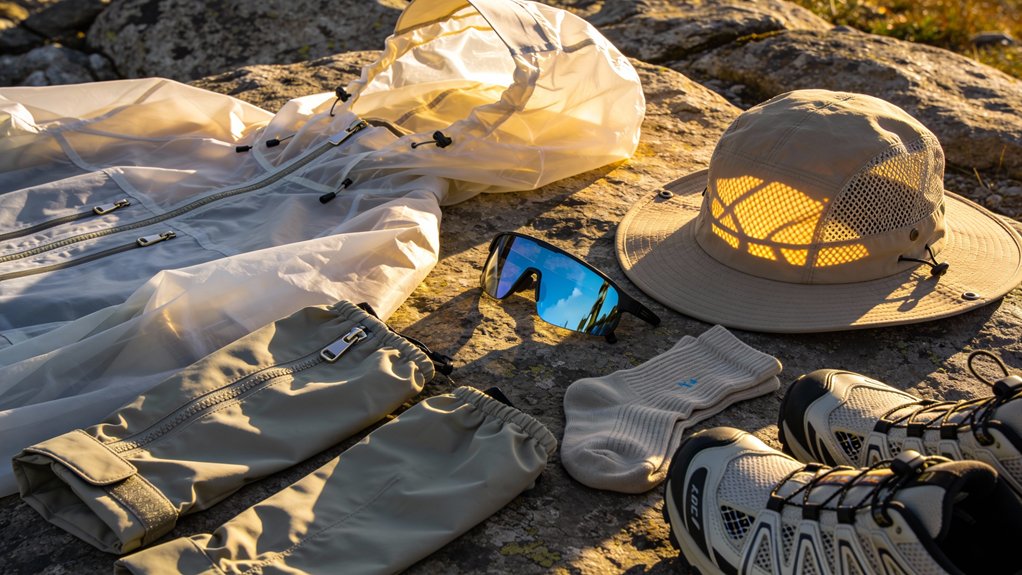
Sun exposure on the trail demands protection that doesn’t weigh you down. Choose lightweight polyester or nylon fabrics with UPF 50+ ratings. Modern fabric technology keeps you cool while blocking harmful rays.
Wear loose-fitting garments that let air move freely. A wide-brimmed hat shields your face and neck from UV. Don’t skip UV-protective sunglasses: they cut glare and protect your eyes on open, exposed trails.
Moisture-wicking socks made from synthetic or wool blends keep your feet dry and comfortable all day. That’s easy to overlook when you’re thinking about sun protection, but sore, damp feet end hikes early.
Rain-Ready Layering Essentials
Wet conditions call for a different approach than sunny ones.
Start with a moisture-wicking synthetic base layer next to your skin. Add a lightweight fleece on top for warmth.
Over that, a waterproof rain jacket with a breathable fabric, adjustable hood, and taped seams keeps the water out where it counts.
Waterproof rain pants over your hiking pants protect your legs. Quick-drying wool or synthetic socks paired with waterproof hiking boots prevent blisters when everything else is soaked.
Taped seams on a rain jacket matter more than the jacket’s price tag. That’s the detail that separates gear that keeps you dry from gear that just looks waterproof.
Most people don’t find that out until they’re already wet.
Check for taped seams before you buy.
Your rain kit, in order:
- Synthetic base layer
- Lightweight fleece jacket
- Breathable waterproof rain jacket
- Waterproof rain pants
- Quick-drying socks and waterproof boots
Cold Weather Hiking: Insulation Without the Bulk
When temperatures drop, layering still applies, but the materials matter more.
The base layer does the real work in cold weather. Merino wool or synthetic blends keep sweat off your skin, which is what prevents that sudden chill when you stop moving.
A damp base layer in cold air is the fastest way to feel miserable.
Add a lightweight fleece or insulated jacket as your mid-layer for heat retention. Top it off with a windproof, waterproof shell. These layers let you shed or add pieces as needed.
Most hikers focus on the big layers and forget everything else.
Hands and ears go cold first.
Don’t forget gloves, a wool hat, and a synthetic buff to protect them. Those extremities lose heat quickly and are the first things you’ll notice.
Hiking Footwear for Different Trail Conditions
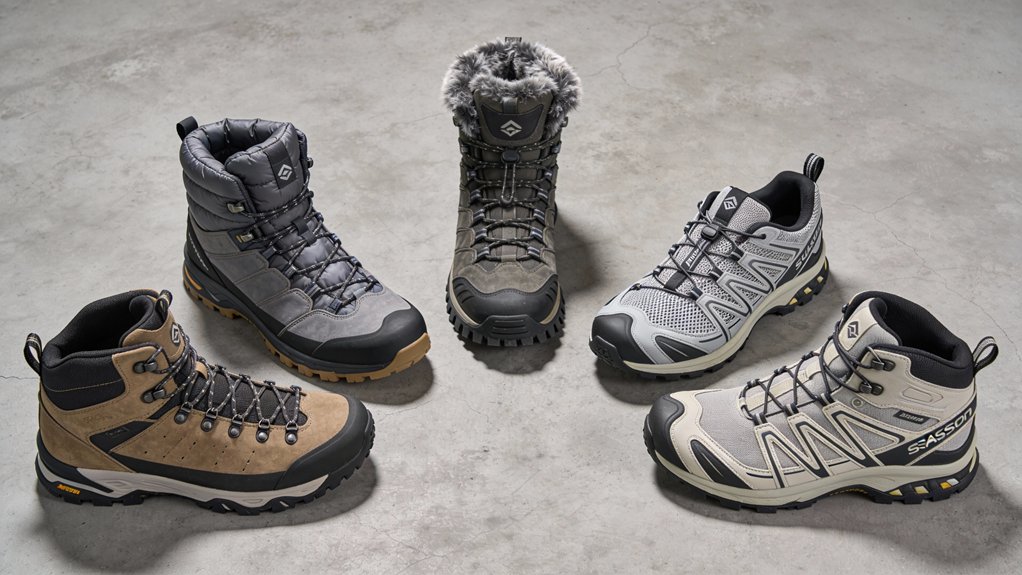
Your feet carry you the whole way. Choosing the right footwear makes a real difference in comfort and safety.
The right footwear prevents more injuries than any other gear choice.
Different trails call for different options:
- Rocky, uneven trails: lightweight boots like Merrell Moab 2 or Lowa Renegade with ankle support and durable outsoles
- Wet conditions: waterproof boots with Gore-Tex membranes that repel water while letting feet breathe
- Well-maintained paths: trail running shoes for lightweight comfort and traction
- Hot weather: breathable mesh uppers or sandals with secure straps
- Icy surfaces: microspikes added for enhanced grip
Match your footwear to the terrain you’ll actually be on. Good footing also supports the cardiovascular benefits of hiking by letting you keep a steady, comfortable pace.
Essential Trail Accessories for Every Hike
Beyond footwear, a few accessories make a noticeable difference.
A moisture-wicking backpack handles gear organization while keeping you dry. UV-protective sunglasses shield your eyes from glare and harmful rays. Trekking poles reduce joint strain on uneven terrain, which matters more the longer you’re out.
A waterproof backpack cover protects your essentials when weather turns. Lightweight headbands manage sweat and provide a bit of sun protection.
These aren’t extras. They’re practical tools that earn their weight on the trail.
Quick Reference: Outfit Checklists for Hot, Cold, and Rainy Conditions
Weather shifts on the trail, sometimes within a single day. These checklists give you a starting point.
Hot Weather:
- Synthetic shorts
- UPF 50+ polyester blend tee
- Quick-drying wool blend socks
- Hat and sunglasses
- Lightweight pack
Cold Weather:
- Moisture-wicking base layer
- Lightweight fleece
- Windproof, waterproof outer layer
- Wool blend hiking socks
- Insulated hat and gloves
Rainy Weather:
- Hard shell rain jacket
- Moisture-wicking base layers
- Waterproof pants
- Quick-drying socks
- Waterproof pack cover
Layering stays your best strategy in all three. You’ll adjust as conditions change, adding or removing pieces without having to stop.