
Starting kayaking is more straightforward than it looks. You’ll need a kayak that suits your size, a Coast Guard-approved lifejacket, and a few basic skills before you head out on your own.
One technique in particular makes all the difference on a first trip: knowing how to get in and out of the boat without tipping it.
Choose Your First Kayak: Beginner Tips
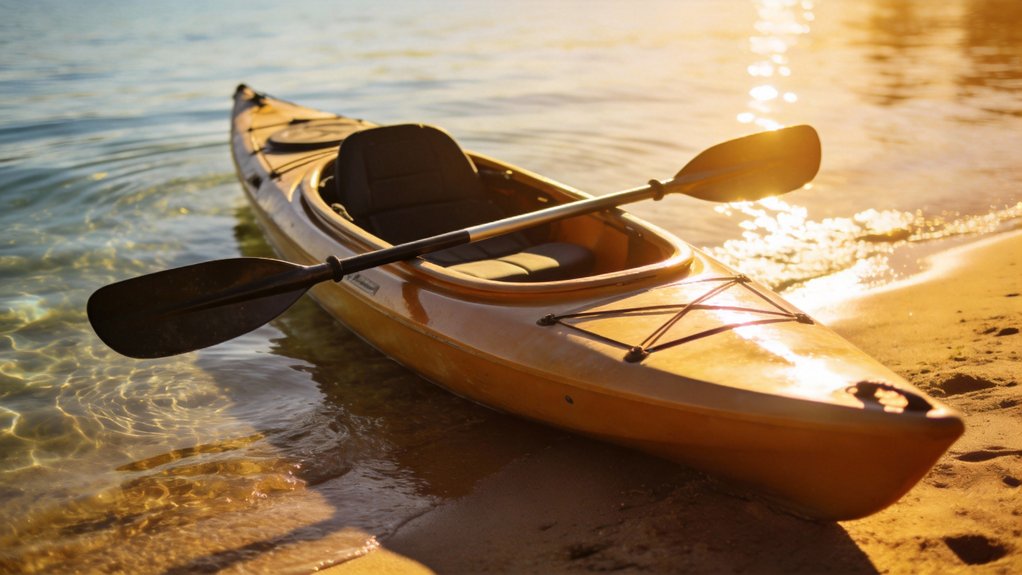
For a first kayak, look for a single model designed for flat water. These offer the stability beginners need most.
Check that the weight capacity matches your body size. A 6-foot, 170-pound person needs a kayak rated for their weight to stay comfortable and safe.
Models like the Dagger Alchemy or Venture Easky 15s handle well on lakes like Lake Tahoe. Visiting local outfitter demo days lets you test different options before committing.
Most people try to choose a kayak from specs alone.
Renting tells you more than any spec sheet.
Consider trying sit-on-top versus sit-inside kayaks first to find which style suits your comfort level. A kayak and its essential gear add up to several hundred dollars or more, so it pays to know which style you like before you buy.
Get Your Safety Gear Ready
Your essential equipment starts with a Coast Guard-approved lifejacket (PFD) that fits snugly. Add a whistle for emergencies and a waterproof phone case to keep communication within reach.
Bring a handheld pump in case your kayak takes on water. In cold water like Lake Tahoe, wear a wetsuit or drysuit for thermal protection. Always check local regulations before you paddle, since some locations have specific safety requirements.
A PFD that fits snugly, a whistle attached to it, and a pump stowed in reach: check all three before you push off.
These aren’t restrictions. They’re what let you paddle confidently and responsibly.
Plan Your First Paddle With a Buddy
Your first time on the water goes better with someone alongside you.
Before heading out, coordinate a few basics:
- Share your trip details with someone at home so they know your expected return time
- Choose calm water such as a lake or slow river where neither of you is fighting a current
- Check the weather forecast together and pick a day without strong winds
Someone alongside you makes the learning curve easier and the day more enjoyable.
Taking a kayaking class together builds confidence while you both pick up proper technique.
Master Three Ways to Enter Your Kayak
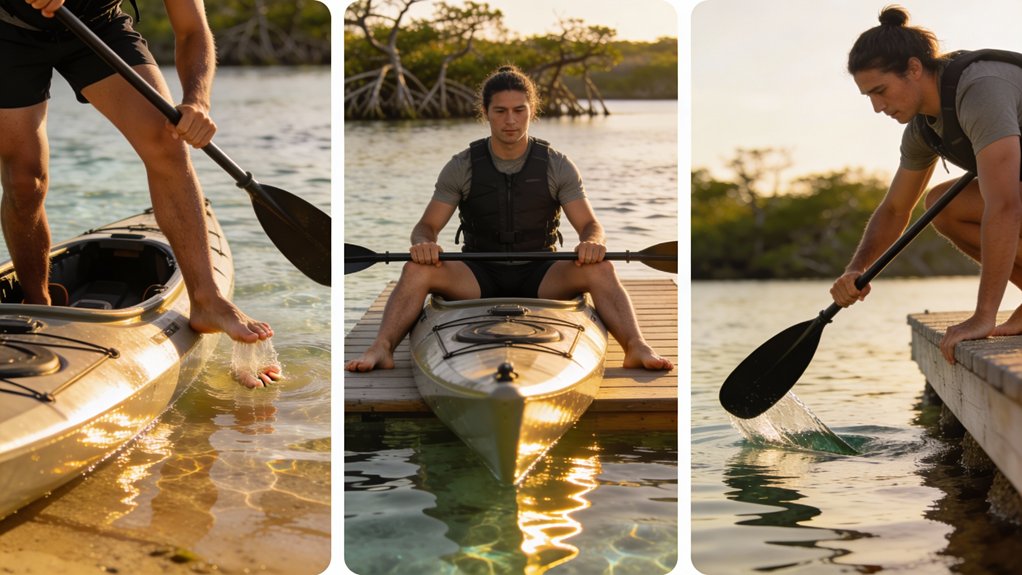
Getting into a kayak smoothly matters more than it seems. It sets the tone for the whole paddle.
The sidesaddle entry works well for beginners. You sit on the kayak’s edge with your legs in the water, then settle into the seat from that stable position.
The straddling technique has you squatting low and sliding into the seat while keeping your balance. A third option is steadying the kayak against a dock, or having a friend hold it.
Beginners often think standing upright makes entry easier.
It doesn’t. Low and slow is the rule.
Never step in feet-first; that’s what causes tipping.
Master the Forward Stroke and Basic Paddle Moves
Once you’re settled in the seat, the forward stroke is what moves you.
Essential techniques to practice:
- Execute forward strokes by aligning your knuckles with the top edge of the blade and fully submerging it
- Maintain consistent paddle angles, alternating strokes on both sides for balanced movement
- Use sweep strokes in wide arcs to initiate turns without losing forward momentum
Torso rotation, not arm pulling, is what keeps paddling sustainable over a full outing.
Practicing regularly builds muscle memory and improves efficiency over time.
Start on Lakes or Slow Rivers
Now that you have the paddle technique, pick the right place to use it.
Head to calm water like lakes or slow-moving rivers where you can focus on your skills without fighting a current. Lakes offer flat conditions that let you concentrate on entry, exit, and basic strokes.
Start with shorter trips. As confidence builds, you can tackle longer distances.
Always check local weather and water conditions first. They need to match your current skill level.
Calm, flat water lets you focus on technique rather than survival.
Steer and Stop Using Sweep Strokes
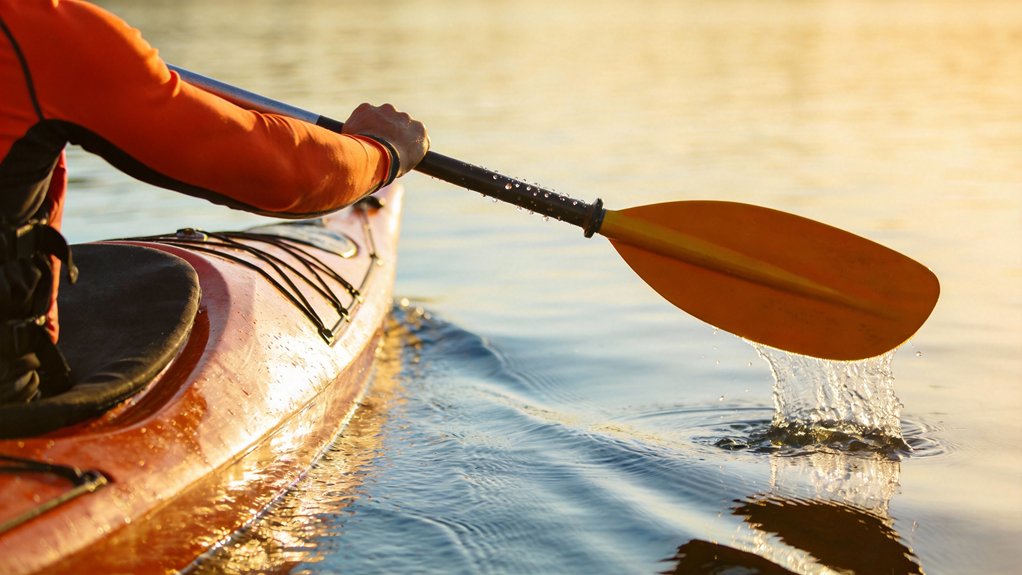
Once you’re comfortable paddling straight, you’ll want to steer with intention rather than guesswork.
Sweep strokes give you that control:
- Forward sweep stroke: Start near the bow and pull the blade in a wide arc toward the stern, power face away from the hull
- Reverse sweep stroke: Position the paddle at the stern, then arc it toward the bow for backward turning
- Alternating strokes: Switch between forward and reverse sweeps to turn efficiently while keeping the boat stable
Keep your eyes on where you’re heading, not on the paddle.
This prevents drifting off course and keeps turns clean.
Exit Your Kayak at Shore
Getting out requires the same care as getting in.
Position your kayak parallel to shore and check that it’s stable before you move. Place your paddle across the boat as a brace, then swing your legs over the side while keeping your weight centered.
Push yourself up with your arms and lower your legs gently into the water.
From a dock, place one foot on the dock and one on the kayak, then stand carefully.
A controlled exit keeps you dry and protects the boat.
Flip Your Sit-On-Top and Climb Back On
Most beginners assume tipping is a disaster.
It’s just a drill.
An unplanned tip happens to most beginners at some point.
First, swim your kayak to a stable position and flip it upright. Then:
- Pull the kayak toward you or push it from the side until you can reach the deck
- Secure your paddle with one hand while pulling your chest and hips onto the boat
- Swing your legs around and settle into a seated position gradually
Practice reboarding in calm, shallow water before you need it. The real thing is far less alarming when you’ve done it before.
Build that confidence early, then move to deeper conditions as your skills grow.
If you have a heart, lung, joint, or balance condition, ask your doctor what distance and terrain make sense before you set out.