
You’re ready to start hiking after 60. Where most people go wrong is jumping straight to trails before giving their body a chance to catch up.
Medical clearance matters. Picking the right gear matters. And a few other things are worth knowing before you lace up.
Talk to Your Doctor Before Hitting the Trail

Before you head out, schedule a visit with your doctor. They can assess your cardiovascular system, joint flexibility, and overall strength, and tailor the conversation to your history.
Depending on what comes up, you might need a stress test to confirm your fitness level. Be upfront about existing conditions, current medications, and recent health changes.
That conversation is worth having before the first hike, not after.
Knowing what your body can handle means you can pick trails with confidence rather than guesswork.
Choose Beginner-Friendly Trails First
Start with local parks and nature reserves that offer well-marked, flat paths under three miles. These spots typically have rest areas and restrooms nearby, which removes one common worry on a first outing.
Short, flat, and familiar is the right bar for the first few months.
Hiking apps can help you check trail ratings and user reviews at your fitness level. Beginner hiking groups are worth looking into too, good for skill-building and for not feeling like the only new person out there.
Increase distance gradually as your endurance improves. Regular hiking on manageable trails builds cardiovascular health and mood at the same time, without needing you to push hard early on.
For national parks later on, if you’re 62 or older and a US citizen or resident, a Senior Pass covers the entrance fee.
Gear: Lighter Is Better
Your knees and back will thank you once you lighten your load.
Look for a backpack that keeps weight off your joints, and aim to carry no more than 20% of your body weight, roughly 10 to 14 pounds for most people.
Trekking poles are worth trying early. They engage your upper body while reducing knee strain, distributing weight more evenly on uneven ground.
Most people assume poles are for steep terrain only.
They’re not.
Poles give you two more points of contact on the trail, and that adds up on descents.
You don’t need to buy from a specialty brand to start. Many beginners use poles and a daypack they already own for the first several months.
Build Strength Alongside Walking
Walking builds some endurance, but it won’t fully prepare your body for hiking’s demands. Adding two weekly strength sessions makes the difference.
Two sessions a week is enough to change how your legs feel on a trail.
Focus on movements that match what hiking asks of you: squats, lunges, and upper body work. Single-leg exercises help with balance on uneven ground.

Resistance bands and light weights are enough to build the muscle you need. Pair that work with walking or cycling for cardiovascular fitness.
Increase Distance Slowly
The approach that works is starting smaller than you think you need to and adding distance week by week.
Begin with a comfortable 1 to 2 miles on flat, well-maintained trails. Each week, increase your distance by around 10 to 20%, giving your body time to adapt.
Steady progress over months beats ambitious weeks followed by setbacks.
A reasonable weekly structure might look like:
- One longer hike to build endurance
- Two or three shorter hikes for recovery
- A more challenging 5 to 7 mile outing every few weeks to test your progress
Taking rest seriously is part of the plan, not a break from it. You can read more about pacing and rest intervals for hiking if you want a closer look at how to structure recovery.
Adjust your goals based on how you actually feel, not a rigid schedule.
Know When to Pull Back
As your mileage builds, knowing when to ease off matters as much as knowing when to push. Your body sends clear signals: persistent soreness, low energy, disrupted sleep.
Gentle and consistent beats hard and occasional, especially after 60.
Schedule rest days between hikes. On off days, light stretching or a short walk keeps things moving without adding strain. Stay hydrated and eat well, since nutrition is part of recovery, not a separate topic.
Shorter hikes are useful for gauging your limits safely.
Most people treat rest days as a sign they’re not trying hard enough.
They’re the opposite.
If you’re not sure whether a day calls for hiking or rest, rest usually wins.
Consistency Is What Makes It Work
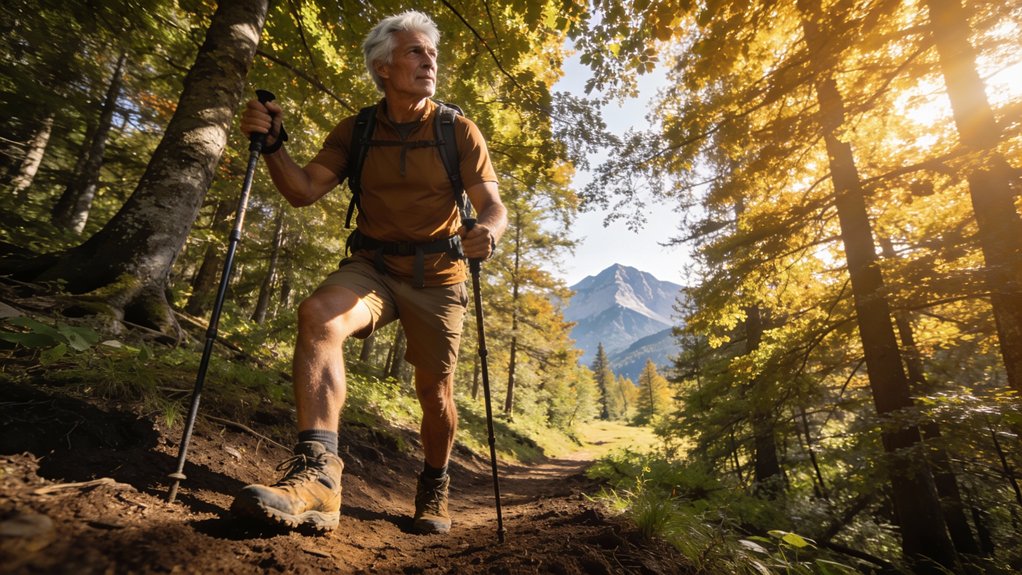
Physical endurance builds gradually with regular movement. Your body adapts better to showing up consistently than to occasional hard efforts followed by long gaps.
Showing up twice a week, every week, outperforms a bigger plan that stalls.
Mood and confidence tend to follow. Time outdoors on a regular schedule has a quieting effect that a single ambitious hike doesn’t replicate.
You’ll also find others hiking at the same pace. Those connections are a real part of why people keep coming back, not just the trails themselves.
Set your own pace, adjust distances to match how you feel, and don’t measure yourself against anyone else’s timeline. Starting after 60 is a reasonable starting point, not a late one.