
Most hikers push too hard early, then wonder why their legs quit long before they planned to stop.
Pace and how often you rest make the difference between finishing a trail comfortably and dragging yourself back to the car.
Why Your Hiking Pace Matters More Than Distance
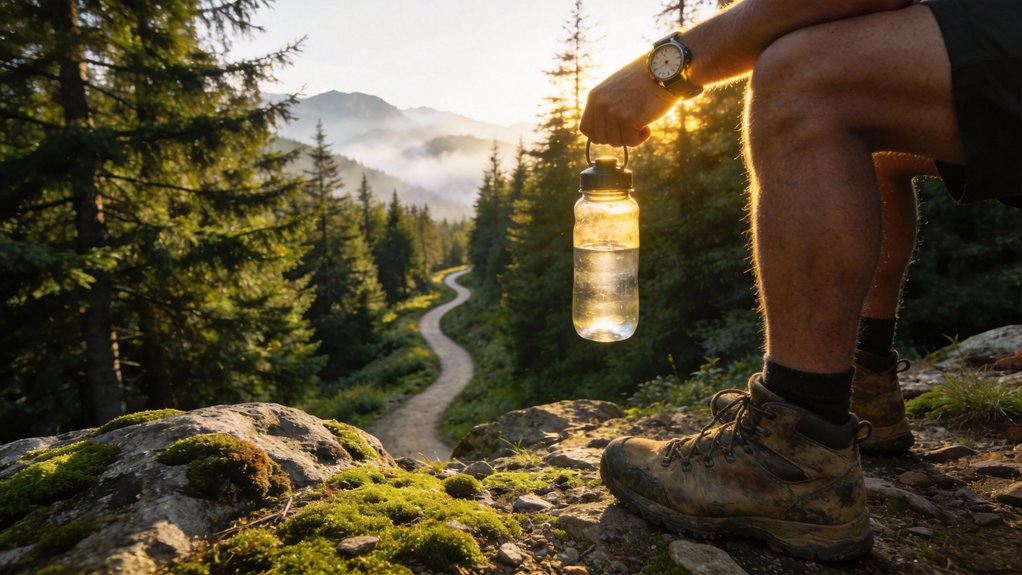
When planning a hike, distance is usually the first number people focus on. But pace is what actually determines how you feel at the end.
A steady, controlled speed lets you cover more ground and arrive at the trailhead still standing.
Matching your speed to the terrain is what hiking efficiency actually means.
Steep sections deserve a slower pace.
That’s not weakness.
The steeper the ground, the slower your comfortable speed. That’s how you hold fuel for the second half.
Building stamina through progressive training helps you safely increase your hiking capacity without overwhelming your body.
Find Your Sustainable Speed: The Nose-Breathing Test
How do you know if you’re going too fast? Try breathing through your nose only while you walk.
If you can’t hold nose breathing, you’re pushing harder than your aerobic zone allows.
Slow down until nose breathing feels easy.
This check works at any fitness level. Start with flat, gentle walking. Gradually add pack weight and elevation as nose breathing becomes easy at each level.
When you can breathe through your nose and still hold a conversation, you’ve found a pace you can sustain. This approach to pacing also carries stress relief and mental health benefits that extend well beyond the physical effort.
The Science Behind Strategic Rest Breaks
Rest stops aren’t wasted time.
Your body is actively clearing fatigue.
Taking 5-minute breaks every 55 minutes removes roughly 35% of accumulated lactic acid. That clearance directly improves how you feel in the next stretch.
Short, frequent stops do more than one long rest in the middle.
During breaks, drink water and stretch. For longer days, 20 to 25 miles, build in 60 to 90 minute breaks at midday to let your body fully reset before the second half.
Rest benefits compound when you time them to the trail, not just the clock.
Pacing Elevation: How to Climb Without Hitting the Wall
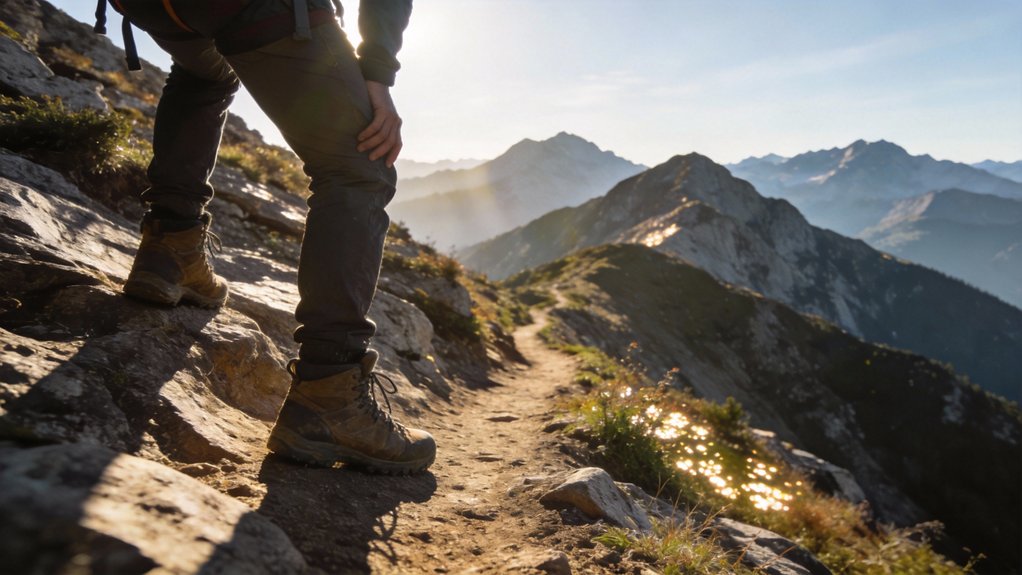
Climbs are where most hikers lose control of their pace, and where it costs them most.
Slow down as the ground tilts up. That adjustment prevents the familiar burn-out halfway up.
Keep breathing through your nose on the climb. When nose breathing breaks down, ease off rather than fighting through it.
Climbing smart means arriving at the top with something left.
For building elevation fitness, 20 to 25 minutes of sustained climbing at a maintainable pace per week is a reasonable target. Take a five-minute break every hour.
The Fatigue Warning Signs Every Hiker Should Know
Several miles in, your body starts signaling that it needs attention. Recognizing these early is what keeps a hike from turning difficult.
Common signs it’s time to slow down or stop:
- Heavy breathing that won’t settle at your current pace
- Muscle soreness that arrived quickly and isn’t easing
- Dizziness, nausea, or excessive sweating
- Trouble concentrating or making simple decisions
Mental fog is a less obvious signal than dizziness.
Don’t dismiss it.
Scheduled breaks every 30 to 45 minutes and honest pace adjustments prevent most of these situations.
Ignoring early signals leads to the kind of fatigue that’s hard to recover from mid-trail.
Adjusting Your Pace for Group Hikes With Mixed Fitness
Group hikes add a layer that solo hiking doesn’t. Someone always needs a different pace than the group average.
The practical rule: set the group’s pace to the slowest member’s comfortable speed.
A conversational 2 mph is a reasonable warm-up target for the first 10 to 15 minutes. Hold that speed, then adjust for terrain.
Everyone finishing the hike is the goal, not the fastest possible finish.
Breaks every 45 minutes to an hour keep the group together and give people a moment to eat and drink. Build in longer stops after significant climbs.
Create Your Own Pace Benchmark for Future Hikes
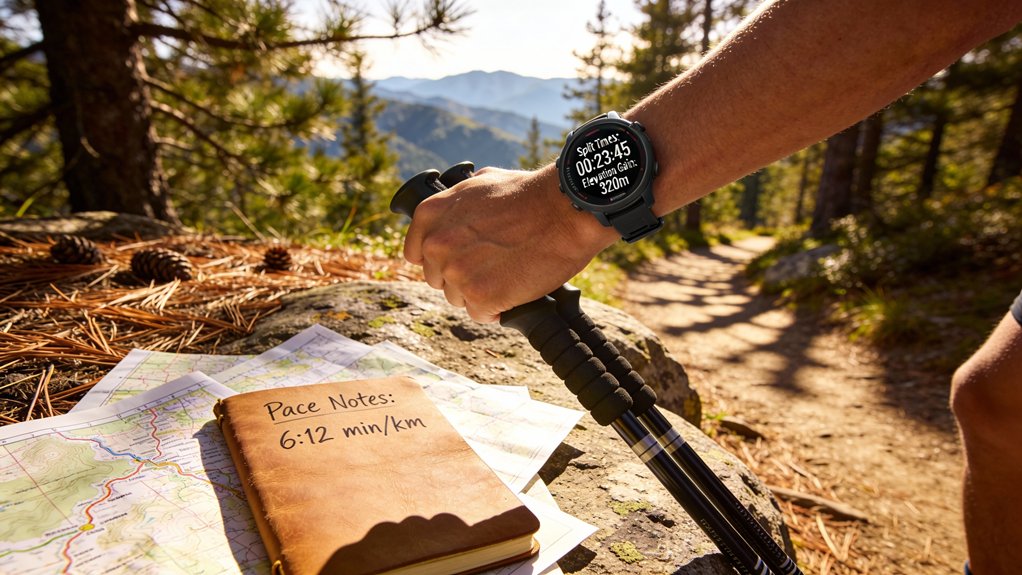
Generic pace guidelines are a starting point.
Your own data is more useful.
After a few hikes, start noting:
- Average speed on flat, maintained trails at low elevation
- How much your pace dropped on steep sections
- Pack weight and weather conditions that day
- How you felt in the last mile
Terrain analysis and honest self-tracking give you a personal reference that accounts for your actual capabilities. Over time, you’ll know before a hike whether a given distance is comfortable or a stretch.
That knowledge makes every future hike easier to plan.