
77°F. That’s warm enough to swim laps in an outdoor pool.
It’s also warm enough to trigger gasping and rapid, uncontrollable breathing the moment someone falls in, according to the National Weather Service.
That reaction is called cold shock. It has nothing to do with how warm the air feels on your face.
A sunny October afternoon can carry air in the 70s while the lake underneath it sits in the 50s. The two numbers stop moving together once summer ends.
A day that feels warm on land can still put you in cold shock range.
Why the air temperature can fool you
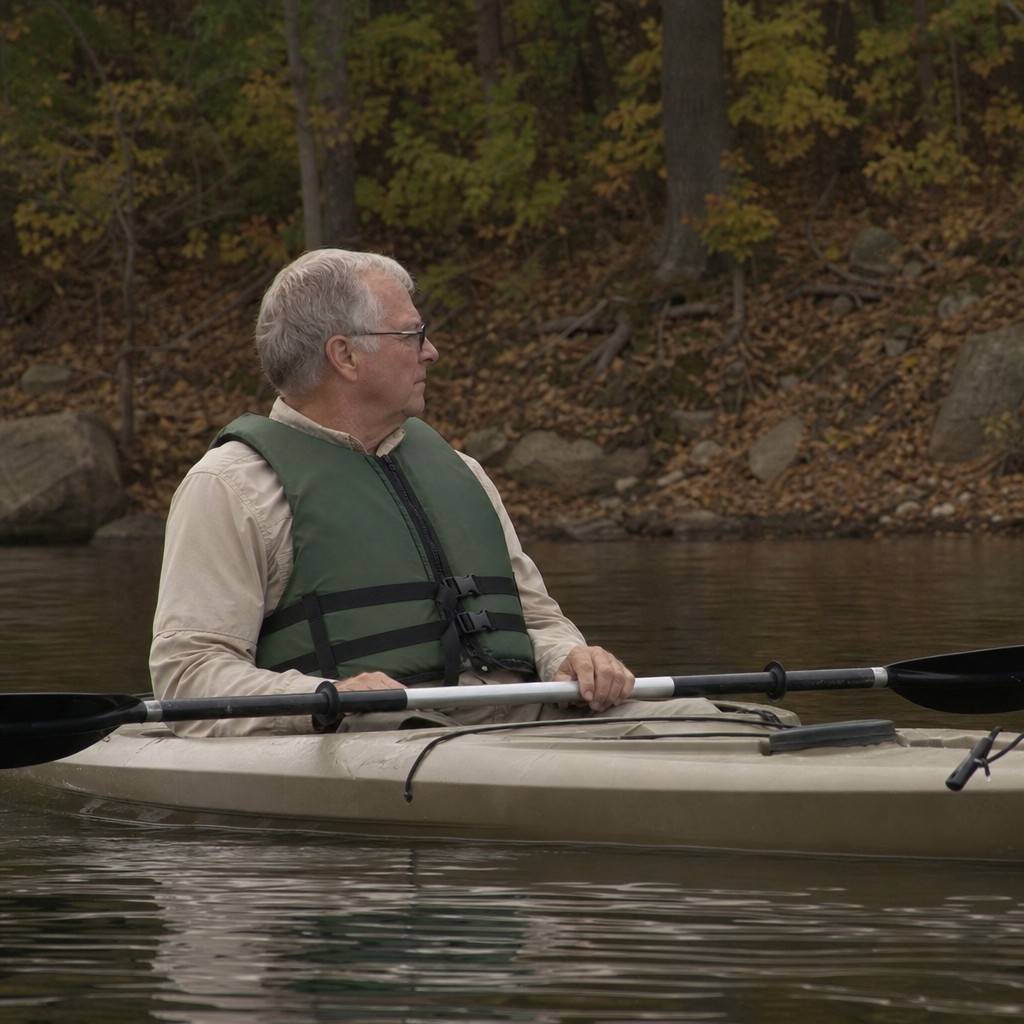
The National Weather Service puts it directly: “Always dress for water temperature, not for air temperature.”
The agency also warns that warm air can create a false sense of security, even when the water hasn’t caught up.
This is why an October paddle can be more serious than it looks. The air might feel like September. The water usually doesn’t.
The water is the one number that decides what happens if you go in.
What cold shock actually feels like
Cold shock isn’t limited to icy water. The National Weather Service reports that water between 50°F and 60°F can produce a reaction just as severe as water at 35°F.
That’s a wide band. A lot of ordinary lake and river water sits inside it well into fall.
A 55°F lake can shock your system as hard as a 35°F one.
The gasping and rapid breathing usually last through the first two to three minutes of immersion, sometimes longer, according to the same source.
That’s the window where controlling your breathing near the surface matters most. A life jacket keeps your head up without you having to fight for it.
If you have a heart or breathing condition, talk to your doctor before paddling in cold water.
Reading the water temperature bands
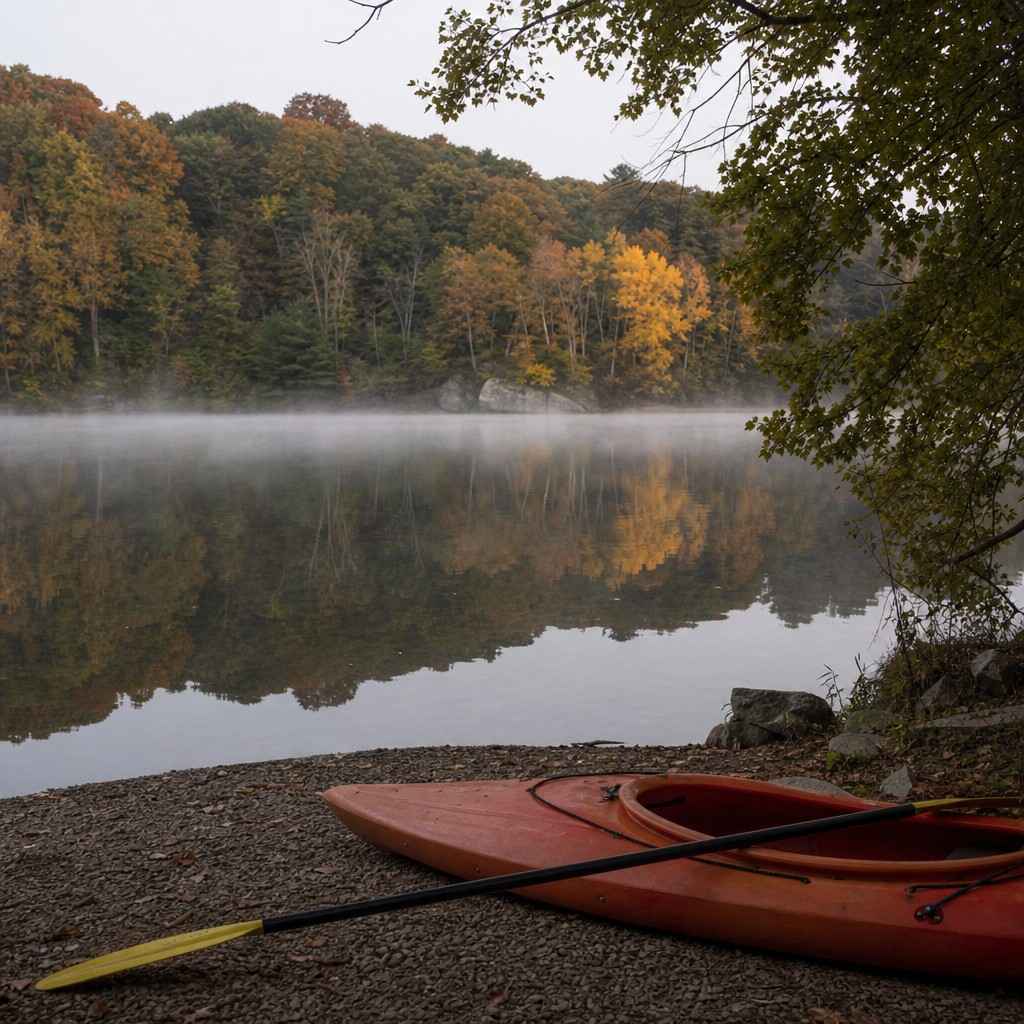
The National Center for Cold Water Safety breaks the risk into bands, and the pattern surprises most beginners.
Here’s roughly how it runs:
| Water temperature | What it means |
|---|---|
| Above 70°F | Lower risk, but conditions can still turn |
| 60°F to 70°F | Rated dangerous; breath control gets harder |
| 50°F to 60°F | Rated very dangerous; cold shock peaks here |
For context, 77°F to 82°F is the official water temperature range for Olympic swimming competition. Breathing already starts to be affected below that, according to the center’s own temperature guide.
Cold shock can’t get worse below 60°F. It is already at its worst.
That’s counterintuitive. Colder water below that band isn’t a bigger shock. The worst of it already happens in the high 50s.
The air might feel like September. The water usually doesn’t.
How to check the water temperature before you go
None of this requires special equipment or a background in weather science.
You don’t need to be an athlete to check one number, and it’s never too late to start doing it.
Checking the water takes less effort than checking the forecast.
Many lakes, rivers, and coastal spots publish current water temperature through buoy and river gauge readings from NOAA, the US federal ocean and weather agency,, or through the local park.
If you’re renting, ask before you launch. A rental outfitter can usually tell you what the water is running that day, and how far it’s drifted from the air temperature.
A short checklist for a late-season paddle:
- Look up the water temperature, not just the forecast
- Ask your outfitter directly if you rent your gear
- Wear the life jacket the entire time you’re on the water
- Paddle with someone else, or tell someone your plan
- Leave a change of dry clothes in the car
If you haven’t been out yet, the beginner’s guide to getting started covers the basics this article assumes.
It’s the same trap either way: the air looks fine, so the decision gets made on the wrong number.
What this means on a rental kayak
Most paddlers renting a kayak for the first time don’t own a wetsuit or a drysuit. They don’t need one.
What changes with cold water isn’t the gear list. It’s how close to shore you stay, and how long a capsize takes to become a real problem.
Know the water before you trust the water.
A capsize near the bank is a wet, cold inconvenience. The same capsize far from shore, where getting back into a kayak takes longer, is closer to what the National Weather Service describes.
Staying inside an easy swim of shore costs very little on a rental kayak. It buys back most of the margin that colder water takes away.
Paddling with someone else helps too. A capsize then has a witness instead of a delay.
Life jackets change what happens next
The U.S. Coast Guard makes a point that’s easy to miss. Most boating related drownings happen on nice days, not stormy ones.
A calm, sunny day is exactly when people skip the life jacket.
It’s the same trap either way: the air looks fine, so the decision gets made on the wrong number.
Wearing a life jacket significantly increases your chances of survival, according to the National Weather Service. Modern ones don’t feel like the bulky vest most people remember.
Before your next paddle, look up the water temperature the way you’d check the wind or the forecast.
The Coast Guard notes that approved life jackets come in many shapes, colors, and sizes. Some are built right into a fishing vest or a hunting coat.
At a rental outfitter, a properly fitted one is already part of what you’re handed, along with guidance on conditions worth watching before you launch.
Before your next paddle, look up the water temperature the way you’d check the wind or the forecast.
If it’s colder than the air suggests, plan around it: the life jacket stays on, you stay within an easy swim of shore, and someone knows where you are. None of that changes what a rental kayak trip looks like.
It just changes what a bad ten seconds turns into.