
You’ve probably noticed that some kayakers sit completely steady in choppy water while others wobble on glassy lakes. That difference comes down to two distinct types of stability working together.
Your kayak’s design matters. Width and hull shape create the foundation.
Your body position, weight distribution, and paddling technique do the rest. Master those elements, and you’ll handle conditions that would otherwise make you hesitate.
Primary vs. Secondary Stability: What Beginners Really Need
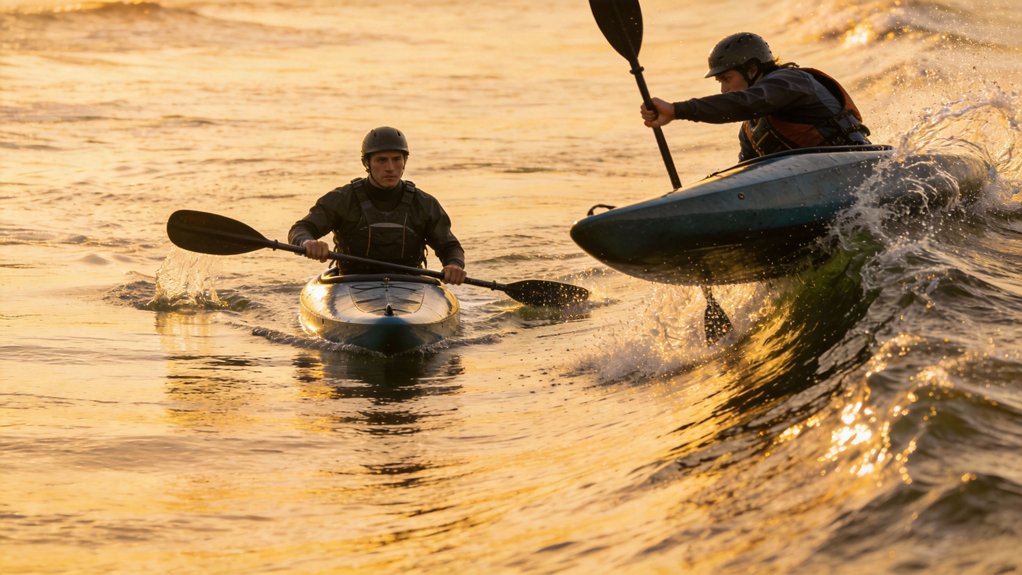
Why do some kayaks feel completely steady beneath you while others seem eager to tip?
You’re experiencing the difference between primary and secondary stability.
Primary stability keeps you steady when you’re sitting still on flat water. Wider kayaks with flat hulls give you that immediate sense of security.
Secondary stability is different.
It’s your kayak’s ability to resist capsizing when you lean or hit waves.
You’ll develop skills faster on a kayak with strong secondary stability.
Choose one that matches your skill level, and confidence on the water follows naturally.
Pick the Right Kayak: Hull Shape and Width Explained
Now that you understand how primary and secondary stability work, you’re ready to pick a kayak that fits your needs. Hull performance depends on shape and width working together.
Wider kayaks over 28 inches give you solid primary stability for calm waters. Narrower models under 25 inches trade that stability for speed and agility. Flat-bottom hulls boost initial stability for recreational use.
V-shaped hulls track better in rough conditions but feel tippy at first. Multi-chine designs blend both strengths, making them a practical starting point for beginners.
Multi-chine hulls give beginners stability without giving up too much maneuverability.
Longer kayaks track efficiently, while shorter, wider ones prioritize ease and control. Before you buy, it’s worth the chance to rent before buying so you can test different hull shapes in your actual paddling conditions.
Body Position and Weight: Your Stability Toolkit
Your body is the most powerful tool you’ve got for staying balanced in a kayak.
Sitting upright with your head centered over the kayak’s centerline keeps your center of gravity low and stable. Spreading your load evenly between yourself and gear prevents wobbling.
Engaging your core while paddling strengthens your stability from the inside out.
When turning, shift your weight opposite the lean to counteract tipping.
Practice these fundamentals in calm water first. Always wear a personal flotation device while you’re building your skills. Confidence and control come with time.
How Paddling Skill Changes Everything
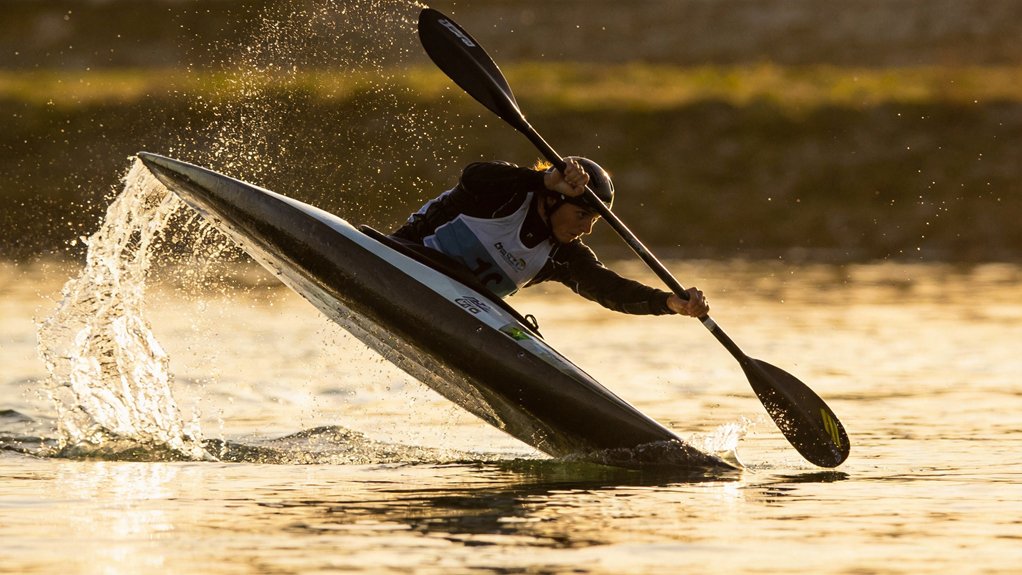
As you develop better paddling technique, you’ll notice your kayak feels far more responsive and forgiving.
Skilled paddlers use leaning and bracing techniques to manage tipping in rough water. Maintaining an upright posture and rotating your torso creates stability through movement, not just stillness.
Edging techniques let you tilt the kayak on its chine for sharper turns. Your paddling technique directly controls how your center of gravity interacts with the kayak’s design.
Most beginners assume stability is about the boat.
It isn’t. It’s about what you do with it.
Reading Water Conditions: When Stability Is Tested Most
Wind, waves, and currents will test your stability like nothing else can. Before paddling, assess the water carefully. Look for wave height, wind speed, and current direction.
Choppy conditions shift your kayak’s center of buoyancy and demand adaptive techniques.
Rough water requires a kayak with strong secondary stability to resist capsizing when tilted.
Keep your weight balanced and stay upright. Those two habits prevent most problems.
Start in calm conditions and build your skills before facing more challenging scenarios. Confidence grows gradually.
Entry, Exit, and Balance: Techniques That Build Confidence
Getting into and out of your kayak safely matters just as much as handling rough water.
Practice entry in calm water with paddle support. Keep your head aligned with the centerline and maintain an upright posture. Distribute weight evenly between yourself and gear to prevent tipping.
Practice exit techniques the same way: deliberately and slowly.
Use outriggers if you need extra confidence early on. Understanding your kayak’s primary and secondary stability helps you anticipate how it’ll respond before you step in.
These fundamentals build real confidence that carries into every paddle after that.
Brace, Lean, and Roll: What to Do When You Tip
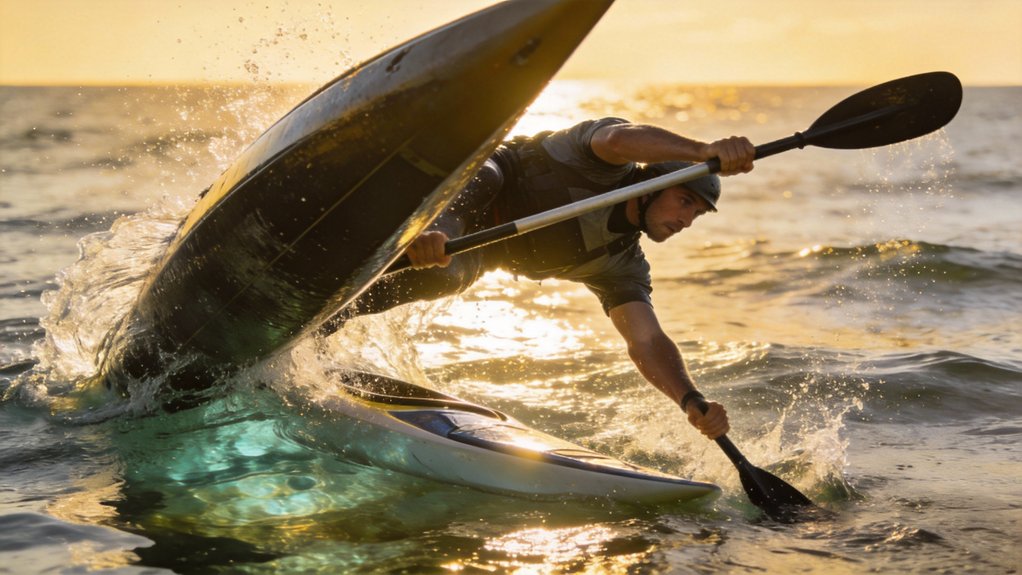
Tipping happens to every kayaker.
How you react instinctively determines the outcome.
When you feel yourself falling, lean into the direction of the tilt to counterbalance your kayak. This simple move can prevent a full capsize.
Extend your paddle outward for stability and support during tipping recovery. That’s the brace technique.
Advanced paddlers also practice the roll, using hips and paddle to flip the kayak upright in rough water.
Regular edging practice, shifting weight side to side, strengthens your stability control over time.
Understanding your kayak’s center of gravity helps you respond effectively instead of panicking.
Best Stable Kayaks for Beginners and Older Paddlers
Choosing the right kayak matters as much as your paddling skills.
Look for recreational models from brands like Old Town and Perception that are designed with wider hulls over 28 inches. These multi-chine hulls provide excellent primary stability in calm waters.
You’ll also want secondary stability features that help you recover from tilts smoothly.
If you’ve got mobility concerns, adaptive paddling systems enhance balance considerably. Outriggers offer another practical option for boosting buoyancy and reducing tipping risk.
Prioritizing stability features is an investment in both safety and enjoyment.
Outriggers and Stabilizers: Your Backup Plan
When you want extra security on the water, outriggers and sponsons are worth knowing about.
Outrigger types range from simple aluminum arms to adjustable systems that extend your kayak’s width considerably. A wider stance dramatically reduces tipping odds in choppy water.
Sponsons are inflatable pontoons that boost buoyancy and stability without adding permanent weight. They work alongside your paddling skills rather than replacing them.
Proper installation matters: secure fastening and balanced placement make the difference.
Choose your stabilizer based on your kayak type, skill level, and typical paddling conditions.
Master Your Stability: A Practice Progression
Now it’s time to build your stability skills through practice.
Start with paddling drills in calm water to develop muscle memory. Focus on maintaining an upright posture and distributing your weight evenly.
Practice stability exercises by leaning toward the kayak’s edge to understand secondary stability. Progress gradually to slightly rougher conditions as your confidence grows.
You’ll notice improved balance within weeks.
Foundational skills like these free you to paddle anywhere with genuine control.