
Drinking more water helps.
It’s not the whole plan.
Temperature, humidity, timing, and your body’s warning signs all factor into whether a hot-weather hike stays enjoyable or turns into a problem. Each decision, from checking the forecast to picking your route, has a specific logic to it.
Check the Weather and Assess Your Real Risk
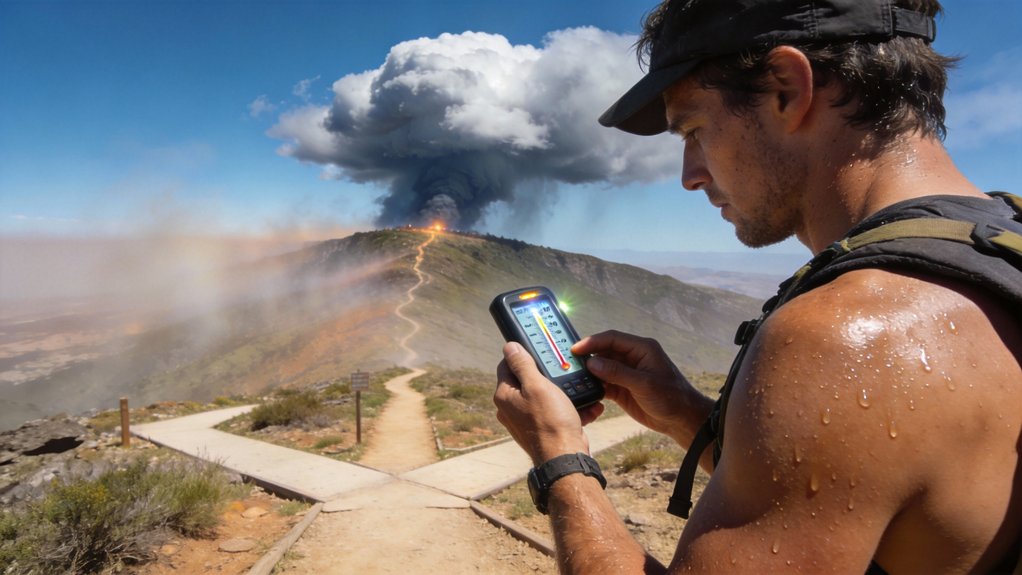
Before you head out, check the local weather to see what temperature and humidity you’re actually dealing with. Nearly 100 million Americans faced temperature advisories by June 2024, which gives a sense of how serious heat conditions can be.
High humidity is particularly dangerous because it prevents your body from cooling through sweat. When you layer strenuous movement on top of that, the risk climbs fast.
Humidity matters as much as temperature. Check both numbers before committing to any plan.
Decide Whether to Go at All
So you’ve checked the forecast. Now make a clear call.
If temperatures exceed 35°C or humidity is climbing, postponing is a reasonable choice, not a sign of weakness.
Postponing is a decision, not a failure. The trail will still be there.
Consider your own health honestly. Conditions like diabetes or asthma can make heat stress worse. Early morning or evening hikes sidestep peak heat.
Just as kayakers follow basic safety rules before heading out on the water, hikers need to make the same kind of honest assessment before the trail.
Check conditions again right before you leave, and if something feels off, trust that.
Plan Your Route Around Peak Heat Hours
The hottest part of the day runs from about 10 AM to 4 PM. Starting early keeps temperatures manageable and cuts down on the work your body has to do.
Shaded trails make a real difference. Look for routes through dense tree cover or between rock formations that block direct sun. Shorter distances during extreme heat also reduce the accumulated strain considerably.
Pack the Right Gear
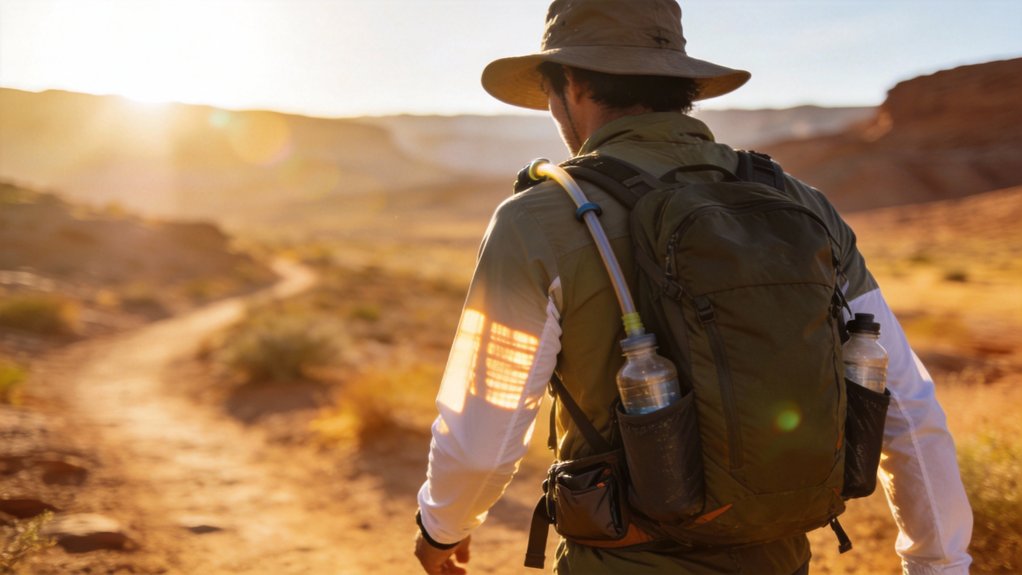
Lightweight, moisture-wicking clothing, long-sleeved shirts and pants that reflect heat, shields your skin from sun while still letting sweat work. Add a broad-brimmed hat and sunglasses. Apply SPF 15+ sunscreen every two hours, especially after sweating.
The hat and sunscreen aren’t optional when you’re in full sun for hours.
Carry at least one liter per hour of hiking.
On longer hikes, electrolyte drinks help replace the sodium, potassium, and magnesium lost through sweat. A bandana soaked in cool water and worn around your neck helps regulate your temperature between water stops.
Hydration Beyond Water: Electrolytes on Longer Hikes
Water keeps you hydrated, but it doesn’t replace the minerals your body loses through sweat on extended hikes. Some options:
- Sports drinks formulated with mineral replacements
- Coconut water for natural electrolyte content
- Electrolyte tablets dissolved in water
- Homemade mixes frozen as slushies
- Plain water paired with salty snacks
Plain water alone isn’t enough on a long hot hike.
A dark yellow urine color means you need more fluids and electrolytes soon.
Keeping hydration steady also supports the mental health improvements that make outdoor activity worth doing in the first place.
Recognize Heat Exhaustion Early
Heat exhaustion tends to sneak up.
Your body sends warnings first.
Watch for a pale face, nausea, vomiting, cool moist skin, or a headache. These are signs your body is struggling to cool down. Stop immediately, find shade, drink water or an electrolyte drink, and cool your skin with water.
Catching these signs early prevents progression to heat stroke, which can cause confusion or unconsciousness. Don’t talk yourself into pushing through. Early action keeps the situation manageable.
Cool Down While You’re Moving, Not Just at Breaks
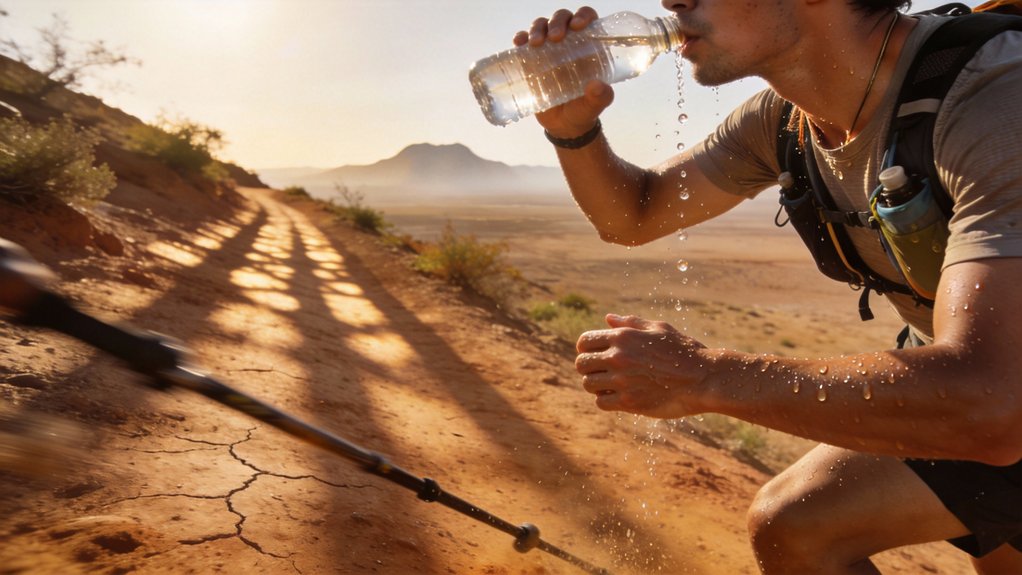
You don’t have to wait for a rest stop to cool down. A few simple techniques work on the move:
- Soak a bandana in cool water and wear it around your neck
- Carry ice cubes in a neck buff for quick relief
- Use an umbrella or sun parasol to block direct sunlight
- Wet your shirt periodically for evaporative cooling
- Use water sources along the trail to dampen your clothing
Keeping your body temperature down throughout the hike, rather than letting it climb and then addressing it at breaks, prevents your core temperature from reaching a dangerous level.
Why Humidity Changes the Math
A 75-degree day can feel worse than a 95-degree one if the humidity is high.
Humidity rewrites the rules.
High humidity slows sweat evaporation, which is your body’s main way of shedding heat. When sweat can’t evaporate efficiently, you retain heat instead of losing it.
If humidity is elevated when you check the forecast, hike earlier, choose a shorter route, or save the trail for another day.
Hike With a Partner and Leave a Plan Behind
In hot weather, a hiking partner becomes a practical safety measure, not just company. If heat stress hits hard, having someone with you means help is immediate rather than hoped for.
Before you go:
- Hike with at least one partner when conditions are serious
- Share your exact route with someone not on the trail
- Sign in at the trailhead when that option is available
- Set a specific return time and stick to it
- Check in by phone once you’re back
These steps make sure someone knows where you are if you don’t return on time.
This is general information about being outdoors, not medical advice.