
Most hikers give their footwear less thought than they give to terrain difficulty. You’ve probably grabbed whatever shoes felt comfortable, but the right pair involves understanding boot types, support levels, and fit timing.
Your foot is larger in the evening than in the morning, a detail that changes everything about finding the right size.
Here’s what actually matters when you’re selecting your next pair.
Boots vs. Shoes vs. Trail Runners: Which Type Suits Your Hikes?
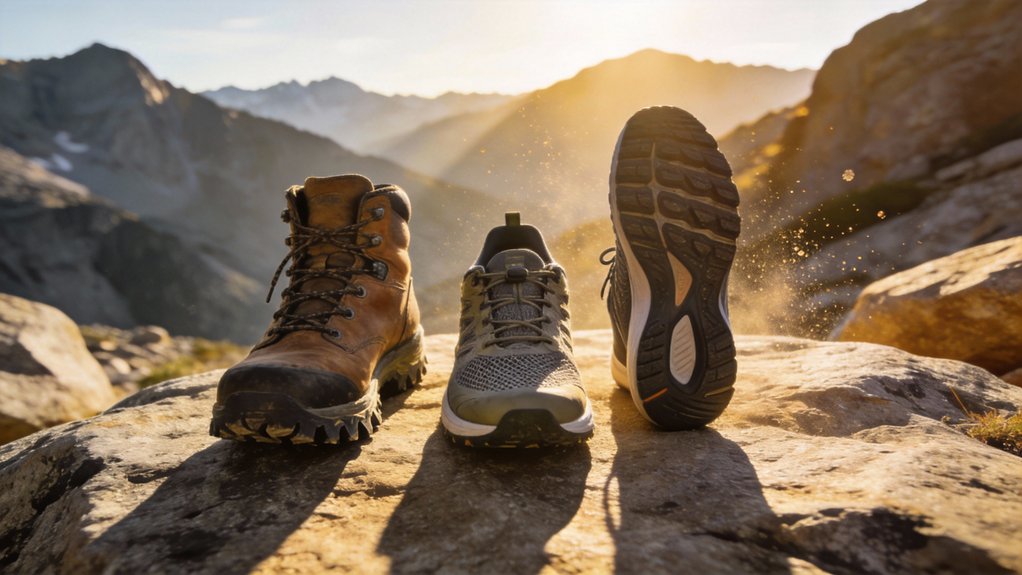
The three main options each fill a different role:
- Hiking boots weigh 2.5 to 3 pounds and cost the most of the three. They offer maximum ankle support for rugged terrain.
- Hiking shoes sit between the two at 25 to 32 ounces, and typically last 800 to 1,000 miles with solid support.
- Trail runners weigh under a pound. They’re breathable and comfortable for three-season hiking, though less stable.
Most people pick what looks serious.
Match your footwear to the ground under your feet, not to what looks serious.
Heavy boots suit rocky mountain terrain. Lighter shoes work well for moderate trails. Trail runners excel on smoother paths where you don’t need serious stability.
Ankle Support and Stability: When and Why It Matters
When you’re hiking on uneven ground with a heavy pack, your ankles face real stress.
That stress compounds on every downhill step.
Three things to know:
- High-cut boots provide maximum ankle support for rocky trails and heavy loads, reducing sprain risk considerably.
- A stiff shank and heel brake enhance stability on uneven surfaces, preventing dangerous slips on descents.
- Hikers with ankle injuries or weak ankles should choose footwear with extra support features.
Older adults should pay attention to ankle sprain prevention techniques, since age-related changes can increase vulnerability on challenging terrain.
High-cut boots earn their weight when the trail gets rough or the pack gets heavy.
Low-cut shoes offer more freedom and agility on lighter hikes, but sacrifice stability. Let the terrain and load decide.
Waterproofing Your Hiking Footwear: When You Need It
Your feet staying dry depends entirely on the conditions you’re hiking in and what you’re willing to trade off.
Waterproof materials with Gore-Tex membranes excel in mud and snow, keeping moisture out initially. The catch is they trap heat and sweat, reducing breathability.
Non-waterproof shoes dry faster and breathe better for summer hikes.
Wet winters call for waterproofing; warm seasons usually favor ventilation.
You can reapply aftermarket waterproofing treatments to extend shoe life. Match your footwear choice to your specific terrain and climate.
Finding the Right Fit for Your Hiking Shoes
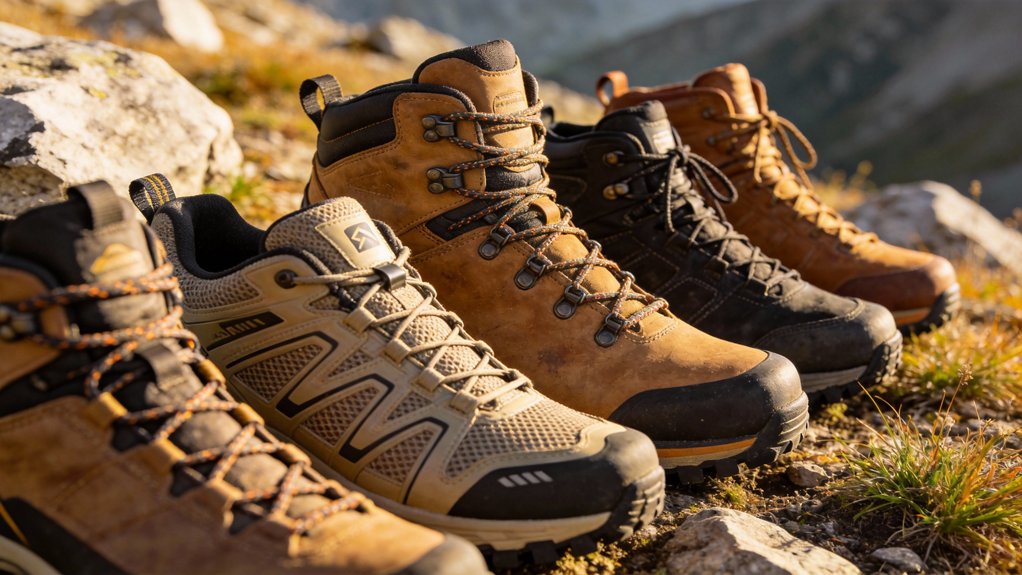
Finding the right fit makes all the difference between a comfortable hike and a miserable one.
Your foot changes size throughout the day. Shop toward evening, when your feet are at their largest. That’s the size that matches your actual hiking conditions.
Size up by a half to full size to accommodate swelling and stop your toes hitting the front on downhill sections.
Two more fit checks worth doing in the store:
- Walk downslope while trying shoes on to verify adequate toe box room.
- Inspect the collar and tongue padding for comfort, then test the shoes for several hours before committing to longer hikes.
Break-In Expectations and Speed-Up Tips
Once you’ve picked shoes that fit, you’ll need to break them in before any long hikes.
Plan for 20 to 30 miles of gradual wear to let the materials conform to your feet.
A simple progression:
- Start with short indoor walks or casual neighborhood strolls for a couple of hours daily.
- Progress to easy trails before attempting challenging terrain.
- Wear thicker, cushioned socks during this phase.
Some discomfort is normal.
Persistent pain signals a poor fit, not a break-in problem.
When Your Hiking Shoes Need Replacing
Your footwear sends clear signals when it’s time.
Most hikers miss them until something goes wrong on the trail.
Signs to watch for:
- Worn tread no longer grips trails safely, compromising stability on rocky or slick terrain.
- Compacted cushioning causes foot soreness during hikes, meaning shock absorption is gone.
- Visible holes or tears damage stability and support.
Also watch for heel slipping, cramped forefeet, or consistently wet socks from failed waterproofing.
Worn tread is the clearest sign. If it’s smooth, the shoe is worn out.
When a worn pair finally gives out, you can compare hiking shoes and trail runners on Amazon to see what suits your terrain and budget.
Where this page links to kit on Amazon, those are affiliate links. A purchase made through one earns this site a small commission at no additional cost.
Hiking Socks: Choosing the Right Pair for Blister Prevention
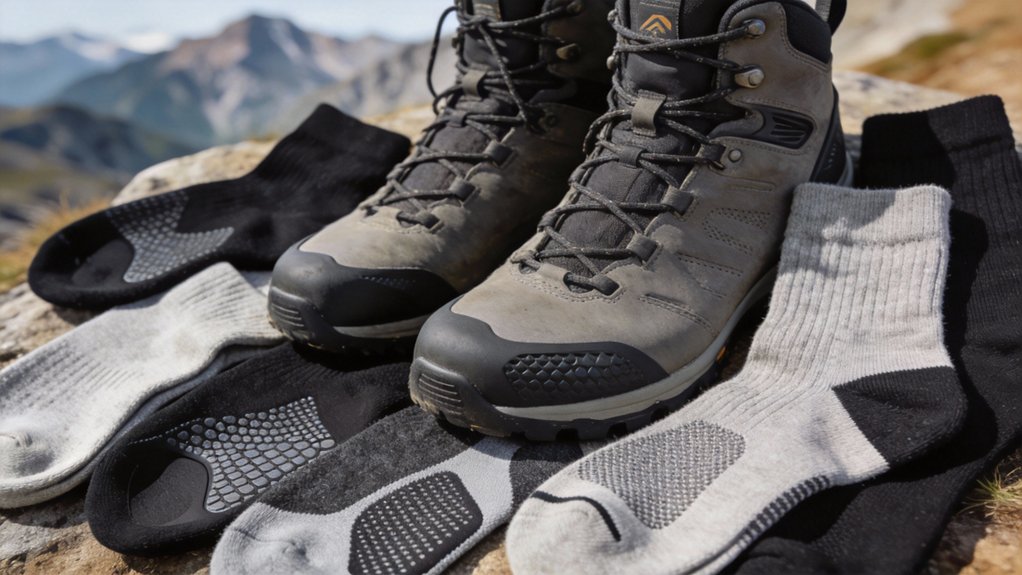
Good shoes can still cause blisters with the wrong socks. The material matters.
Merino wool and synthetic blends wick moisture away from the skin, which is what keeps blisters from forming.
Look for cushioning in the heel and toe areas to absorb impact and reduce friction. Socks should fit snugly without bunching, with a little stretch.
Consider thickness carefully. Thicker socks offer more cushioning but might crowd your boots. Test new socks on short walks first before tackling longer trails.
Caring for Your Hiking Shoes to Extend Their Lifespan
What happens after you return home matters nearly as much as what happens on the trail. A little care keeps hiking shoes functional for years.
- Remove dirt immediately with a soft cloth and scrub brush on stubborn stains to maintain material integrity.
- Take out insoles after each hike and let them dry completely at room temperature to prevent odor and deterioration.
- For leather shoes, use pH-balanced soap and conditioner, brush mud away while wet, then air dry at room temperature.
Pulling the insoles out after every hike is the single habit that extends shoe life most.
Check tread regularly. Worn treads compromise safety on uneven trails, and it’s easy to miss the gradual change.