
The best afternoons with a grandchild rarely involve a big plan. A slow walk, a pond full of ducks, a handful of stones to skip. The simplest outings are usually the ones a child remembers.
That suits grandparents well, because the same easy pace that keeps a four-year-old happy also keeps the activity kind to your knees. You don’t have to be an athlete to give a child a good day outside.
Why Simple Shared Time Outside Matters
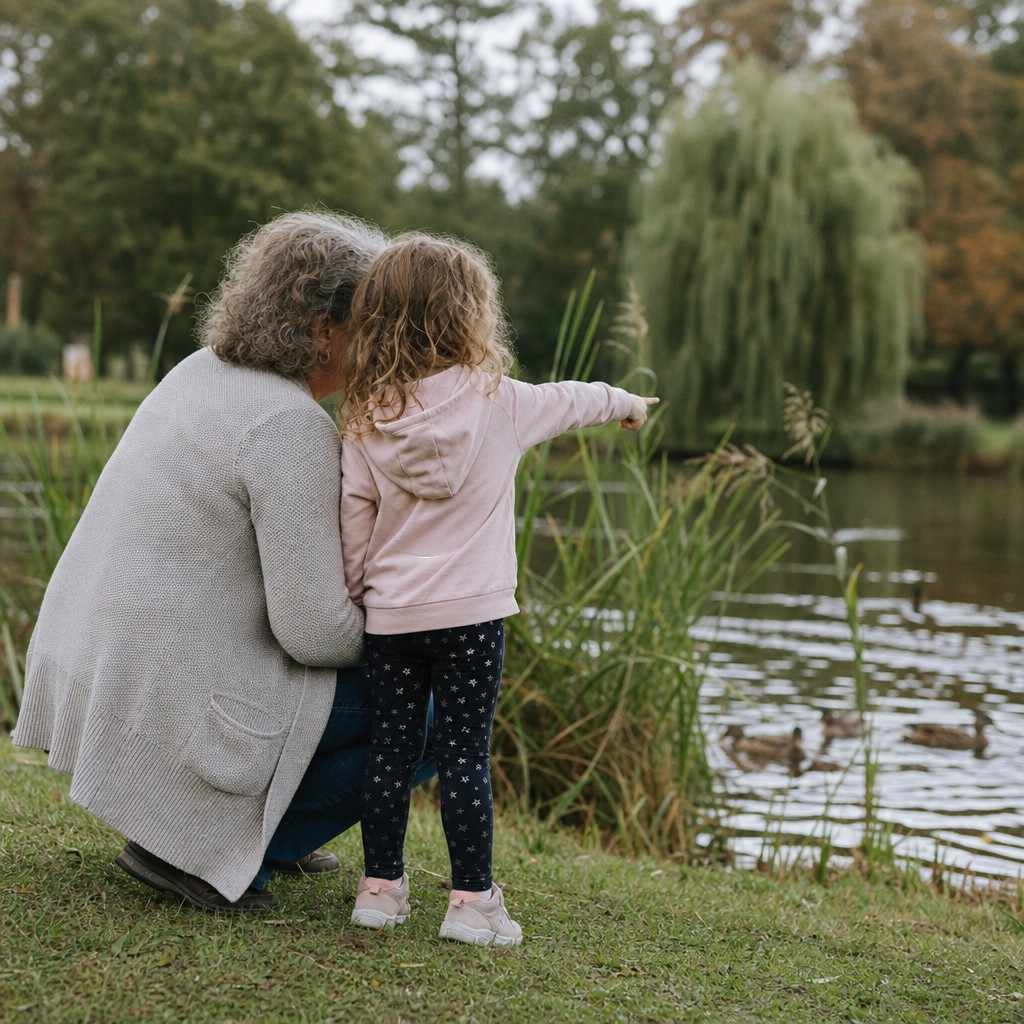
A shared outdoor outing quietly does something for both generations at once. The child gets movement, fresh air, and your full attention. You get gentle activity and company in the same hour.
That second part matters more than it sounds. Staying socially connected protects long-term health and independence, and an unhurried walk with a grandchild is one of the easiest forms it takes.
The activity itself does not need to be impressive. The Centers for Disease Control and Prevention notes that any amount of physical activity is better than none, and that holds true whether you are pushing a stroller or ambling beside a ten-year-old. Low-impact doesn’t mean low-benefit. The point is being outside together, not covering ground.
A Range of Easy, Low-Cost Activities
You almost certainly already have what you need for most of these. None of them asks for special gear, a ticket, or a long drive.
- A short nature walk on a flat, paved loop, turning back whenever the child tires
- Feeding ducks or watching birds at a local pond, with bread swapped for oats or seed
- A simple scavenger hunt, looking for a red leaf, a smooth stone, something round
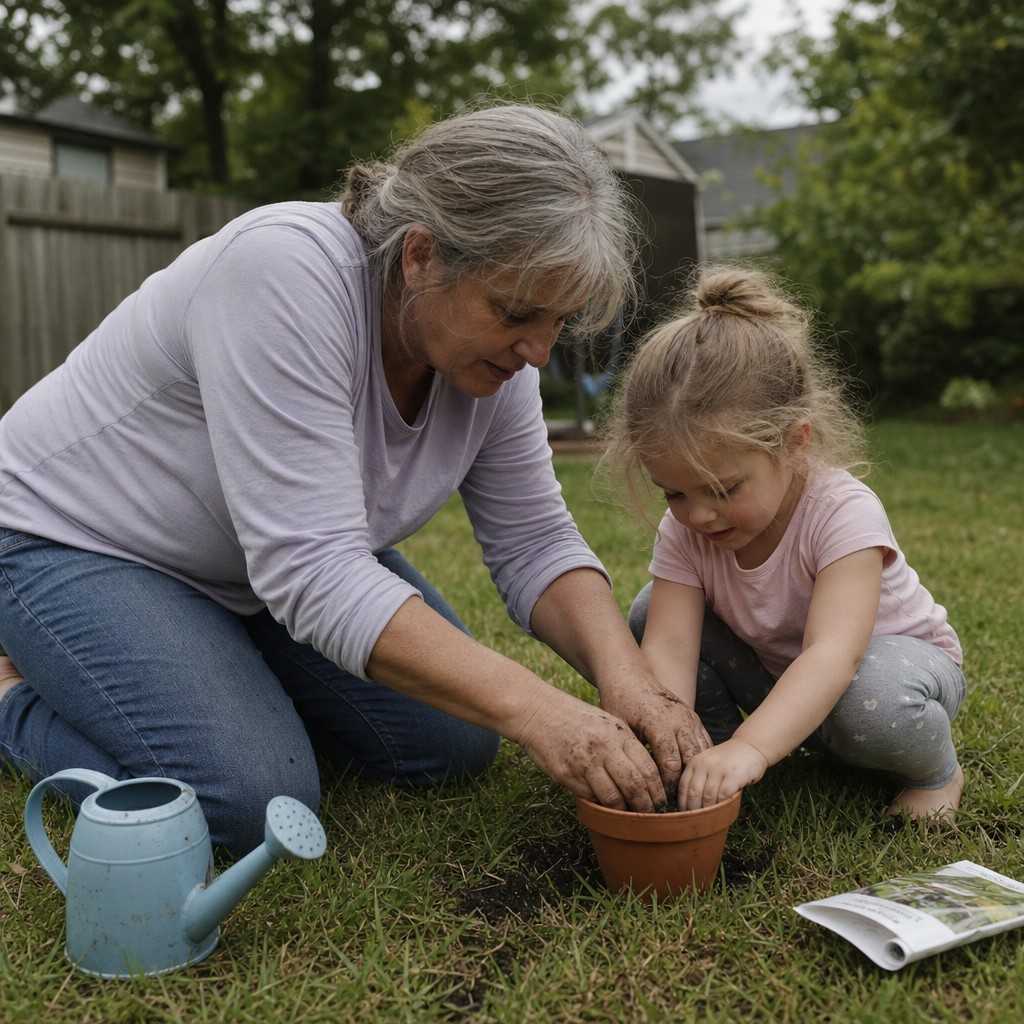
- Planting something together, a few seeds in a pot or a corner of the yard
- A picnic on a blanket, where the food is half the fun
- Skipping stones at the edge of a calm lake
- Stargazing in the backyard on a clear night, with no equipment at all
A few of these are worth a closer look. An easy outing built around a gentle, flat nature walk gives the youngest children plenty to point at without asking much of anyone’s legs, and the National Park Service and many state parks list accessible, paved routes if you want to plan ahead.
Watching birds together is one of the calmest ways to slow a restless child down, and quietly watching the small wildlife at a pond holds the attention of both a toddler and a grown-up for longer than you would expect. Planting is another favorite, partly because the child has a reason to come back and check on it.
Whatever activity the child can lead is usually the one that works.
Matching the Activity to Your Pace and Theirs
Two clocks are running on any outing like this: your joints and the child’s attention span. A good plan respects both.
For your own comfort, pick flat, even ground and routes with benches, and keep the loop short enough that turning back is never a problem. Pace yourself by conversation: if you can’t talk easily, slow down. There is no prize for distance here.
For the child, match the activity to their age rather than your ambition:
- Toddlers and preschoolers do best with very short, sensory outings: ducks, leaves, a sandbox, fifteen unhurried minutes.
- Early school age can handle a scavenger hunt, a real picnic, or a slow half-mile loop.
- Older children enjoy a bit of challenge, like stone skipping, simple birdwatching with a list, or staying up for the stars.
The well-documented benefits of low-impact outdoor activity reach the child as much as you, so there is no need to turn the outing into exercise. Let it stay play. The movement takes care of itself.
Safety Basics, Kept in Proportion
A little planning prevents almost every problem, and none of this needs to feel like a lecture. The goal is a relaxed afternoon, not a risk assessment.
Keep these few things in mind:
- Sun. Hats, shade, and sunscreen for both of you, since small children burn fast.
- Water. Near a lake or pond, stay within arm’s reach of young children and let them know the rule before you arrive.
- Hydration. Bring water even on a cool day, because children rarely say they are thirsty until they already are.
- Footing. Choose smooth, even ground so neither generation has to worry about a stumble.
That really is the whole list for a gentle local outing. If you have a heart condition or another health concern, a quick word with your doctor before you start anything new is a sensible step, not a warning sign.
Keeping It Relaxed, Not a Big Production
The most common mistake is overplanning. A packed itinerary tires you out, overwhelms the child, and leaves everyone ready to go home early.
Aim for one simple activity and a loose hour. If it ends after twenty minutes because a puddle turned out to be more interesting than the trail, that counts as a success. Children remember the puddle.
It helps to lower the bar on purpose. Keep a blanket and a bag of seed in the car, pick one or two nearby spots you already like, and let the child set the pace. Gentle and consistent beats hard and occasional, especially after 50, and a short, easy outing you both enjoy is one you will actually repeat.
You are not there to deliver an event. You are there to be outside, together, with nowhere in particular to be. That is the part the child keeps.