
Any US citizen or resident aged 62 or older can get a Senior Pass. It comes in two versions, annual and lifetime.
The National Park Service (NPS), the federal agency that runs the national parks, lists the annual pass at $20 and the lifetime pass at $80.
One pass covers your entrance fee and, at per-vehicle sites, the passengers in your car.
Who qualifies
The US Geological Survey (USGS) is the federal science agency whose online store sells the passes. It says the pass is for US citizens or residents who are 62 years or older.
Owning property or paying taxes in the US does not automatically qualify you, USGS adds.
You must have turned 62 before you can buy a pass.
The two versions
The Senior Pass is one of the interagency passes, which six federal agencies take part in.
NPS gives the fees on its passes page:
- Senior Annual Pass: $20.00, valid for one year from the month of purchase, per USGS
- Senior Lifetime Pass: $80.00
A Senior Annual Pass can be upgraded in person at any time to a Senior Lifetime Pass. USGS says the price is the annual pass plus $60.
Holders of an old Golden Age or Golden Access Passport don’t need to pay again. NPS says they can exchange it for a current Senior Lifetime Pass for free.
What the pass covers
NPS says the pass covers entrance fees and standard amenity fees (day-use fees) at sites run by those six agencies.
What that means at the gate, according to USGS:
- At per-vehicle fee areas, the pass owner and passengers in a non-commercial vehicle
- At per-person sites, the pass owner plus 3 adults, not to exceed 4 adults
- Children under 16, who are always admitted free
Only the vehicle with the pass owner in it is covered. A second car in your group pays its own entrance fee or needs its own pass.
What the pass doesn’t cover
NPS says the pass generally does not cover or reduce special recreation permit fees or fees charged by concessioners (businesses that operate services at the site).
Two more limits are worth knowing before you buy:
- The pass is valid only at participating federal recreation sites, so state parks aren’t part of it
- NPS says a pass cannot be replaced if it’s lost or stolen
The pass is yours alone: it can’t be transferred or bought as a gift.
The camping discount
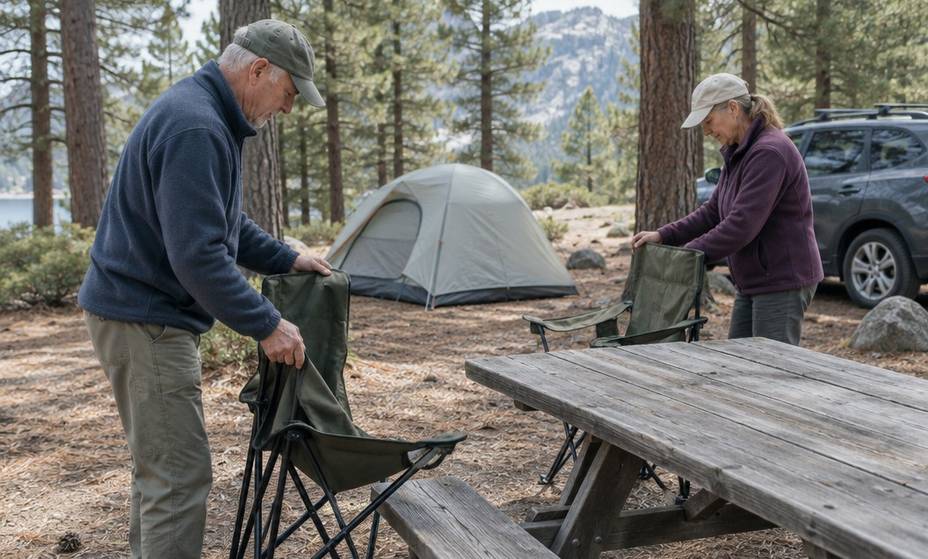
According to NPS, the Senior Pass may provide a 50 percent discount on some amenity fees. Its examples are camping, swimming, boat launch and specialized interpretive services.
USGS describes a discount and tells passholders to inquire locally.
Three conditions from USGS shape what you’ll actually save:
- It applies to the fee for the campsite you physically occupy
- If utility fees are charged separately, there’s no discount
- There’s no discount for group campsites that charge a flat fee
The half price isn’t guaranteed, and flat-fee group campsites get none. NPS words it as “may” and “some”, so ask at the campground first.
Where and how to buy
NPS says physical passes can be purchased or picked up at over 1,000 federal recreation sites.
The NPS pickup locations list shows where.
You can also buy a physical Senior Pass from the USGS Store online. Applicants upload proof of residency and age there, USGS says, such as a US driver’s license, Green Card or US passport.
Online orders carry extra fees. USGS lists an additional $5 document processing fee and a $7.50 handling fee, and its lifetime pass page shows $80.00 plus fees totaling $12.50.
NPS also says an online order may take up to three weeks to be processed and delivered.
A paper application can also be mailed to USGS. NPS says applicants must provide documentation of age and residency or citizenship.
If a park visit will also be your first real hike, read about getting started hiking after 60 and choosing a first trail first.
What to carry at the gate
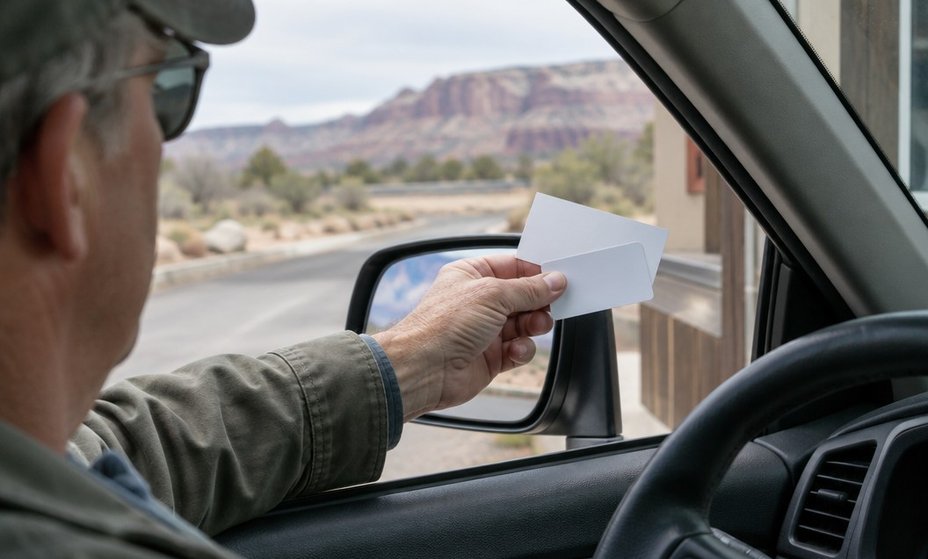
NPS says passholders must show valid photo identification (ID) with each pass.
Carry the pass and a valid photo ID together, and show both at the gate.