
A rail trail is the old railbed, with the tracks taken up and a path laid on top.
A train can’t climb a hill the way a car can. The people who built the line kept that bed as level as they could.
That flat or gently sloping bed is what you walk on today.
A former rail line is flat or gently sloping, so a first walk doesn’t start with a hill.
Why old rail lines are gentle
Trains need long, even grades. According to Trains magazine, grades on main lines are generally 1 percent or less, and grades steeper than about 2.2 percent are rare.
A 1 percent grade rises 1 foot over every 100 feet of path. You’d barely notice it.
The Rails-to-Trails Conservancy is a US nonprofit that has worked on rail trails for 40 years. It describes rail-trails as multipurpose public paths created from former railroad corridors. It adds that these paths are flat or gently sloping.
Its design guidance puts grades under 3 percent as typical for former railroad corridors. The figure comes from its design notes on ideal grades for cyclists.
A rail-with-trail is a different thing. It runs parallel to an active rail line instead of on the old bed.
What the path is made of
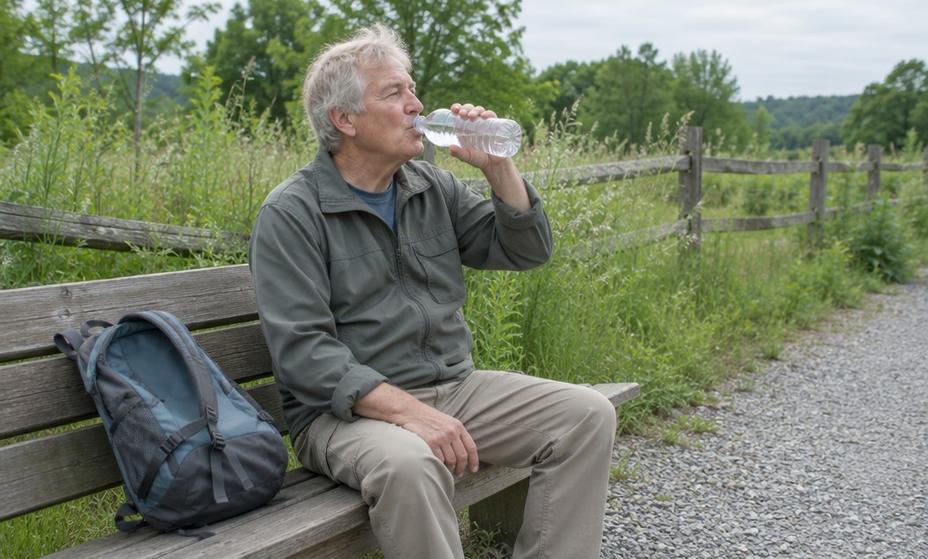
Surfaces vary from one trail to the next.
The Conservancy’s design guidance says most walkers prefer softer surfaces such as rubber, mulch or crushed stone. Asphalt and concrete are the hard surfaces.
The same guidance lists benches, drinking fountains, shaded rest areas and restrooms as valuable amenities for people on foot.
Not every rail trail has benches or restrooms, so check the listing before you go.
Things worth checking on any listing:
- The surface (crushed stone, asphalt or concrete)
- The total length
- Where benches and restrooms sit along the route
How to find a rail trail near you
TrailLink is the Conservancy’s trail-finder site. The Conservancy counts 2,423 rail trails covering 25,934 miles, and the page notes the figures are updated periodically.
Here is how to find one:
- Go to traillink.com and use the box that says find a trail by city, state or zip.
- Use the search filters to narrow the list to shorter trails.
- Open the listing and read the surface, length and amenities.
A short trail keeps the first walk short. On a longer one, pick an early turnaround.
TrailLink also has a page for walking trails with a filter search. Every trail it lists is multiuse, so expect cyclists too.
TrailLink gives walkers this advice: consider the trail’s surface, length and distance between amenities.
If no rail trail is close, easy nature walks for beginners are worth a look.
Sharing the path
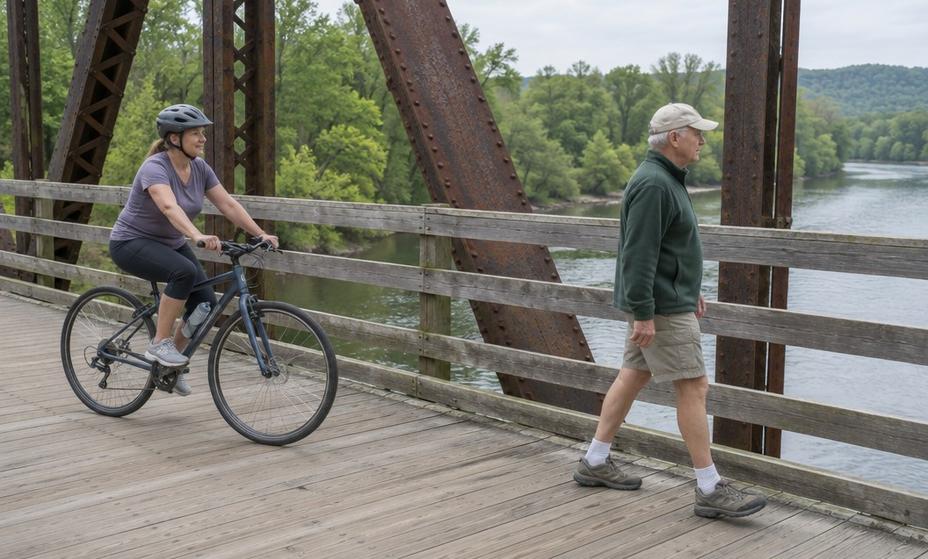
Which uses a trail allows depends on that trail’s own rules. Depending on each trail’s rules, rail trails carry walking, bicycling, wheelchair use and inline skating, so you’ll share the path.
The Conservancy’s rule is simple: move on the right, pass on the left, and be heard. A bell or a call of “On your left!” works.
Stay as far right as is safely possible, and announce yourself before you pass someone. The Conservancy’s trail blog says announcing a pass avoids startling people.
Pedestrians also yield to horses on TrailLink trails, unless a sign says otherwise.
Plan a first out-and-back
An out-and-back walk goes out along the trail and returns the same way. It suits a rail trail well, because the way back has the same gentle grade as the way out.
Start shorter and flatter than you think you need to. Confidence builds faster than fitness.
If you have a health condition, ask your doctor before you build up distance. This is information, not medical advice.
A simple plan for the first outing:
- Choose a short trail from its listing, with a surface you like.
- Pick your turnaround point before you leave. A bench, a road crossing or a mile marker all work.
- Walk out at a pace where you could talk with a friend.
- Turn around at the point you chose, even if you feel good.
- Walk back the way you came.
Choose the turnaround before you start, so the walk ends while you still feel good.
When you want something hillier later, learn how trail difficulty ratings work before you pick a route.
At the turnaround point, stop and take a minute to note how you feel: your breathing, your legs and your energy. If you feel comfortable, add a little distance next time. If you feel tired, walk the same distance again.