
The first time I went to rent a kayak, the outfitter asked: “Sit-on-top or sit-inside?” I had no idea what that meant or which to choose. The staff member showed me both types, and that quick explanation made the decision much easier.
This is the fundamental choice every kayaker faces, whether renting for an afternoon or eventually buying. Understanding the difference helps you make smart choices for your next water adventure. Both types work well for beginners.
Understanding the Two Main Kayak Types
Sit-on-top kayaks position you on a molded seat on top of the hull. Your legs rest in front of you on the kayak’s surface with no interior compartment.
Sit-inside kayaks feature a cockpit opening where you sit with the kayak hull surrounding your lower body. You slide your legs under the front deck.
Most rental facilities stock both styles and charge similar rates, typically $25 to $50 for a half-day rental. When you visit a rental facility, ask to see them side by side.
Sit-On-Top Kayaks: What I Learned
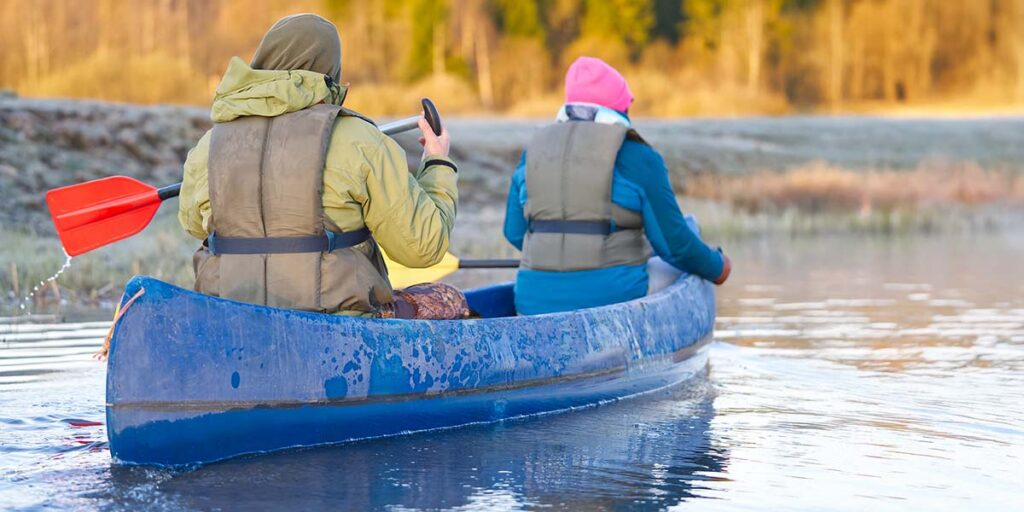
My first rental was a sit-on-top model, which offered several beginner-friendly advantages.
Easy Entry and Exit
You simply sit down and swing your legs over the sides. No squeezing into tight spaces. During my first outing, I got in and out multiple times without difficulty. For people with limited flexibility or balance issues, this ease of access makes a significant difference.
If you tip over, getting back onto a sit-on-top is considerably easier. You can pull yourself up from the water without special techniques.
Self-Draining Design
Small scupper holes throughout the hull allow water to drain automatically. When waves splash over the sides, water flows right back out. I was surprised by how much water splashed on during normal paddling, but it drained immediately.
This design means sit-on-tops cannot sink. Even if completely swamped, they remain buoyant.
Comfort and Movement
You can stretch, adjust your position, or shift around freely. The open design works well for warm weather paddling. The cooling splash feels refreshing. You will get wet, but in summer this is usually welcome.
When to Choose Sit-On-Top
For renting: First time kayaking, warm weather, shorter rentals (one to two hours), anyone with flexibility concerns.
For buying: Primarily paddling in warm weather on calm waters like small lakes. These excel for casual recreation and fishing.
Considerations
You’ll be more exposed to sun, wind, and splash. Wear sunscreen and dress for getting wet. Limited dry storage, though rental facilities often provide dry bags. The wider hull makes them slower than sit-inside models.
Sit-Inside Kayaks: Planning to Try Next
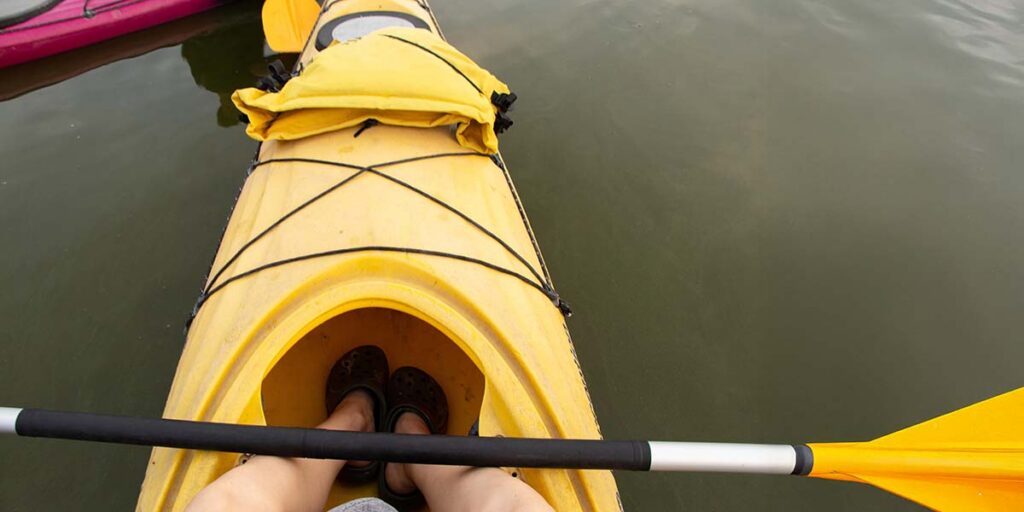
I haven’t rented a sit-inside yet, but I plan to on my next outing. Here’s what makes them different.
Weather Protection
The cockpit provides shelter from wind and spray. Your legs stay drier because they’re protected under the front deck. This becomes valuable in cool weather or longer sessions, especially during hour two or three.
Gear Storage and Performance
Sealed storage hatches keep belongings completely dry. If you’re bringing a camera or valuables, this protected storage is useful.
The narrower hull design moves through water more efficiently. You paddle straight more easily with less effort. Rental staff say beginners often upgrade to sit-inside on their second rental because of this improved efficiency.
When to Choose Sit-Inside
For renting: Second kayaking experience, cool or windy weather, longer rentals (three or more hours), bringing valuables.
For buying: Planning to paddle in varied weather throughout spring and fall. These suit longer trips where efficiency matters.
Considerations
Entering requires reasonable flexibility to slide your legs under the deck. The enclosed feeling takes getting used to. If you capsize, you need to push yourself out underwater and either swim to shore or learn re-entry techniques.
Making Your Decision: Key Questions
For Your Next Rental
First time kayaking? Choose sit-on-top for a more forgiving experience. Already kayaked once? Try sit-inside to compare.
What’s the weather? Hot days favor sit-on-tops. Cool or windy days favor sit-inside kayaks.
How long? One to two hours, either works. Three or more hours, sit-inside efficiency reduces fatigue.
Bringing valuables? Sit-inside offers better dry storage.
For Future Purchase
Where will you paddle? Small lakes work with either type. Larger lakes and bays benefit from sit-inside weather protection.
Local climate? Year-round warm makes sit-on-tops comfortable. Four-season climates benefit from sit-inside kayaks.
How often? Rent multiple times first to confirm regular use. Once monthly might be better served by continued rentals. Weekly paddling makes purchase sensible.
The Rental-Before-Buying Strategy
I’m renting multiple times before considering purchase. This teaches you what you actually prefer without financial commitment.
Start with a sit-on-top for your first outing to build confidence. Try a sit-inside for your second rental to compare. Ask rental staff questions because they observe hundreds of beginners and know common issues.
When Renting Makes More Sense
Continued renting works if you kayak only a few times each summer, lack storage space, or like trying different locations.
Renting at $35 per outing, six times yearly, costs $210 annually. Purchasing costs $500 kayak plus $80 paddle plus $60 PFD plus rack, totaling $800 upfront. Break-even occurs around three years with regular use.
Find kayak rentals near you through Paddling.com’s rental directory, or check with the American Canoe Association for beginner courses that include equipment trials.
Beyond the Basic Choice
Shorter kayaks (8 to 10 feet) are easier to maneuver and transport. Wider kayaks (28 inches or more) feel more stable. Request “recreational” or “beginner” models when renting because these prioritize stability.
Quality beginner kayaks cost $300 to $700. Add $40 to $100 for a paddle and $50 to $80 for a PFD. REI’s Used Gear section frequently lists quality beginner kayaks at significant discounts. Used kayaks often provide excellent value for first-timers.
My Recommendation
First rental: Choose sit-on-top if nervous or the weather is hot. Choose sit-inside if you want better efficiency.
Second rental: Try the other type to compare directly.
Before purchasing: Rent each type twice in different conditions. Join local paddling groups where members let newcomers try their kayaks. Confirm you’ll use a kayak regularly before spending several hundred dollars.
Getting on the water matters more than having the perfect kayak. Start with rentals, learn what you enjoy, and let experience guide decisions.
Before your first rental, read basic kayaking safety guidelines to understand proper techniques. Start with calm, protected waters until you develop fundamental skills. The benefits of regular kayaking make it worth exploring, and simple preparation exercises help you feel confident on the water.