
If you’re new to kayak camping, you’ll find it shares a lot with traditional camping. The main difference is that your kayak handles the weight.
That extra carrying room means you can bring slightly heavier but more reliable gear, including a camp stove for hot meals and beverages in the field.
Why White Gas Stoves Work Well for Kayak Camping
White gas stoves offer a good balance of reliability, simplicity, and performance for beginners. They’re compact enough to fit in your kayak’s storage compartments and straightforward enough to use without much practice.
Few moving parts means less to go wrong at the campsite.
The simple design also makes field repairs possible. Unlike more complex cooking systems, white gas stoves can often be fixed on the spot with basic tools.
Brands like MSR, Coleman, and Eastern Mountain Sports make reliable white gas stoves built for outdoor conditions.
Understanding Fuel: Accessible and Affordable
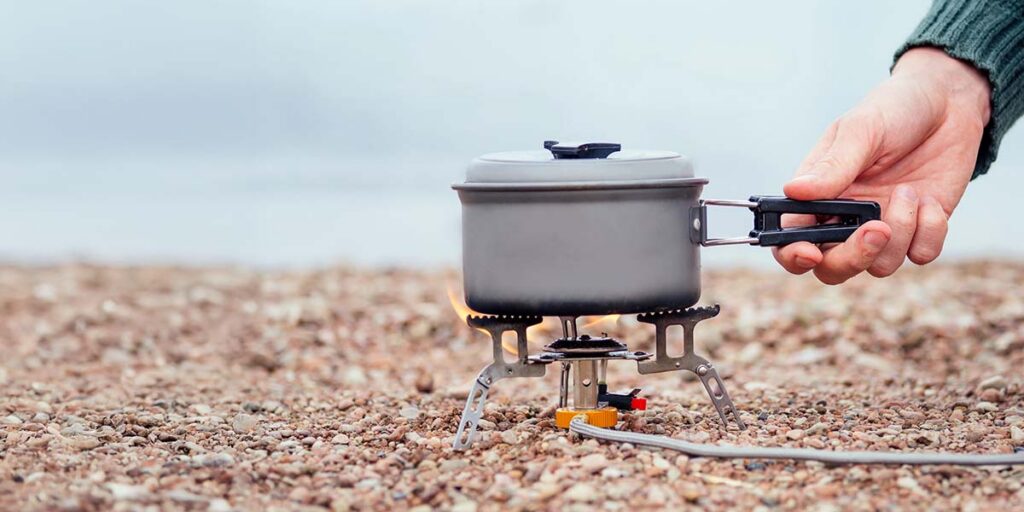
White gas is sold at outdoor retailers like REI and EMS, and at general merchandise stores like Walmart. You won’t have to search for it before a trip.
You’ll find it in two forms:
- Coleman-branded fuel, typically sold in one-gallon containers
- Generic white gas, which works just as well and costs considerably less
Generic white gas performs just as reliably as branded versions but costs considerably less. It’s the practical pick for budget-conscious campers.
This wide availability makes white gas stoves a natural starting point for beginners who don’t want to deal with specialized fuel canisters.
The Advantage of Simple Repairs
Most white gas stoves contain just five components: a priming cup, fuel jet, burner, fuel line, and pump.
The MSR Whisperlite is a good example of how serviceable these stoves are in the field. Each part can be replaced individually, even miles from the trailhead.
You can fix most problems with the multi-tool that ships with the stove.
The construction uses stainless steel, aluminum, and brass, and it holds up well over years of regular use. A few thumb screws hold everything together.
Simple Maintenance: The Shaker Jet System
Modern white gas stoves include a self-cleaning feature that makes maintenance easy for first-time users.
Here’s how it works:
- A small weighted pin sits inside the fuel line and moves freely.
- When you pick up the stove and shake it, the pin rattles back and forth.
- That movement clears soot and fuel deposits from the burner and fuel line, preventing clogs.
Regular maintenance is usually just shaking the stove until you hear the rattle.
For occasional fuel line clogs, you unscrew the fuel line with the included multi-tool and snake the braided cable through it a few times. No technical expertise required.
What You’ll Need to Purchase Separately
White gas stoves come with most of what you need, but a couple of additions are worth picking up before your first trip.
- An aluminum fuel bottle attaches to the pump and holds your white gas supply. These come in various sizes to match your trip length, and they’re sold separately.
- A plastic base or U-shaped stand designed for beach camping prevents the stove from tipping or sinking into sand. The clips create a stable footprint on uneven or soft surfaces.
Performance Considerations
White gas stoves heat up quickly and boil water efficiently.
Heat control at low settings takes a little practice.
High heat: reliable. Simmering: less precise.
One thing that surprises first-time users: the noise.
Surprisingly loud.
Despite its name, the MSR Whisperlite emits a high-pitched sound similar to a small jet engine once the priming cup heats up. It doesn’t affect cooking performance, but it’s worth knowing before your first morning at camp.
The whole unit packs into a bag roughly the size of a child’s winter hat, easy to fit in a day hatch compartment.
Budget-Friendly Options for Beginners
Quality white gas stoves are affordable, which makes them accessible for anyone starting their kayak camping.
The MSR Whisperlite gets consistently positive reviews from kayak campers for its reliability, durability, heat output, and easy maintenance. It’s a purchase that should last many camping seasons.
Getting Started with Your Camp Stove
White gas stoves are forgiving for beginners. Simple design, widely available fuel, easy maintenance, and field repairability add up to a stove that works well while you’re still developing outdoor cooking skills.
Start with shorter overnight trips to get comfortable with setup and operation.
Practice lighting your stove at home first, so you’re not figuring it out for the first time at the campsite.
Good gear supports the experience. A reliable white gas stove will carry you a long way as you build your skills and your confidence on the water.