
You’ve probably noticed that standard hiking and bird watching don’t mix well: your pace is too fast, your hands are full, and you’re missing most of the action.
The trick isn’t buying expensive gear or becoming an expert overnight. It’s adopting a few simple habits that transform your hikes into genuine birding opportunities.
Once you know where to look and what to listen for, you’ll spot species you’ve walked past dozens of times.
Start With a Field Guide You’ll Actually Carry
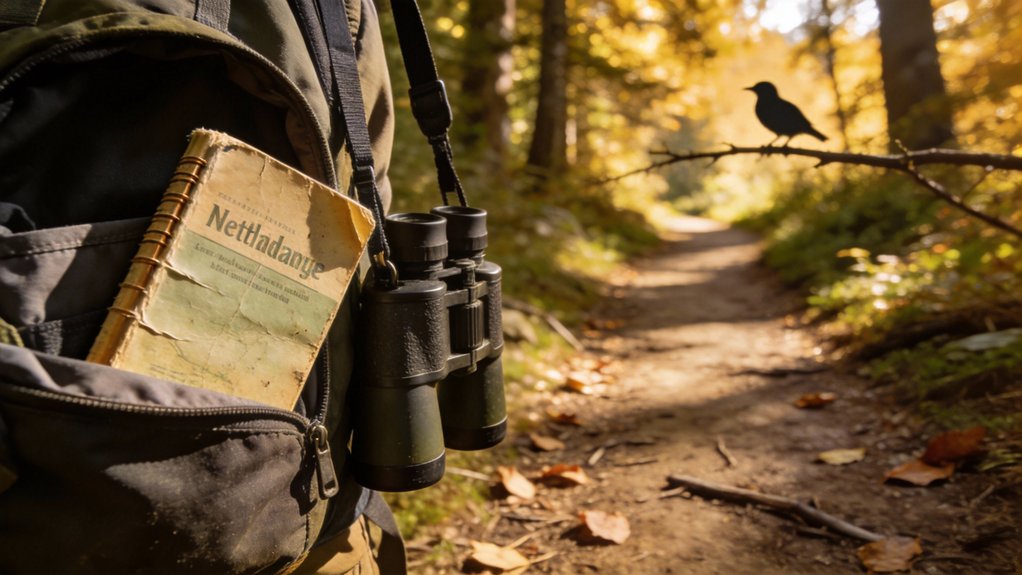
The foundation of enjoyable bird watching starts with one simple choice: pick a field guide you’ll genuinely use. Compact, lightweight guides fit easily in your backpack or pocket, encouraging frequent reference during hikes.
Look for field guide features like color-coded illustrations or photographs that enable quick bird identification tips in the field. Digital apps like Merlin BirdID offer real-time identification without added weight.
Select guides covering your specific hiking region to match local species. Choose references providing concise details about size, migration patterns, and habitats.
You’ll actually carry what fits your needs and hiking style.
Pick Binoculars That Won’t Tire Your Neck
Since you’ll be looking through binoculars for hours on the trail, weight matters more than you’d think. Choose models under 1.5 pounds to prevent neck strain.
Lightweight binoculars under 1.5 pounds prevent neck strain during extended trail use.
Look for ergonomic design features like padded neck straps or harness systems that spread weight across your shoulders instead of concentrating pressure on your neck.
A wide field of view, at least 300 feet at 1000 yards, lets you spot birds without constantly moving your head around.
Adjustable eyecups and comfortable grips matter too.
Finally, grab waterproof, fog-proof binoculars. They’ll handle whatever weather you encounter while hiking, keeping your view clear all day long.
Embrace Slower Hiking to Spot More Birds
Now that you’ve got the right binoculars ready, it’s time to change how you hike.
Slowing down transforms your trail experience completely. You’ll notice bird behavior patterns you’d otherwise miss.
Hiking mindfulness develops naturally when you reduce your pace and pause frequently.
- Walk at half your normal speed to catch subtle sounds and movements
- Stop every 10-15 minutes to observe your surroundings and listen carefully
- Visit wetlands or wooded areas where diverse bird populations concentrate
- Use identification apps during quiet moments to confirm species sightings
You’re not rushing anymore.
Remember that hiking with others enhances both safety and the enjoyment of spotting birds together.
You’re genuinely connecting with nature’s rhythm and revealing the birds hidden around you.
Move Quietly and Listen for Bird Calls

While your slower pace gives you time to observe, moving quietly multiplies what you’ll actually see and hear.
Soft footsteps preserve bird behavior, keeping species in their natural routines instead of fleeing. You’ll notice subtle movements and feeding patterns you’d otherwise miss.
Pay close attention to sound recognition: learning regional bird calls transforms your experience completely. You can identify species hiding in dense foliage by their vocalizations alone.
Combine visual observation with active listening. This dual approach opens up freedom to explore without disrupting wildlife, revealing birds that remain invisible to louder hikers.
Wake Up Early: Most Birds Sing at Dawn
To catch birds at their most active and vocal, you’ll want to hit the trail right after sunrise.
Between 5 AM and 9 AM, you’re witnessing the dawn chorus, nature’s most spectacular bird symphony.
Early risers experience peak activity when birds sing to establish territory and attract mates.
Here’s why this timing matters:
- Birds vocalize most intensely during these hours, making identification easier.
- Soft morning light improves visibility and photography opportunities.
- Fewer hikers mean less disturbance to wildlife.
- You’ll observe unique behaviors unavailable later in the day.
Start your hikes early.
You’ll reclaim your freedom to experience nature undisturbed.
Learn Common Bird Calls Before Your Hike
Since you can’t always see birds hiding in dense foliage, learning their calls beforehand gives you a real advantage on the trail.
Download apps like Merlin Bird ID or Audubon Bird Guide to access audio samples of local species.
Spend time listening to distinctive calls, the Eastern Whip-poor-will’s clear whistle or the American Robin’s melodic song, until you recognize them instantly.
Immerse yourself in distinctive bird calls—the Eastern Whip-poor-will’s clear whistle, the American Robin’s melodic song—until recognition becomes instant.
Practice auditory learning in your backyard or on neighborhood walks.
Join online birding communities or local workshops where experienced birders share call-identification tips.
This bird call recognition skill transforms your hiking experience, letting you spot species you’d otherwise miss completely.
Use Hiking Poles to Free Your Hands for Binoculars
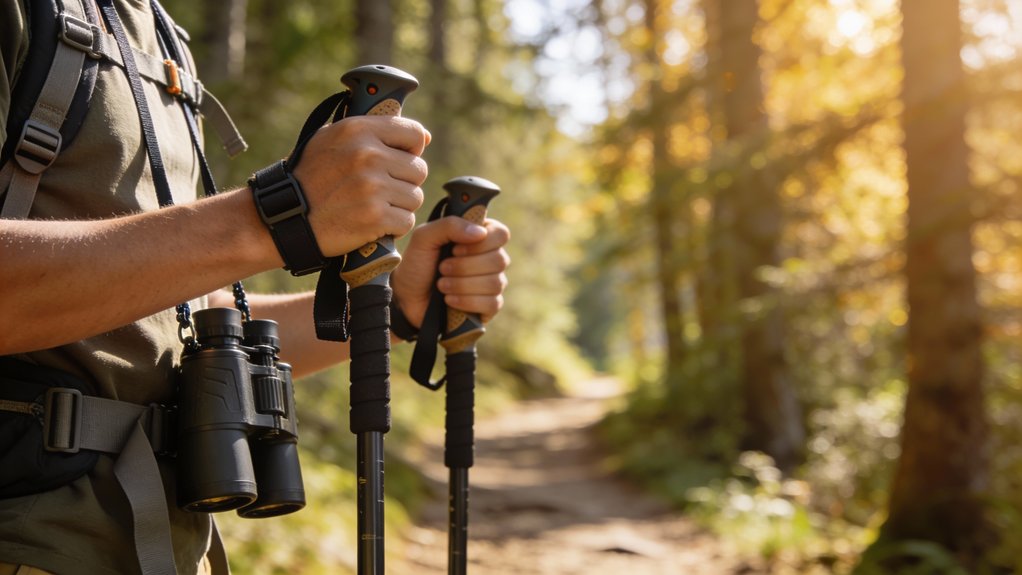
One key advantage of hiking poles is that they’ll keep your hands free for binoculars. You can tuck poles under your arm while scanning for birds. This approach enhances your birdwatching techniques considerably.
- Maintain better balance on steep terrain without dropping your binoculars
- Pause safely mid-slope to observe bird activity uninterrupted
- Adjust poles to comfortable height for easier spotting
- Keep both hands available for quick binocular adjustments
Hiking pole benefits include providing stability on uneven ground. You’ll focus on identifying species rather than worrying about footing.
Proper pole height enhances comfort and control throughout your hike. This simple adjustment transforms your birdwatching experience into something more engaging and enjoyable.
Download the Merlin Bird ID App for Real-Time ID
Your smartphone becomes a powerful birding tool when you download the Merlin Bird ID app.
The app features an intuitive user interface that lets you input size, color, and location details to match birds instantly. You’ll access over 7,500 species in its extensive database, covering North America and beyond.
The app includes audio recordings of bird songs and calls, helping you identify species by sound alone. Regular updates keep information current and relevant.
Whether you’re a beginner or experienced birder, this tool transforms your hike into an educational birding adventure without slowing you down.
Focus on Trails Near Water or Dense Forest
The best bird-watching trails share two key features: water and dense forest.
You’ll find the most birds where these habitats intersect, giving you freedom to explore diverse ecosystems.
Here’s what makes these locations ideal:
- Water trails attract waterfowl and shorebirds year-round, offering reliable viewing opportunities.
- Forest habitats shelter songbirds and woodpeckers that hide in thick foliage.
- Spring and fall migrations concentrate bird activity along these corridors as species rest and feed.
- Wetland plants like cattails create natural nesting and feeding grounds.
Stay patient and quiet on forested trails.
Dense foliage conceals birds effectively, so slow movement rewards your effort with better sightings.
Connect With Local Birding and Hiking Groups
After you’ve picked your trail near water or forest, connecting with local birding groups‘ll take your experience to the next level.
These local groups organize regular outings combining hiking with birdwatching, teaching you spotting techniques and bird identification in real time.
You’ll learn from knowledgeable guides who understand regional species and habitats deeply.
Joining community events like bird counts or conservation initiatives builds friendships with fellow enthusiasts while supporting local avian populations.
Many clubs offer workshops on bird behavior and photography.
You’ll gain practical skills, meaningful connections, and shared adventures that make your outdoor time richer and more rewarding.