
Most hiking injuries don’t happen suddenly. Your feet take a beating on uneven terrain, your ankles twist on hidden rocks, and muscle soreness builds quietly over miles.
The good news: most of these are preventable before they start.
The right footwear, a few targeted exercises, and some attention to technique make the real difference.
Gear Up Right: Choose Shoes and Socks That Protect Your Feet
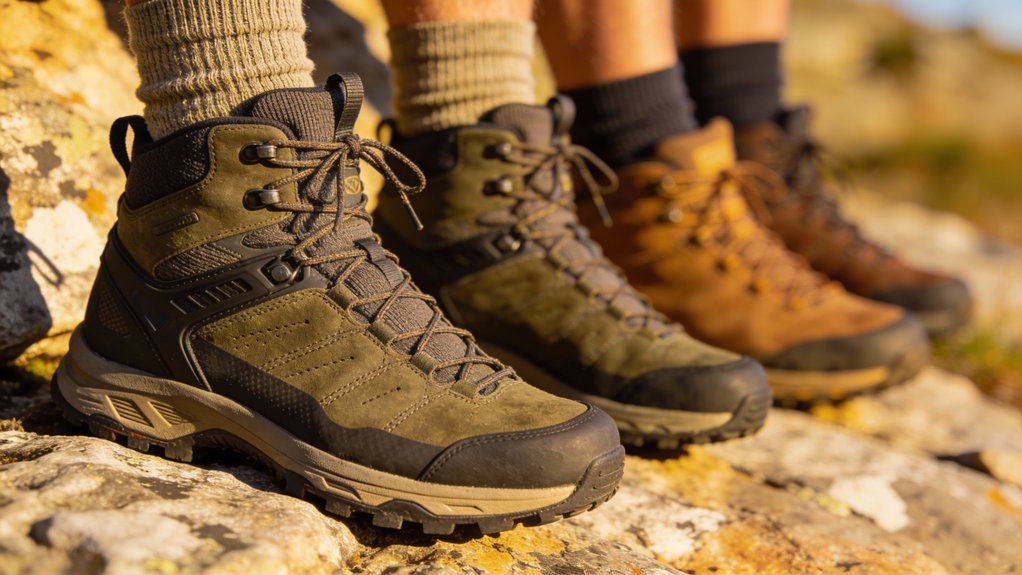
Your feet are your foundation on the trail. Getting footwear right matters more than almost any other preparation.
Start with hiking shoes or boots that have solid arch support. That combination prevents blisters and plantar fasciitis before they start.
Pair them with moisture-wicking socks, such as merino wool, which keeps friction down and feet dry throughout a hike. Break in new boots at home before taking them on longer trails.
The right footwear prevents more injuries than any other gear choice.
Good ankle support is what to look for on rough ground specifically. Understanding the differences between boots versus shoes helps you pick the right option for your terrain and conditions.
Replace worn shoes regularly so cushioning and shock absorption stay effective.
Strengthen Your Ankles and Knees to Prevent Sprains
Strong ankles and knees matter just as much as the right footwear when it comes to staying injury-free.
Neither works without the other.
Ankle stability comes from targeted exercises like Figure 8 hops and single-leg stands, which sharpen your balance on uneven ground. Bulgarian Split Squats strengthen the front leg and build knee strength, protecting against ligament injuries.
Trekking poles reduce impact during descents, absorbing shock that would otherwise stress your joints.
Start with shorter hikes and increase intensity gradually as your muscles adapt.
A progressive training approach builds hiking stamina safely over time, and it’s the most reliable way to avoid overuse injuries on the path to harder terrain.
Perfect Your Footwork and Trekking Pole Technique
Ankle sprains and knee injuries often trace back to foot placement.
Where you step matters as much as how you step.
Plant your feet deliberately on stable ground, distributing weight evenly across each step.
Hold poles at a ninety-degree elbow angle, planting them slightly ahead of your body.
That position absorbs shock and reduces stress on your knees.
Upright posture while using poles also improves breathing and endurance over a long day.
Foot placement and solid pole technique together create the foundation for comfortable hiking on any terrain.
Build Your Pre-Hike Stretching Routine
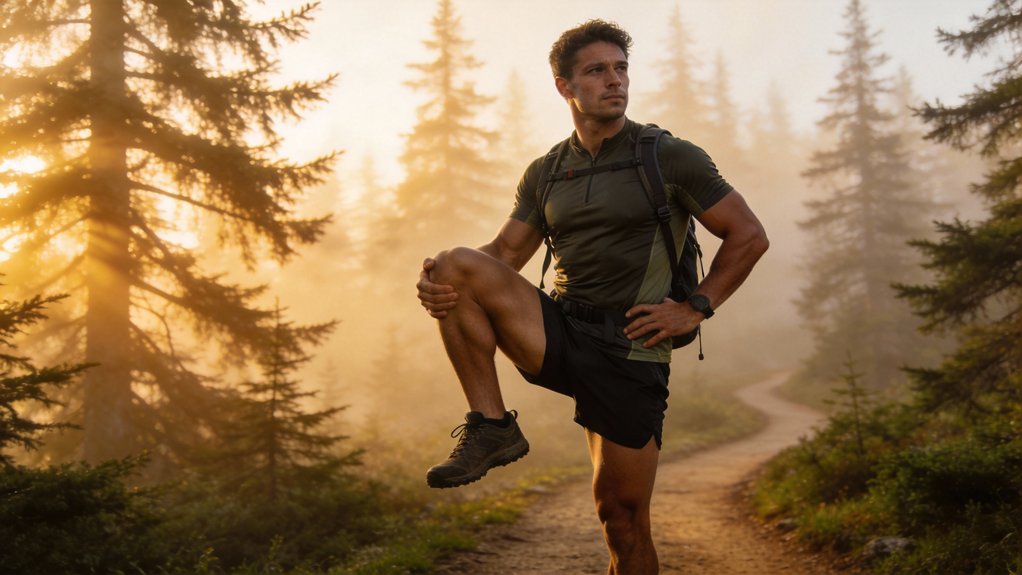
Preparing your muscles before you start is the other half of staying injury-free.
Dedicate 10 to 15 minutes to dynamic stretches like leg swings and arm circles for flexibility. Target your calves and hamstrings especially: tightness there is a common cause of plantar fasciitis and knee pain.
A few more moves worth adding:
- Short Foot Exercise: strengthens arch muscles and helps prevent foot injuries
- Ankle circles and toe raises: boost ankle stability on uneven ground
Ten to fifteen minutes of preparation here saves days of recovery later.
Spot the Red Flags Before You Get Injured
Your body will signal problems before they become serious.
The question is whether you’re paying attention.
Sharp or lingering pain demands attention right away. Numbness or tingling in your feet signals nerve compression that won’t resolve on its own.
Unexplained swelling in joints or muscles indicates a sprain or strain that warrants professional evaluation.
Hot spots on your feet precede blisters, so address them before they worsen.
Excessive fatigue during a hike is often an overuse injury developing in real time, not just tiredness.
Slow down, rest, and seek help when these signs appear. Recognizing them early is what keeps a manageable problem from turning into a longer recovery.