
You’ve probably noticed that what works on one trail completely fails on another. Temperature swings, sudden rain, intense sun: they’ll all test your gear choices.
The difference between a miserable hike and an enjoyable one often comes down to one thing: wearing the right combination of clothes. So how do you figure out exactly what that combination should be?
Understanding Trail Conditions and Outfit Choices
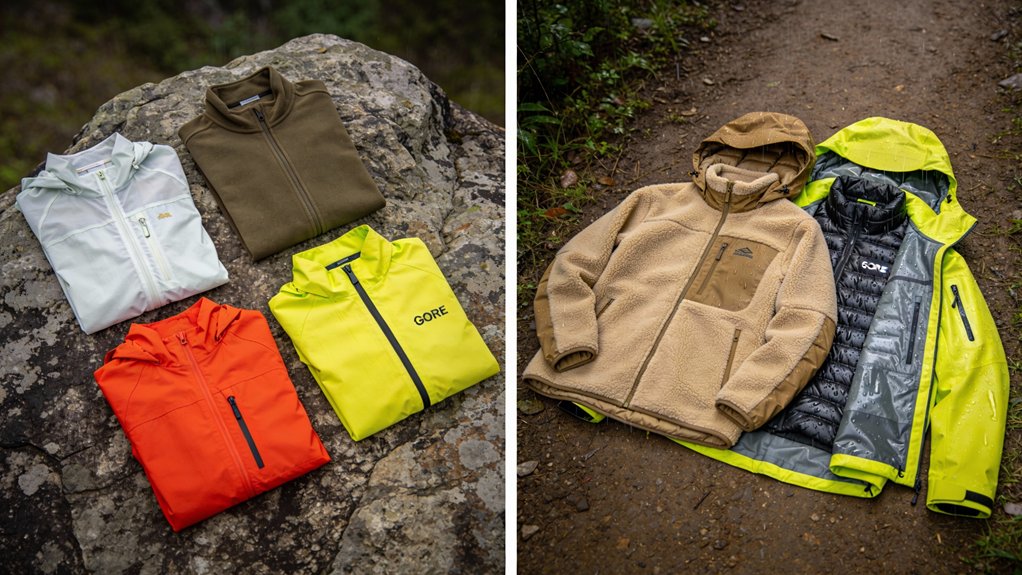
Before you head out on the trail, you’ll want to match your clothing to what the environment will throw at you. Sunny trails demand lightweight, breathable fabrics with UPF 50+ protection for trail safety.
Rainy paths require water-repellent, moisture-wicking materials to keep you dry and comfortable. Windy conditions need windproof outer layers that prevent heat loss.
Higher elevations call for layering strategies to handle cooler temperatures. Your environmental awareness matters too: choosing durable fabrics like reinforced nylon protects both you and the trail.
Consider sustainable options like organic cotton or recycled polyester. Match your gear to specific conditions, and you’ll stay protected throughout your hike. Proper footwear is essential for navigating different trail conditions safely and comfortably.
Pick the Right Hiking Fabrics: Moisture-Wicking and Breathable Materials
Once you’ve matched your overall outfit to trail conditions, you’ll want to focus on the actual fabrics that make up your gear.
Moisture-wicking hiking fabric types like synthetic blends and merino wool pull sweat away from your skin, keeping you dry and comfortable.
Moisture-wicking fabrics like merino wool and synthetic blends keep you dry by pulling sweat away from your skin during hikes.
Breathable materials such as bamboo and polyester boost air circulation, preventing overheating on warm days.
You’ll also benefit from fabrics with UPF ratings for sun protection.
Durable reinforced nylon resists abrasions on rugged terrain.
Consider sustainable options like organic cotton or recycled polyester.
These choices deliver performance while respecting the environment you’re exploring.
Layering for Any Temperature
Since temperatures shift dramatically during a hike, layering’s your best strategy for staying comfortable.
Your layering techniques should include three essential components working together for effective temperature management:
- Moisture-wicking base layer pulls sweat away from your skin
- Insulating middle layer traps heat without bulk
- Waterproof outer layer shields you from wind and rain
- Synthetic buffs and hats protect exposed areas
- Gloves regulate hand temperature during cool conditions
Dress as if it’s 10 degrees warmer than actual conditions.
This prevents overheating during physical exertion. You’ll adjust layers as you warm up or cool down, maintaining comfort throughout your hike without restriction.
Sun Protection: Ultralight Gear for Sunny Trails
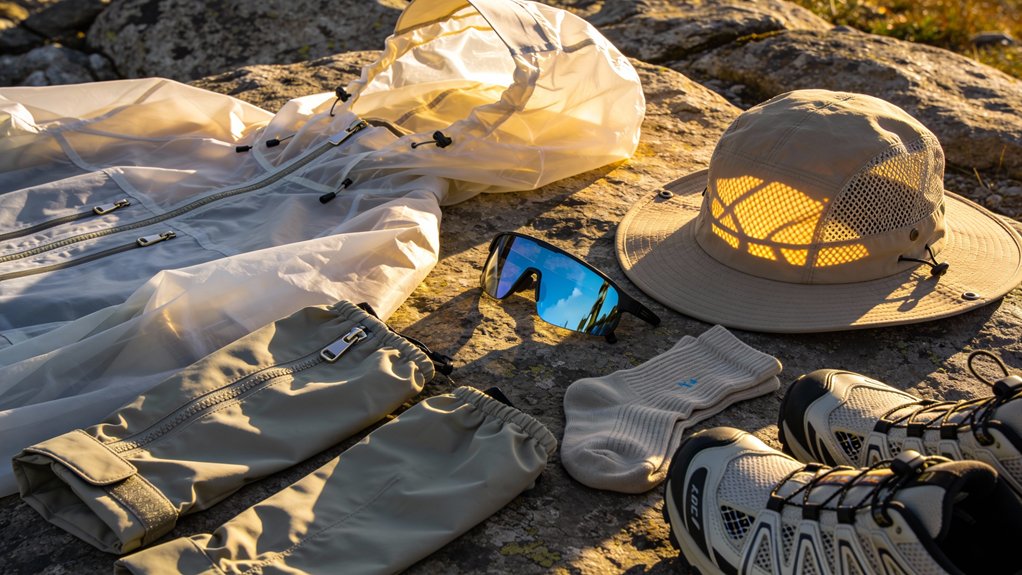
Sun exposure on the trail demands gear that protects without weighing you down. Choose lightweight polyester or nylon fabrics with UPF 50+ ratings for reliable sun safety.
Modern fabric technology keeps you cool while blocking harmful rays. Wear loose-fitting garments that let air flow freely, preventing overheating during long hikes.
Add a wide-brimmed hat to shield your face and neck from UV damage. Don’t skip UV-protective sunglasses: they reduce glare and protect your eyes.
Finally, grab moisture-wicking socks made from synthetic or wool blends. They’ll keep your feet dry and comfortable all day long.
Rain-Ready Layering Essentials
While sunny trails demand lightweight UV protection, wet conditions call for a completely different strategy.
You’ll need proper rain gear and layering techniques to stay comfortable when moisture threatens your hike.
Start with a moisture-wicking synthetic base layer. Layer a lightweight fleece jacket on top for insulation. Add a waterproof rain jacket with breathable fabric, adjustable hood, and taped seams.
Wear waterproof rain pants over your hiking pants for leg protection. Don’t neglect your feet: quick-drying wool or synthetic socks paired with waterproof hiking boots prevent blisters.
Your rain protection priorities:
- Synthetic base layer
- Lightweight fleece jacket
- Breathable waterproof rain jacket
- Waterproof rain pants
- Quick-drying socks and waterproof boots
Cold Weather Hiking: Insulation Without the Bulk
When temperatures drop, you’ve got to think strategically about layering to stay warm without feeling weighed down.
Start with a moisture-wicking base layer, merino wool or synthetic blends work best, to keep sweat off your skin.
Add a lightweight fleece or insulated jacket as your mid-layer for heat retention.
Top it off with a windproof, waterproof shell jacket.
These layering techniques let you shed or add pieces as needed.
Don’t forget insulating materials like gloves, wool hats, and synthetic buffs to protect your extremities.
This approach keeps you comfortable and mobile throughout your adventure.
Hiking Footwear for Different Trail Conditions
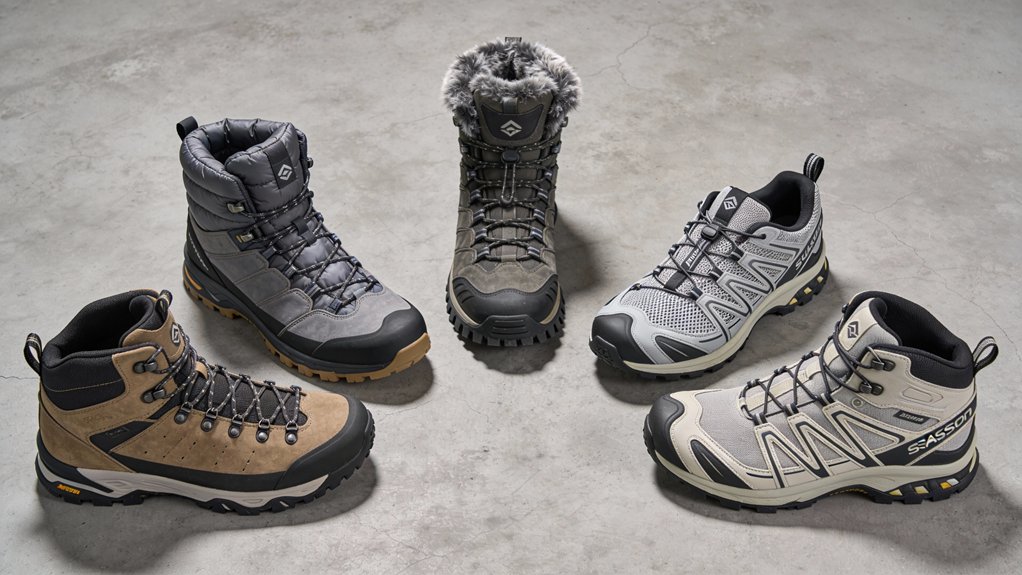
Your feet are the foundation of every hike, so choosing the right footwear makes a real difference in comfort and safety.
Different trails demand different gear. Here’s what works best:
- Rocky, uneven trails: lightweight boots like Merrell Moab 2 or Lowa Renegade with ankle support and durable outsoles
- Wet conditions: waterproof boots with Gore-Tex membranes that repel water while letting feet breathe
- Well-maintained paths: trail running shoes for lightweight comfort and traction
- Hot weather: breathable mesh uppers or sandals with secure straps
- Icy surfaces: microspikes added for enhanced grip
Match your footwear materials and traction features to terrain conditions. Proper footwear also supports the cardiovascular benefits of hiking by allowing you to maintain a steady, comfortable pace throughout your journey.
You’ll hike smarter, safer, and more comfortably.
Essential Trail Accessories for Every Hike
Beyond proper footwear, you’ll want to gear up with accessories that’ll make your hike more comfortable and safer.
A moisture-wicking backpack handles gear organization while keeping you dry. UV-protective sunglasses shield your eyes from glare and harmful rays.
A moisture-wicking backpack organizes gear while keeping you dry, while UV-protective sunglasses shield your eyes from harmful rays and glare.
Trekking poles reduce joint strain on uneven terrain. A waterproof backpack cover protects your essentials when weather turns unpredictable. Lightweight headbands manage sweat and provide sun protection.
These trail accessories aren’t luxuries: they’re practical tools that enhance your experience.
Pick what matches your conditions and hiking style.
You’ll notice the difference immediately once you’re on the trail.
Quick Reference: Outfit Checklists for Hot, Cold, and Rainy Conditions
Because weather shifts dramatically on the trail, you’ll want outfit checklists for three main conditions: hot, cold, and rainy.
Your hiking gear needs weather adaptability to handle whatever conditions you encounter.
Hot Weather Checklist:
- Synthetic shorts
- UPF 50+ polyester blend tee
- Quick-drying wool blend socks
- Hat and sunglasses
- Lightweight pack
Cold Weather Checklist:
- Moisture-wicking base layer
- Lightweight fleece
- Windproof, waterproof outer layer
- Wool blend hiking socks
- Insulated hat and gloves
Rainy Weather Checklist:
- Hard shell rain jacket
- Moisture-wicking base layers
- Waterproof pants
- Quick-drying socks
- Waterproof pack cover
Layering remains your best strategy regardless of conditions.
You’ll adjust easily as temperatures change throughout your hike.