
Do not run. If a bear follows you, the National Park Service (NPS), the federal agency that runs America’s national parks, says to stop and hold your ground.
Bears are usually trying to avoid you, and a few habits make a close meeting much less likely. Most bears leave when they hear you coming, so noise is your first tool.
Make noise so bears hear you first
According to the NPS, most bears will avoid humans if they hear them coming. Yellowstone National Park suggests periodically yelling “Hey bear!” to alert bears of your presence.
Glacier National Park says bear bells are not adequate or effective. Calling out and clapping at regular intervals work better.
Group size matters too. The NPS notes that groups are usually noisier and smellier than a single person. Glacier reports no attacks on groups of four or more.
Yellowstone reports that since 1970, 91% of the people injured by bears there were hiking alone or with only one partner. If you often walk by yourself, solo hiking safety habits matter more here.
Keep food and trash from becoming a reason to stay
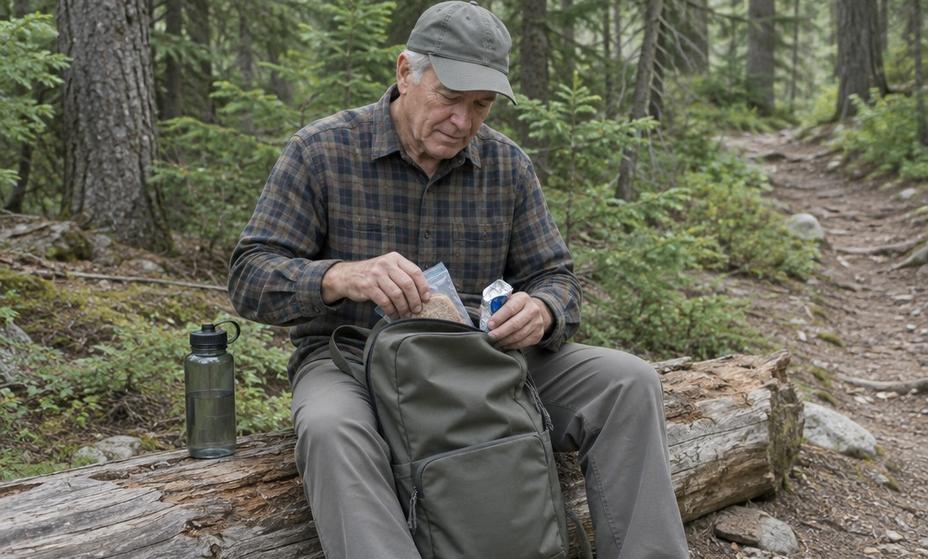
Glacier says never to leave food or garbage unattended, and that includes your backpack or day pack. Secure all food and odorous items, and pack out all garbage.
The Great Smoky Mountains park adds that trash goes in bear-proof containers or comes home with you. Carrying it out is also one of the Leave No Trace principles for hikers.
Once a bear gets a taste of human food, the Smokies say, it loses its natural fear of people.
It may begin approaching them.
The Smokies also report that dogs are involved in most incidents between people and black bears.
How to tell a black bear from a grizzly
Color and size will not settle it. Glacier says size and color are not reliable indicators of species. In the Smokies, the NPS notes that black bears in other regions may appear brown or cinnamon.
Glacier points to body shape instead:
- Black bears have a prominent rump, a straight, dog-like muzzle, pointed ears, and dark claws.
- Grizzly bears have a shoulder hump, a dished face, rounded ears, and long, light-colored claws.
If you see a bear at a distance
Each park sets its own distance, so use the number from the park you are in:
- Yellowstone: keep at least 100 yards (91 meters) from bears at all times and never approach one for a photo.
- Glacier: coming within 100 yards (91 m) of bears or wolves on purpose is prohibited.
- Great Smoky Mountains: approaching within 50 yards (150 feet), or any distance that disturbs or displaces a bear, is illegal.
If a bear has noticed you and is standing still, the NPS says to move away slowly and sideways. If it is standing up, that is usually curiosity, not a threat.
Talk calmly so the bear knows you are a human and not a prey animal. Always leave it an escape route.
If a bear is moving toward you on a trail, Glacier says to get out of its way and let it pass.
Glacier also warns that bears may read direct eye contact as threatening.
If a bear comes closer
The Smokies park says that if a bear changes what it is doing because of you, you are too close. Back away slowly while facing the bear, and never run.
In the Smokies, where the bears are black bears, the park says:
- If it approaches or follows you, change direction.
- If it keeps following, stand your ground.
- If it gets closer, shout and act aggressively to scare it off.
Yellowstone adds that a group should stay together while backing away. The NPS also says not to drop your pack, and that both grizzlies and black bears can climb trees.
Once the bear has retreated, leave the area as quickly as you can without running, per the Interagency Grizzly Bear Committee (IGBC), a group of US federal and state wildlife agencies working on grizzly bears.
If a bear attacks
The NPS gives different advice by species:
- Brown or grizzly bear: leave your pack on and play dead. If the attack persists, fight back vigorously.
- Black bear: do not play dead. Try to escape to a secure place such as a car or building.
The Smokies say that if a black bear attacks and is not after your food, fight back with everything you have.
One exception applies to any species. If a bear stalks you and then attacks, or attacks you in a tent, fight back.
The NPS says this is very rare, but it often means the bear is looking for food and sees you as prey.
Some parks base the advice on why the bear is acting, not on its species.
Yellowstone says to play dead if a bear makes contact, but to fight back against a curious or predatory one. The NPS says recommendations vary from park to park based on local bear behavior.
Bear spray basics
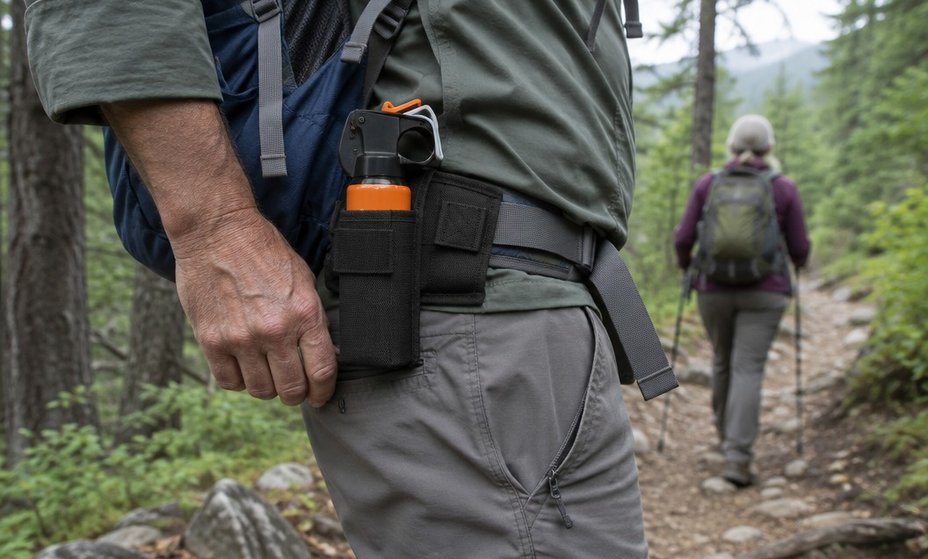
The NPS says bear spray is used defensively to stop an aggressive, charging, or attacking bear. It is not a repellent, so do not apply it to your body or equipment.
Carry bear spray where you can reach it fast. The IGBC says to carry it where you can reach it quickly, such as in a hip or chest holster.
Yellowstone says each person should carry one can and not keep it inside a pack.
The sources give two kinds of number: how far the spray reaches, and how close the bear should be before you spray.
- IGBC: most bear sprays shoot 20 to 30 feet.
- Yellowstone: spray when the bear is 30 to 60 feet away, and keep spraying until it changes direction. Bears can run up to 40 feet per second.
- Great Smoky Mountains: use spray only if necessary and the bear is within 20 yards.
The IGBC says to look for a minimum of 7.9 ounces of product. The can should also carry an EPA registration, from the Environmental Protection Agency, the federal environmental regulator. The IGBC also says to check the expiration date.
The IGBC adds that bear spray works on all bear species in North America.
Glacier says distance, wind, rain, temperature extremes, and shelf life all affect how well it works. Yellowstone warns that a can of bear spray can explode if it reaches 120 degrees Fahrenheit (49 degrees Celsius).
The IGBC also says spray is not a substitute for avoiding bears in the first place.
Before you leave the trailhead
Clip the can to your hip or chest holster where your hand finds it quickly, not in the bottom of your pack. Then check that park’s own bear rules, including whether spray is recommended or allowed there.