
You’ve probably heard that hiking in hot weather just requires drinking more water, but that’s only part of the story. Temperature, humidity, timing, and your body’s actual warning signs all factor into whether you’ll stay safe or end up in real trouble.
There’s a specific strategy to each decision you’ll make before and during your hike.
Check the Weather and Assess Your Real Risk in Heat and Humidity
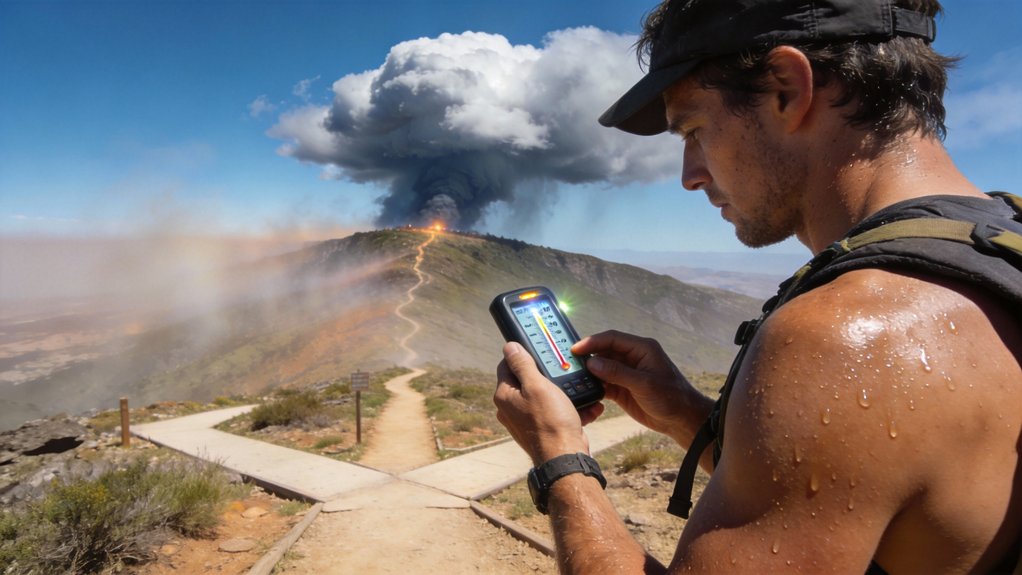
Before you hit the trail, check your local weather forecast to see what temperature and humidity you’re actually facing.
Don’t assume you’ll handle it just fine.
Nearly 100 million Americans dealt with temperature advisories by June 2024, showing how serious heat conditions have become.
High humidity effects are particularly dangerous because they prevent your body from cooling through sweat.
Weather patterns matter equally: humidity can trap heat around you, elevating heat stress risk.
Strenuous hiking in these conditions creates real danger.
Adjust your plans based on what you discover.
Monitor both numbers carefully before committing to any hike.
Decide Right Now: Is It Safe to Hike Today?
So you’ve checked the forecast, now what? Make your call based on real conditions. If temperatures exceed 35°C or humidity’s climbing, postpone your hike.
That’s not weakness; it’s smart heat safety. Assess your fitness honestly and your companions’ too. Consider medical conditions like diabetes or asthma that heat stress worsens.
Early morning or evening hikes dodge peak heat. You’ve got options. Just as kayakers rely on proper equipment to stay safe in their environment, hikers need appropriate gear for hot weather conditions.
Don’t push through dangerous conditions just to stick to plans. Your freedom includes the choice to reschedule.
Check conditions again before leaving. Trust your judgment, if something feels risky, it probably is.
Plan Your Route Around Peak Heat Hours
Once you’ve made the call to hike, your next move is picking the right time and route.
Early morning hikes beat the brutal midday heat that peaks between 10 AM and 4 PM. You’ll gain freedom to explore when temperatures stay manageable and your body doesn’t work overtime.
Early morning hikes beat brutal midday heat, keeping your body from working overtime in peak temperatures.
Seek out shaded trails surrounded by dense trees or rock formations that block direct sunlight. This strategy cuts heat exposure considerably.
Check humidity levels too: high moisture makes even cooler temps feel oppressive.
Shorter distances during extreme heat reduce physical strain and heat-related risks greatly.
Pack the Right Gear: Clothing, Sun Protection, and Hydration
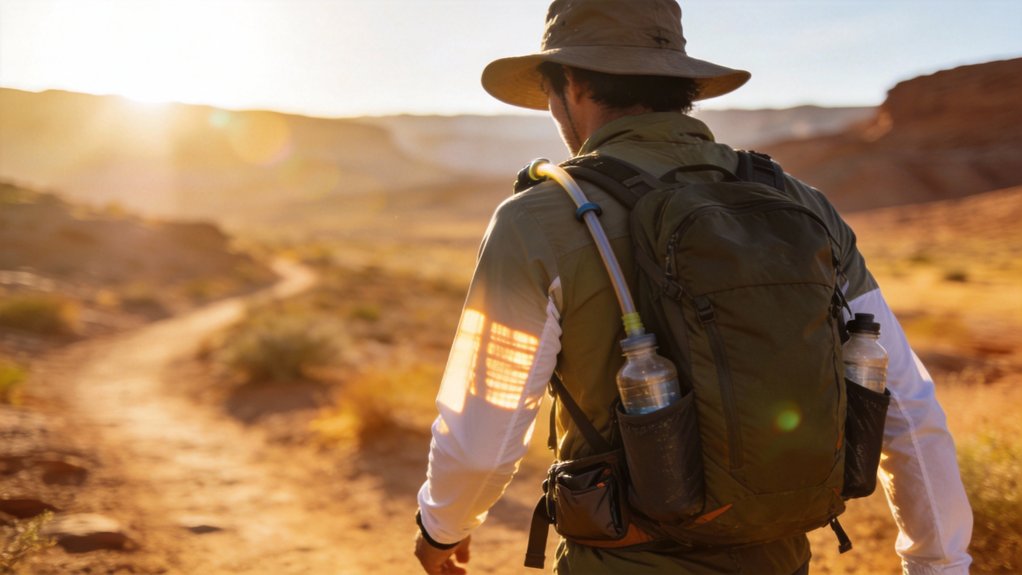
Now that you’ve picked your time and route, gearing up properly makes all the difference in staying safe and comfortable.
Wear lightweight, moisture-wicking clothing materials like long-sleeved shirts and pants that reflect heat and shield your skin. Add a broad-brimmed hat and sunglasses for eye protection.
Apply SPF 15+ sunscreen every two hours, especially after sweating.
Your hydration strategies matter most: carry at least one liter of water per hour of hiking.
Consider electrolyte drinks to replace lost minerals during longer treks.
Pack a soaked bandana or neck buff to regulate your body temperature and keep yourself feeling decent on the trail.
Drink More Than Water: Add Electrolytes for Extended Hikes
While water keeps you hydrated, it doesn’t replace the sodium, potassium, and magnesium your body loses through sweat on longer hikes.
You need smart hydration strategies to stay balanced during extended outdoor activity.
Consider these electrolyte sources:
- Sports drinks formulated with mineral replacements
- Coconut water for natural electrolyte content
- Electrolyte tablets you dissolve in water
- Homemade mixes frozen as invigorating slushies
- Plain water combined with salty snacks
Aim for about one liter per hour during strenuous hikes.
Check your urine color; dark yellow means you need more fluids and electrolytes immediately.
This simple monitoring prevents heat-related illness and keeps you performing at your best. Beyond physical performance, maintaining proper hydration during outdoor hiking contributes to the mental health improvements that make outdoor activities so valuable for overall wellness.
Spot Heat Exhaustion Symptoms Before They Escalate
Heat exhaustion sneaks up quietly, but your body sends clear signals before things get dangerous.
Watch for early signs: a pale face, nausea, vomiting, cool moist skin, and headache.
These symptoms mean your body’s struggling to cool down. Don’t ignore them.
Your body’s cooling system is failing. These warning signs demand immediate action.
Stop immediately and find shade. Drink water or electrolyte drinks to rehydrate. Cool your skin with water.
Recognizing heat exhaustion early prevents progression to heat stroke, which can cause unconsciousness or confusion.
Monitor yourself during hot weather hikes.
Catch these warning signs fast, and you’ll stay safe and in control of your adventure.
Cool Down While Hiking, Not Just During Breaks
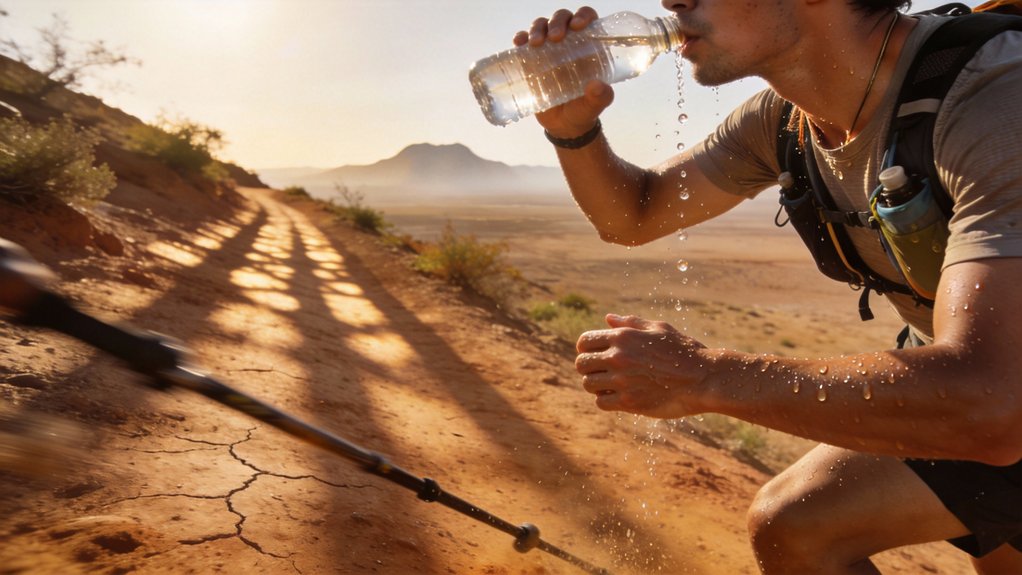
Unlike waiting until you stop to cool down, you can regulate your temperature throughout the entire hike. Implement these cooling techniques and hydration tips to stay comfortable:
- Soak a bandana in cool water and wear it around your neck
- Carry ice cubes in a neck buff for immediate relief
- Use an umbrella or sun parasol to block direct sunlight
- Wet your lightweight, breathable long-sleeved shirts periodically for evaporative cooling
- Access water sources along the trail to dampen your clothing
You’re not locked into waiting for breaks. Continuous cooling keeps your body functioning efficiently.
These strategies prevent your core temperature from climbing dangerously high during extended exertion.
Don’t Forget About Humidity: It Changes Everything
Why does a 75-degree hike feel unbearable while a 95-degree one in dry air feels manageable? Humidity. High humidity levels trap moisture in the air, which dramatically slows your sweat evaporation, your body’s primary cooling mechanism.
When sweat can’t evaporate efficiently, you retain heat instead of shedding it. This humidity effects phenomenon means you’ll experience greater heat stress at lower temperatures than you’d expect. A humid 75 degrees can genuinely feel worse than a dry 95 degrees.
Before heading out, check both temperature and humidity levels. If humidity’s elevated, adjust accordingly: hike earlier, choose shorter routes, or pick another day entirely.
Hike With a Partner and Tell Someone Your Plan
When you’re hiking in hot weather, bring someone along with you. Your hiking partners become your safety net when heat stress hits hard.
Establish solid communication strategies before you head out. Tell someone exactly where you’re going and when you’ll return.
Here’s what you need to do:
- Hike with at least one partner for immediate assistance
- Share your exact route details with a trusted person
- Sign in at trailheads when available for ranger tracking
- Set a specific return time and stick to it
- Check in by phone once you finish your hike
These steps keep you accountable and guarantee help arrives quickly if things go wrong.