
You’re heading out for a short hike, and you’ve probably wondered what actually belongs in your daypack. Water, snacks, and a first aid kit are the obvious starting points, but a few other things matter too.
Navigation, weather protection, and some gear you won’t think about until you’re standing on the trail without it.
Hydration First: Water, Filters, and Backup Purification
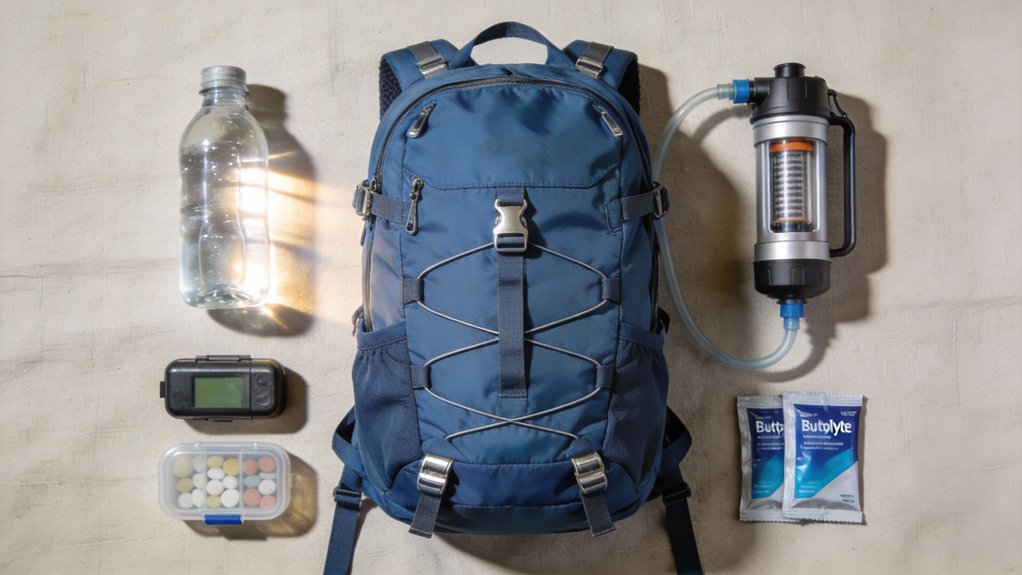
Pack at least two liters of water before you leave the car. A hydration bladder or regular water bottles both work.
Drink about half a liter every hour to stay sharp.
Don’t count on what you carry being enough for the whole trip. Bring a water filter too, something like a Sawyer Squeeze or LifeStraw, so you can refill from streams or ponds if you need to. Water purification tablets in your first aid kit serve as a second backup for uncertain sources.
Pack a little more water than you think you’ll need.
Trails take longer than expected.
Good hydration on the trail matters as much as it does on the water, where dehydration slows your thinking before you notice it.
Pack High-Energy Snacks: Fuel Without Excess Weight
You’ll need around 200 calories per hour of hiking to keep your energy steady and avoid that heavy-legged feeling mid-trail.
Variety helps, and so does keeping the weight down. A few good options:
- Nuts and dried fruits pack a lot of calories in minimal space
- Granola bars are convenient and don’t need refrigeration
- Energy gels are fast fuel without much bulk
- Rice cakes with nut butter travel well and keep you full
Pack more than you think you’ll need. An extra snack costs almost nothing in weight, and you’ll be glad to have it if the trail runs longer than planned.
Staying fueled on the trail also supports the broader health benefits of being active outdoors.
First Aid Basics: Treating Minor Trail Injuries
A compact first aid kit handles most things that happen on a short hike. The essentials:
- Adhesive bandages in a few sizes
- Antiseptic wipes
- Moleskin for blisters
- Ibuprofen or acetaminophen for pain
- A tick removal tool if you’re hiking in wooded areas
- Any personal medications you take, including allergy pills or an inhaler
A well-stocked kit weighs almost nothing and covers most trail situations.
Keep it in its own compartment so you can find it quickly.
Dress in Layers: Adapting to Changing Trail Conditions
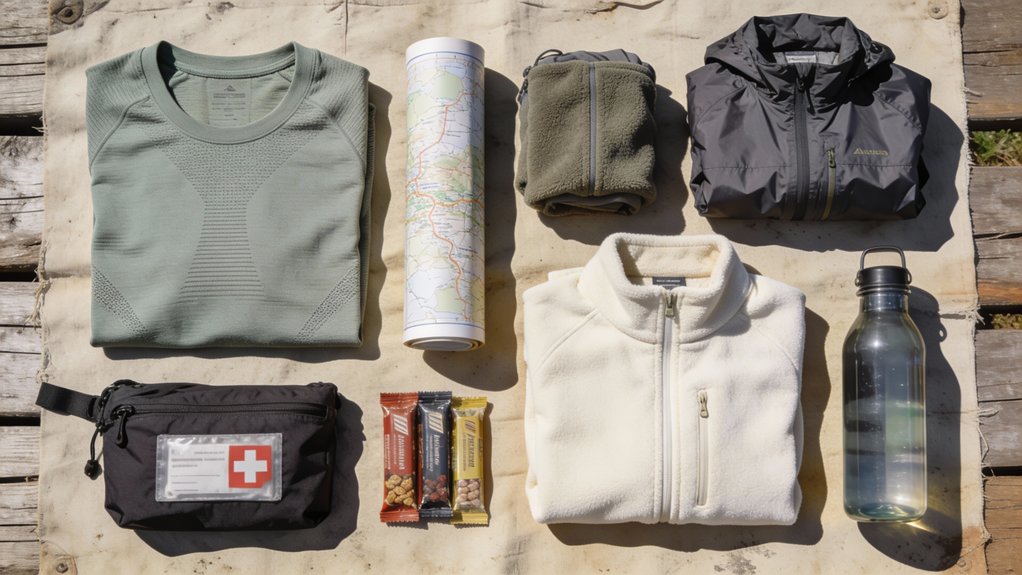
Weather changes faster on a trail than you expect it to. Layering lets you adjust without carrying a heavy jacket the whole time.
Start with a moisture-wicking base layer to keep sweat off your skin. Add a fleece or light insulating layer for warmth when you stop moving. A waterproof shell goes on top if rain is possible. Merino wool and synthetics breathe better than cotton in these slots.
The layered system in short:
- Moisture-wicking base layer
- Insulating fleece middle layer
- Waterproof outer shell
- Extra lightweight rain jacket if the forecast is uncertain
Most people think layering is about cold weather. It isn’t.
It’s about managing your temperature as you move and stop.
Finding Your Way: Maps, GPS, and Offline Backups
Even reliable technology can fail. Batteries die, signals disappear, and screens crack. Carrying more than one navigation option is a reasonable habit.
Pack a paper map of your hiking area, and spend a few minutes learning how to read it before you go. Download offline maps using Google Maps or AllTrails Pro before you leave home. These work without cell service.
A GPS device like the Garmin inReach Mini 2 adds two-way satellite messaging for more remote areas. A compass is a lightweight backup that needs no battery.
The most useful navigation tool is the one you actually know how to use.
Check trail condition updates online before you head out. Conditions change.
Essential Safety: Communication and Bear Spray
Distance from a cell tower doesn’t have to mean distance from help, but it does require some planning before you go.
- Carry a Garmin inReach Mini 2 for emergency messaging in remote areas
- Tell someone your route and your expected return time before you leave
- Keep bear spray clipped to your hip belt, not buried in your pack
- Practice removing it from the holster at home, before you need it on the trail
- Check the expiration date regularly, since bear spray loses effectiveness over time
People assume bear spray works automatically.
It only works if you can reach it.
Communication devices let you call for help even when your phone has no signal. Practice removes the hesitation.
None of this gear works if it’s buried at the bottom of your pack.
Daypack Layout: Quick-Access Zones for Essentials
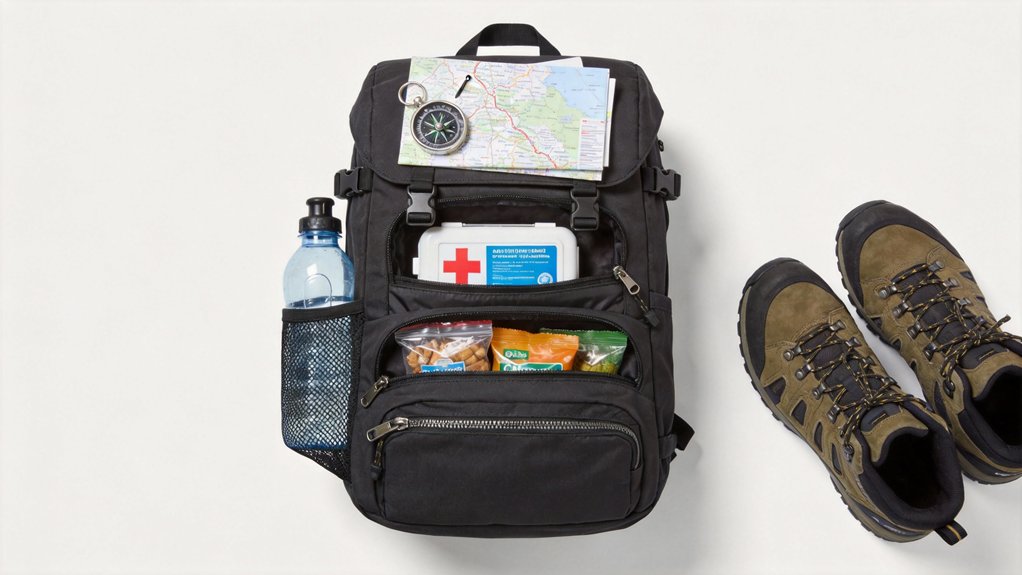
How you pack matters almost as much as what you pack. Digging through a full bag to find a snack or a rain jacket slows you down and gets frustrating.
Use your outer pockets for snacks and water, things you’ll reach for often without stopping. Keep your map or GPS in a dedicated pocket you can check without removing your pack.
Your first aid kit deserves its own compartment so you can find it without searching.
Put your hydration reservoir in a side pocket for hands-free access. Heavier items, like extra clothing or lunch, go in the main compartment to keep your pack balanced.
Sun and Bugs: UV Protection and Insect Defense
Sun and insects are easy to underestimate on a short hike. A little preparation handles both.
For sun protection:
- Travel-size SPF 30 sunscreen, applied generously and reapplied every two hours
- SPF lip balm
- A wide-brimmed hat
- UV-blocking sunglasses
Reapplying sunscreen every two hours matters more at higher altitudes, where UV exposure increases.
For insects:
- Picaridin lotion is effective and doesn’t damage synthetic fabrics
- Permethrin-treated clothing adds another layer of protection
- A lightweight bug net is worth carrying for dawn and dusk if mosquitoes are heavy
Don’t skip the lip balm. Lips burn faster than most people expect.
Bring Backup Power: Phone Chargers and Emergency Banks
Your phone drains faster outdoors than it does at home. Navigation apps, camera use, and weak signal all pull from the battery steadily.
Pack a portable power bank with at least 10,000 mAh capacity to keep your phone and other devices charged through the day. Multiple USB ports let you charge more than one device at once if needed. For longer outings, a solar charger works as a supplement.
Turning on Airplane Mode when you’re not actively navigating extends battery life considerably.
A dead phone on the trail isn’t just inconvenient.
It removes your navigation and your ability to call for help.
Trail Ethics: Waste Systems and Leave No Trace Principles
What you carry out matters as much as what you carry in. A look at Leave No Trace hiking principles covers the full picture, but the daypack basics come down to a short list.
- Pack sealable containers or sturdy bags for all trash, including food wrappers
- Carry out toilet paper and pet waste
- Use established fire rings or a portable stove instead of open campfires
- Follow local regulations for human waste disposal
- Keep pets leashed and pack out what they leave behind
Bring odor-proof containers if you’re in bear country. They prevent the kind of wildlife interest you don’t want.
Knowing the specific regulations for your area before you go saves a lot of guesswork on the trail.
Check local rules when you check the trail map.
If your current bag isn’t the right size for all of this, you can compare lightweight daypacks on Amazon to find one that carries these essentials comfortably.