
You’re probably underestimating how much prep your body actually needs before hitting the trail. Starting twelve weeks out isn’t overkill, it’s smart.
You’ll build the cardiovascular stamina, leg strength, and balance your body demands on uneven terrain.
But here’s what most hikers miss: the specific training your ankles and knees require. That’s where things get interesting.
Start Training 12 Weeks Before Your Hike

If you’re planning a serious hike, you’ll want to start training about 12 weeks ahead of time. This gives your body enough time to build endurance and strength for the trail.
You’ll need to commit to regular workouts that combine cardio, strength training, and rest days.
Don’t skip the mental preparation either; visualizing yourself on the trail builds confidence.
During these 12 weeks, focus on hiking nutrition to fuel your workouts properly.
Start with shorter day hikes and gradually increase distance.
This systematic approach lets you build fitness steadily without overdoing it. Building cardiovascular endurance through consistent training ensures your heart can handle the demands of challenging terrain.
Build Cardiovascular Fitness With Walking and Running
How do you build the aerobic engine your legs need for steep climbs and long distances? Walking and running deliver serious cardio benefits for hiking preparation.
Aim for 150 minutes of moderate aerobic activity weekly, that’s about 30 minutes, three to four times per week. Boost your endurance techniques by increasing duration roughly 10% each week, preventing injury while building strength.
Interval training works too; alternate between walking and jogging to spike cardiovascular capacity. Local bike trails and easy paths offer safe training grounds.
This systematic approach transforms your fitness foundation before hitting challenging terrain.
Perfect Your Balance for Hiking on Uneven Terrain
While cardiovascular fitness gets you up the mountain, balance is what keeps you upright on rocky, root-filled trails. You’ll strengthen your stabilizing muscles by practicing single leg stands for up to 30 seconds.
Challenge yourself further with balance exercises on unstable surfaces like balance boards to sharpen proprioception training, your body’s ability to sense terrain beneath your feet.
Heel raises and heel walks fortify your ankles, reducing sprain risk.
Yoga or tai chi builds core stability. These consistent drills improve coordination and agility, letting you respond quickly when your footing suddenly shifts.
Strengthen Legs and Core With Bodyweight Exercises

Beyond perfecting your balance, you’ll need to build serious leg and core strength to power through demanding trails.
Bodyweight exercises like squats, lunges, and step-ups strengthen your quads, hamstrings, glutes, and calves, the muscles that propel you uphill and stabilize rocky terrain.
Planks and side planks build core stability for maintaining posture during long hikes. Single-leg variations improve coordination while reducing ankle sprain risk.
Aim for 2-3 weekly sessions with 10-15 repetitions per exercise to develop strength endurance. Progress gradually by adding bodyweight variations or increasing sets.
This approach builds the functional power you need for challenging mountain trails without fancy equipment.
Train Your Ankles and Knees for Rocky Terrain
Your ankles and knees take a real beating on rocky trails, so it’s worth spending time to strengthen them now. Heel raises and squats build the foundational strength you’ll need.
Balance work matters too: single-leg stands train stability on uneven ground. Progress gradually by walking on inclines and rough terrain to condition your joints.
Balance and stability training through single-leg stands and gradually increasing terrain difficulty conditions your joints for rocky trails.
Lateral step-ups specifically enhance knee stability and ankle resilience. These ankle exercises and knee stability drills prepare your lower body for demanding landscapes.
You’ll navigate steep, rocky sections with confidence and reduce your injury risk considerably. Start this training weeks before your trip for best results.
Break In Your Hiking Boots and Test Your Gear
Once you’ve built strength in your lower body, the next step is making sure your feet stay comfortable during those long miles on the trail.
Before committing to a major hike, you’ve got to break in your boots properly.
Here’s what you need to do:
- Wear your new boots for at least 20-30 miles on short walks
- Test gear on uneven terrain to check grip and stability
- Pack your backpack fully to assess weight distribution and comfort
This approach lets you identify boot comfort issues and gear functionality problems before they ruin your adventure.
Wear them in real conditions, not just around your house.
You’ll discover what works and what doesn’t while you’re still close to home.
Remember that proper footwear is one of the most critical hiking essentials, as it directly impacts your comfort and safety on the trail.
Create a 12-Week Hiking Training Schedule That Works for You
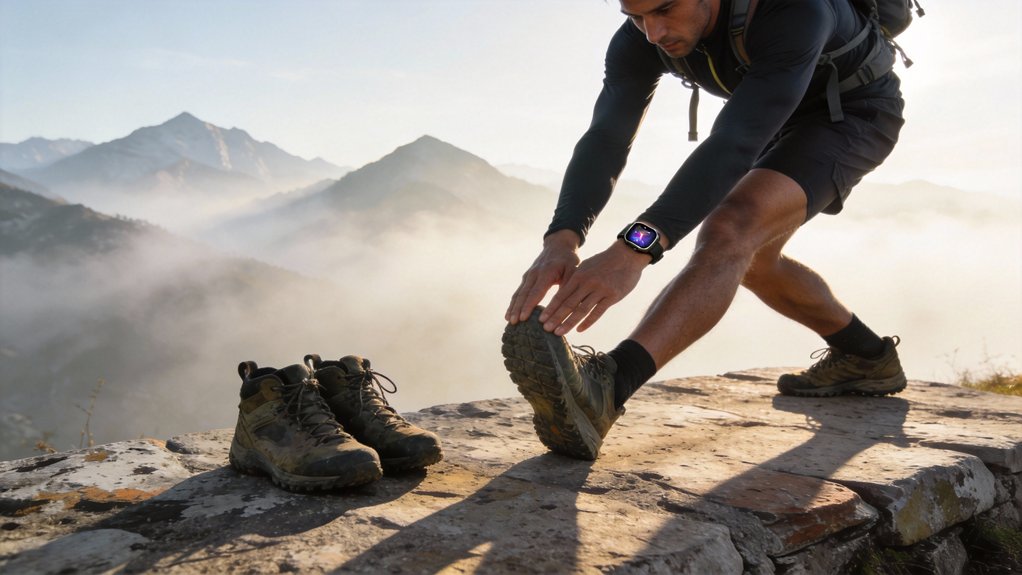
Training for a serious hike requires more than just showing up on trail day.
Training for a serious hike demands preparation that extends far beyond showing up on trail day ready to go.
You’ll need a structured 12-week plan that builds your fitness systematically. Aim for three to four walking or running sessions weekly to boost cardiovascular endurance.
Add strength training twice weekly: squats, lunges, and calf raises target your legs, glutes, and core for injury prevention.
Increase your weekly step goals by roughly 10% each week. Include back-to-back training hikes to simulate multi-day conditions.
Don’t skip rest days; recovery is essential for peak performance and staying healthy throughout your preparation.