
You’re hiking a ridge trail in Colorado when the path splits three ways. You spot a white rectangle painted on a tree ahead, then two more stacked above it. You pause.
That double blaze means something specific. Knowing what could save you from wandering miles off course.
Trail markers aren’t casual guideposts. They’re the trail’s way of talking to you, and the system is simpler than it looks.
What Trail Markers Do and Why They Matter
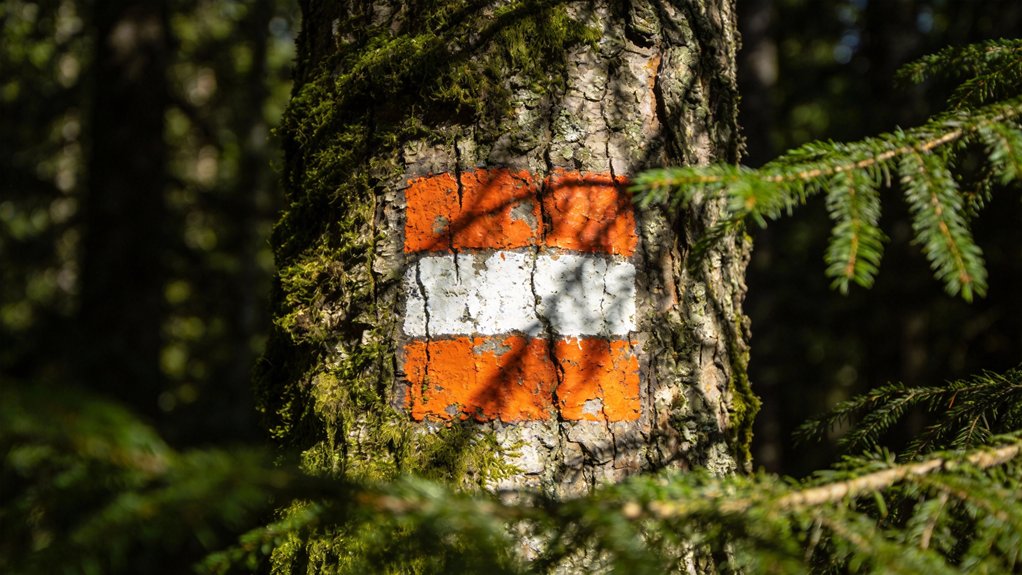
Trail markers, blazes, cairns, and signs guide you through the terrain and help you stay on course. They show you which direction to follow, especially where trails fade or branch.
Markers are most important exactly where you’re most likely to second-guess yourself: at junctions, in poor visibility, and where the path fades into the surrounding ground.
You’ll find them at decision points, tricky sections, and at regular intervals along quieter stretches. Paired with solid hiking preparation, they’re your main safety net on unfamiliar terrain.
Without them, you’d be backtracking and guessing. With them, you can move forward with confidence.
Five Main Types of Trail Markers You’ll Encounter
Not all markers are paint. You’ll run into five main types:
- Paint blazes: rectangular strips, roughly two inches wide and six inches tall. These are the most common by far.
- Cairns: stacked rocks used above the treeline, where there are no trees to paint.
- Posts: wooden or metal posts, often used in sparse-tree terrain or areas with heavy snow.
- Affixed markers: metal, plastic, or wood nailed directly to trees. More durable than paint, designed to last years.
- Flagging tape: brightly colored, temporary; used for trail maintenance or reroutes, not permanent navigation.
Each type serves a specific environment. Once you know what to look for, you’ll start recognizing them without thinking.
How to Read Paint Blazes: Straight, Turns, and Intersections
The paint blaze system is consistent enough that you can learn it once and rely on it almost anywhere.
- Single rectangle: continue straight ahead.
- Two rectangles, upper offset right: a right turn is coming.
- Two rectangles, upper offset left: a left turn ahead.
- Three rectangles pointing upward: the trail’s beginning.
- Three rectangles in an inverted triangle: the trail’s end.
A double blaze is a prompt, not a destination. It tells you a change is coming, and to pay attention to the offset direction.
Most hikers keep scanning forward when they lose a blaze.
Look back instead.
The last blaze you passed often tells you more than the one you’re hunting.
What Trail Marker Colors Actually Mean
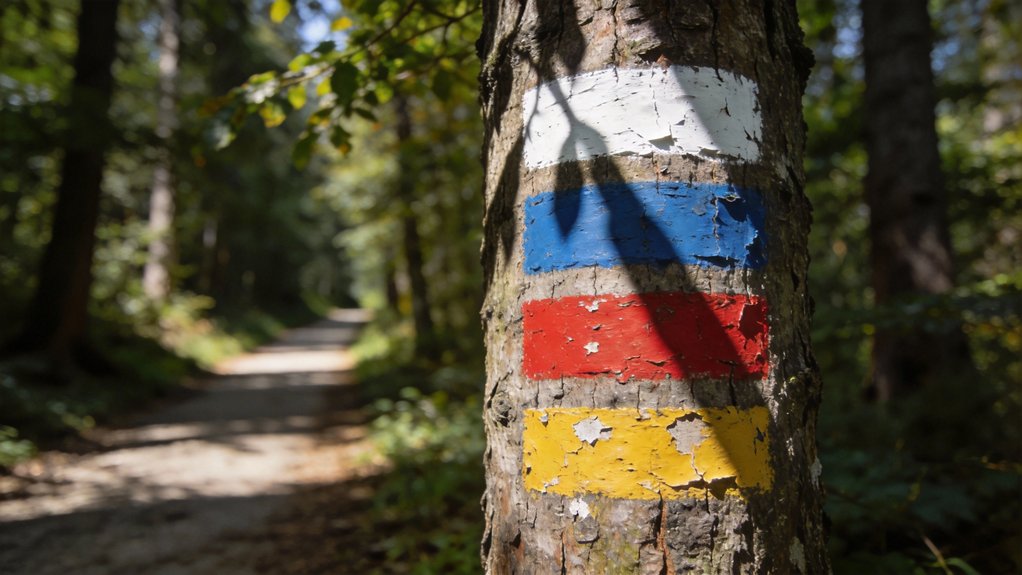
Paint blazes show you where to go. Colors tell you which trail you’re on.
Each trail carries one consistent color from start to finish. A color doesn’t mean “easy” or “difficult” or “turn here.” It’s the trail’s identity, nothing more.
A few well-known examples:
- White blazes mark the Appalachian Trail.
- Yellow marks the Pinhoti Trail.
- At junctions where two trails cross, seeing two colors at once helps you choose which route to follow.
Stick with one color and you won’t lose your trail at an intersection. That’s the whole logic of the system.
Colors don’t indicate terrain features or direction. They identify. Once you internalize that distinction, junctions become much less confusing.
Beyond Paint: Cairns, Posts, and Rock Stacks
Above the treeline, where there’s nothing to paint, cairns take over.
Land management agencies build these carefully, and the placement is deliberate. A cairn marks a safe passage across exposed rock or open terrain.
Don’t add to cairns or rearrange them. The original builder placed them with a specific sight line in mind.
Trail posts work similarly in areas with heavy snow, where blazes would be buried. They mark the route when everything else is white.
Affixed markers, metal or plastic nailed to trees, appear on trails that see heavy maintenance. They last through conditions that wear paint away.
Each marker type exists because paint doesn’t work everywhere. Knowing them all means you’re not thrown off when the method changes mid-trail.
Trail Marker Patterns at Forks and Junctions
Junctions are where you’re most likely to go wrong.
Read every blaze twice before committing to a direction.
At a fork, watch for:
- A double blaze on the tree just before the split, with the upper rectangle offset toward the correct direction.
- Blazes painted on both sides of trees at the junction, visible whether you’re coming or going.
- In rocky terrain above treeline, a cairn placed clearly to one side of the split.
If you’re unsure at a fork, look for the next blaze farther along each option. The correct path will show one quickly; the wrong one often won’t.
Retrace to the last clear marker when in doubt.
What to Do When Trail Markers Disappear
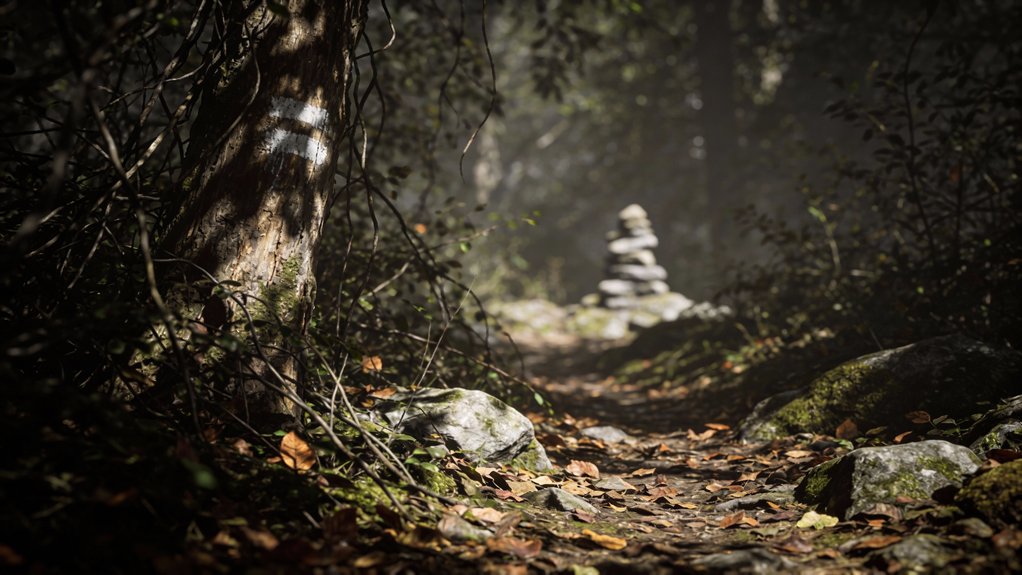
Losing sight of markers happens, even to experienced hikers. It’s not necessarily cause for alarm.
Stop moving forward first. Standing still is free; walking the wrong direction costs you twice.
Then work through a short mental list:
- Look around for the last recognizable landmark: a distinctive tree, a ridge line, a rock formation.
- Retrace to the last visible marker you remember clearly.
- Pull out your map or GPS and confirm where you are relative to the trail.
- If you’re hiking with someone, talk through what you’ve each observed. Two sets of eyes and different angles help.
The instinct to keep moving is the one to resist. Most trail confusion clears up quickly once you stop and look back.
Respecting Trail Markers: What Not to Do
The marker system only works if everyone leaves it alone.
Everyone assumes someone else is maintaining it.
Nobody is. That’s on all of us.
What to avoid:
- Adding rocks to existing cairns, or rearranging them. You change their intended sight line.
- Painting over, removing, or damaging official blazes.
- Placing flagging tape near official markers. It creates ambiguity about which one to follow.
- Building new cairns that weren’t placed by the land manager. They confuse other hikers.
Good trail markers exist because past hikers left them intact. That’s the quiet agreement behind the whole system.
Leave the markers exactly as you find them. The hikers behind you will be relying on them.