
You’ve probably noticed that popular trails show real wear: eroded paths, trampled vegetation, scattered trash.
The seven Leave No Trace principles give you a straightforward framework to hike responsibly. They cover everything from planning ahead to respecting wildlife.
But here’s the thing: you might be surprised how small decisions on the trail add up.
The Seven Leave No Trace Principles: A Hiker’s Essential Guide
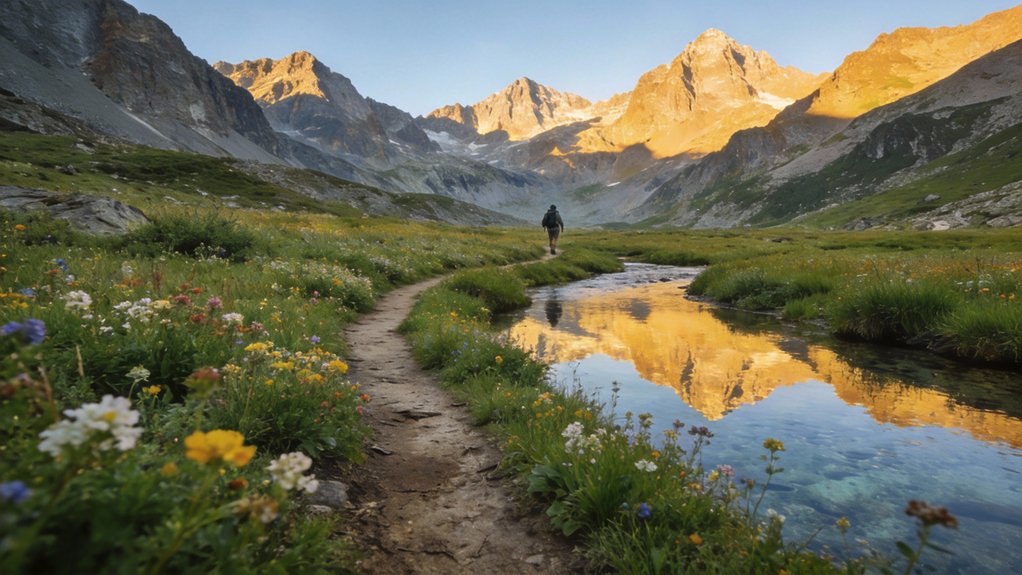
Seven core principles guide responsible hiking and protect our natural spaces.
You’ll find that understanding outdoor ethics and Leave No Trace practices keeps ecosystems healthy for everyone.
- First, you plan ahead to know terrain and weather.
- Second, you stick to established trails to prevent erosion.
- Third, you pack out all waste, nothing stays behind.
- Fourth, you leave what you find untouched.
- Fifth, you minimize campfire impacts.
- Sixth, you respect wildlife by watching from distance and securing food.
- Seventh, you consider other visitors’ experiences.
These principles give you freedom to enjoy nature responsibly while preserving it.
Plan Your Trip: Check Weather, Permits, and Fire Bans
Before you lace up your boots, you’ve got to do some homework. Proper planning keeps you safe and protects the land you’re exploring.
- Check weather safety forecasts for your destination so you can pack right and avoid dangerous conditions.
- Research permit requirements since many protected areas demand them to control visitor impact and preserve ecosystems.
- Verify fire bans in your region, as dry seasons often restrict campfires to prevent wildfires.
Also share your detailed itinerary with someone trusted. Include your planned route and expected return time.
Ask about local group size restrictions too.
These steps take minimal effort but make a real difference for your safety and environmental responsibility.
Stay on Established Trails and Durable Surfaces
When you’re out on the trail, your footsteps matter more than you might think. Staying on established paths prevents soil erosion and stops trail braiding that damages ecosystems.
Walk single file to keep trails narrow and protect surrounding vegetation.
For camping, choose durable surfaces like rock, gravel, or compacted soil. Camp at least 200 feet from water sources and trails to preserve fragile habitats.
In remote areas, move your camp daily: this prevents permanent-looking sites that disrupt the landscape.
Smart trail maintenance and camping ethics protect wild places you love, keeping them free and wild for everyone who comes after you.
Pack Out All Waste: Leave No Trace at Camp
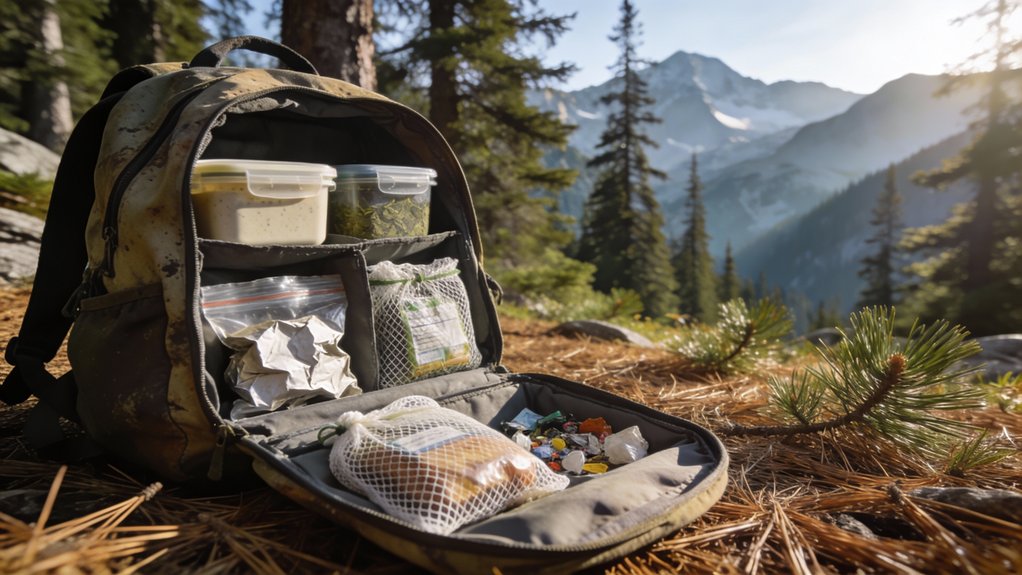
Keeping trails narrow and camps on durable surfaces is just the start. What you leave behind matters just as much as where you walk. You’re responsible for proper waste management and biodegradable disposal during every trip.
What you leave behind matters just as much as where you walk. Proper waste management is your responsibility on every wilderness trip.
- Dig catholes 6-8 inches deep, at least 200 feet from water sources and campsites.
- Pack out all food scraps, toilet paper, and hygiene products since they disrupt ecosystems.
- Carry a trash bag to collect litter you find, practicing “negative trace.”
Even organic materials break down slowly and harm wildlife.
You’ll protect the wilderness you love by removing everything you bring in.
Respect Wildlife: Keep Distance and Secure Food
Wildlife encounters become safer and more meaningful when you keep your distance and secure your food properly.
You’ll want to observe animals from at least 25 yards away, allowing them to act naturally without stress.
Never feed wildlife; it damages their health and creates dangerous dependencies on humans.
Use bear-proof containers or hang food at least 12 feet high and 6 feet from tree trunks in bear country.
Pack out all trash and food waste completely.
Understanding local wildlife guidelines protects both you and the animals.
These practices maintain natural behaviors while keeping everyone safe and respecting the wilderness you’ve chosen to explore.
Be Courteous on the Trail: Respect Other Hikers
As you share the trail with other hikers, you’re part of a community that depends on mutual respect and consideration.
Strong trail etiquette keeps everyone safe and happy.
Strong trail etiquette keeps everyone safe and happy, creating a respectful community for all outdoor enthusiasts.
Here’s how you respect fellow hikers:
- Yield to uphill hikers first, letting them pass without delay
- Keep noise levels low so others enjoy nature’s tranquility
- Communicate clearly when passing, maintaining safe distances
You’ll also want to follow local group size regulations.
These rules prevent overcrowding and protect the natural environment.
When you’re courteous on the trail, you’re not just being polite, you’re preserving the outdoor experience for everyone who comes after you.