
You’re ready to start hiking after 60, but here’s what most people get wrong: they jump straight into trails without preparing their bodies first.
Getting medical clearance matters. Choosing the right gear matters.
But there’s one critical step that’ll make or break your success, and it’s not what you’d expect.
Get Medical Clearance Before Hitting the Trail

Before you lace up your hiking boots, you’ll want to schedule a visit with your doctor. Your physician can conduct proper health assessments and risk evaluation tailored to your situation.
They’ll examine your cardiovascular system, joint flexibility, and overall strength.
Depending on your history, you might need a stress test to confirm your fitness level. Be upfront about any existing conditions, current medications, and recent health changes.
This medical clearance gives you real freedom on the trails: you’ll know exactly what your body can handle and hike with genuine confidence.
Choose Beginner-Friendly Trails to Build Confidence
Now that you’ve got medical clearance, it’s time to pick trails that’ll build your confidence without overwhelming you.
Start with local parks and nature reserves offering well-marked, flat paths under three miles long. These spots typically feature rest areas and bathrooms, making your experience comfortable and stress-free.
Local parks and nature reserves with well-marked, flat paths under three miles offer comfortable starting points for beginner hikers.
Use hiking apps to check trail ratings and reviews matching your fitness level.
Join beginner hiking groups for support and skill-building in safe environments. Gradually increase distance as your endurance improves.
This methodical approach lets you discover what you enjoy while building strength steadily. Regular hiking on these manageable trails will enhance your cardiovascular health while providing mental wellness benefits through nature exposure.
Invest in Lightweight Gear and Hiking Poles
Your knees and back’ll thank you once you lighten your load. Invest in lightweight backpacks that reduce strain on your joints and muscles. Aim for pack weight no more than 20% of your body weight, that’s roughly 10-14 pounds for most folks.
Trekking poles are game-changers too. They engage your upper body while cutting knee strain by distributing weight evenly across uneven terrain. You’ll gain stability and confidence on the trail.
Shop from reputable ultralight companies that design gear specifically for older hikers. Regularly updating your equipment pays off; you’ll notice immediate improvements in performance and enjoyment.
Start With Strength Training, Not Just Walking

While walking builds some endurance, it won’t fully prepare your body for hiking’s demands. You’ll need strength benefits that targeted training delivers.
Aim for two weekly sessions focusing on exercise variety: squats, lunges, and upper body work. These movements replicate hiking’s physical challenges, carrying your pack and managing uneven terrain.
Add resistance bands and kettlebells to build real muscle. Single-leg exercises improve balance on rocky trails.
Pair strength training with cycling or brisk walking for cardiovascular fitness. This combination creates a complete preparation strategy, letting you hit trails confidently and enjoy every step.
Build Your Hiking Distance Week by Week
The key to building hiking endurance after 60 is starting small and increasing gradually.
Building hiking endurance after 60 means starting small and increasing your distance gradually each week.
Begin with a comfortable 1-2 mile baseline on flat, well-maintained trails. Each week, bump up your distance progression by 10-20%, letting your body adapt safely.
Aim for three to five hikes weekly: one longer hike for endurance building, others shorter for recovery.
Every couple weeks, tackle a challenging 5-7 mile hike to push your limits. Stay hydrated and nourished during these outings.
Most importantly, listen to your body. Rest days aren’t failures; they’re smart training.
Adjust your goals based on how you actually feel, not rigid schedules.
Recognize When Your Body Needs Rest
As you build your weekly mileage, knowing when to pull back matters just as much as pushing forward. Your body sends clear fatigue signals, persistent soreness, low energy, sleep disruptions, that demand attention. Don’t ignore these warnings.
Schedule regular rest days between hikes to let muscles recover. Recovery techniques like stretching, yoga, and light activity on off days enhance flexibility and mobility.
Stay hydrated and eat well-balanced meals; nutrition fuels both energy and muscle repair.
Shorter hikes help you gauge your limits safely. Listen closely to what your body tells you, then act on it.
Why Hiking Over 60 Gets Better With Consistency
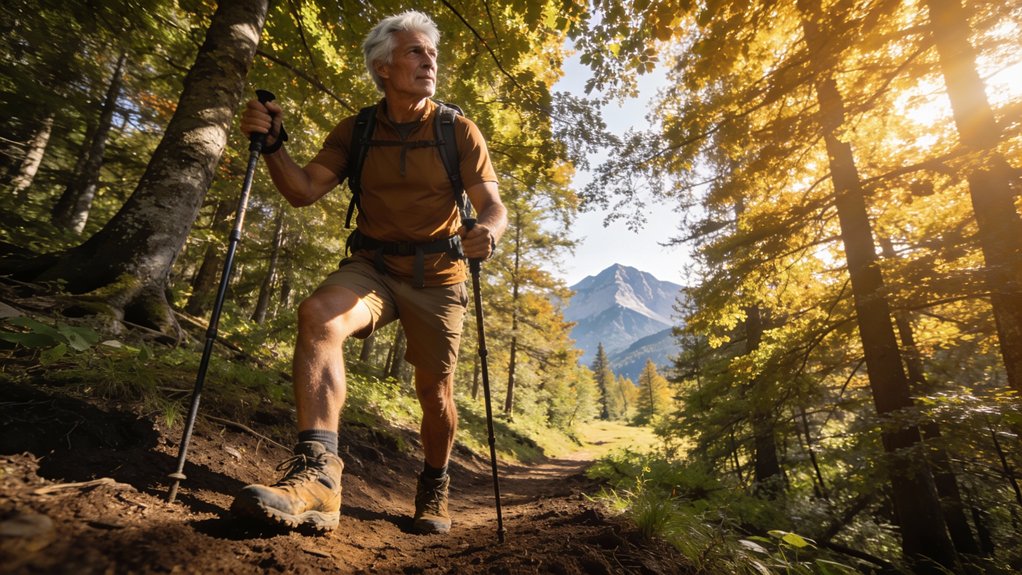
Consistency beats intensity when you’re building a hiking habit after 60.
Build your hiking habit after 60 through steady consistency rather than pushing yourself with intensity.
You’ll build physical endurance gradually by walking daily and taking longer hikes each week. Your body adapts better to regular movement than occasional strenuous efforts. This steady approach delivers real health benefits without overwhelming yourself.
Mental wellness improves as you spend time outdoors regularly, boosting your mood and confidence.
You’ll also discover social connections with fellow hikers who share your passion. These relationships provide motivation and support for your adventures.
You’re free to set your own pace, adjust distances to match your abilities, and enjoy the trail without pressure to achieve specific goals.