
Kayaking uses muscles you don’t typically exercise in daily life, particularly your shoulders, back, and core. The repetitive paddling motion can strain unprepared muscles and leave you surprisingly sore the next day.
Many beginners focus on choosing the right kayak but overlook physical preparation.
The good news is that simple stretches before and after paddling prevent soreness and injury. You don’t need a gym membership or special equipment, just 10 to 15 minutes of preparation.
Even experienced kayakers do these stretches before getting on the water. By the end of this article, you’ll know exactly which stretches to do and how to do them properly.
Why Preparation Matters
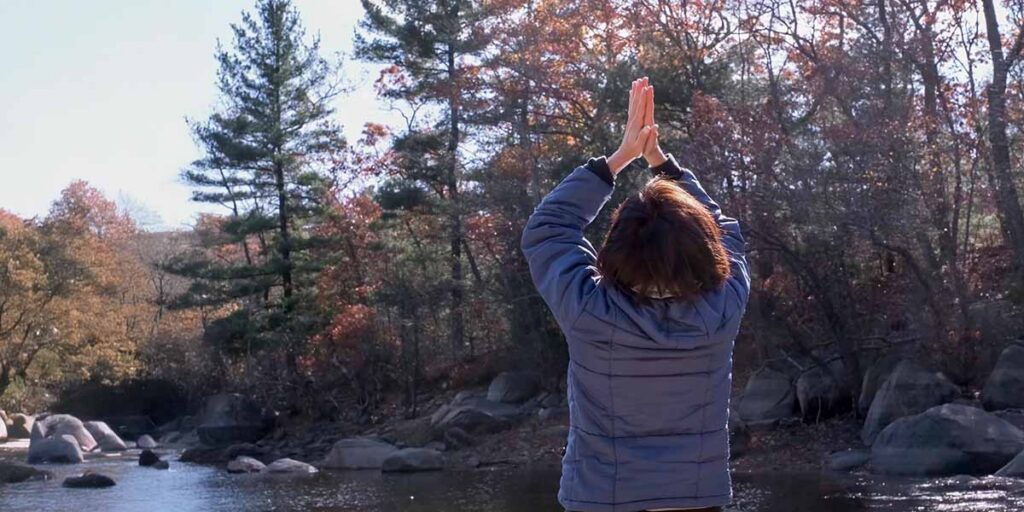
Kayaking primarily uses your shoulders, back, core, and forearms in rotational movement patterns different from most daily activities. The repetitive paddling motion can strain unprepared muscles. Cold muscles are more prone to strains and pulls than warmed-up, flexible muscles.
Five minutes of stretching prevents days of soreness. This is particularly important for people who sit at desks regularly, as office work creates tight shoulders and hips.
Prevention is always easier than recovery. Don’t let preventable muscle strain cut short your kayaking adventures.
When to Do These Stretches
Before paddling (most important): Arrive at the water and complete these stretches before getting in your kayak. The full routine takes 8 to 10 minutes. If you’re short on time, do at minimum the first three stretches, which takes about 5 minutes and covers the primary paddling muscles.
After paddling (helpful but optional): Stretching after kayaking prevents next-day stiffness. This takes 5 to 7 minutes and uses the same stretches but with longer hold times. Focus on the muscle groups that feel most worked.
At home between trips: Doing these stretches three times weekly builds flexibility and strength gradually. This helps if you have limited flexibility or plan to kayak regularly throughout the season.
The Six Essential Stretches
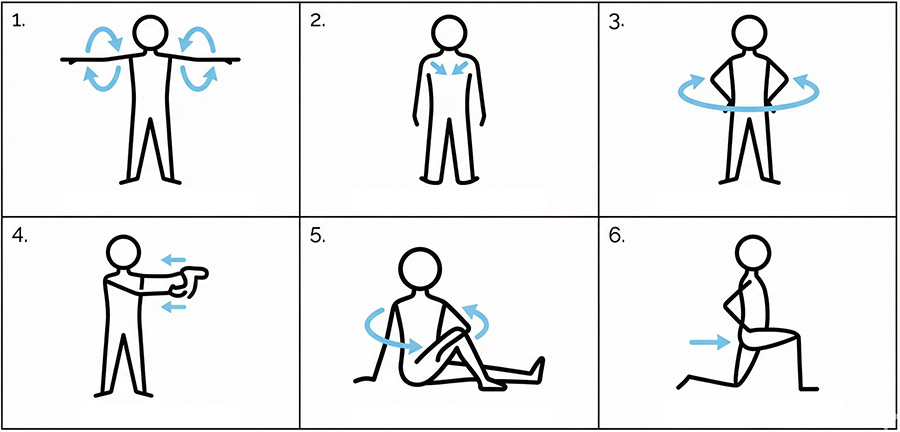
1. Shoulder Circles and Arm Swings
Why this matters: This warmup increases range of motion in your shoulder joints, which do most of the work during paddling.
How to do it: Stand with feet shoulder-width apart. Make large circles with both arms simultaneously, rotating forward for 10 circles, then backward for 10 circles. Move slowly and deliberately through the full range of motion, making the largest circles you can comfortably manage.
Next, swing both arms across your chest and back out to the sides, like giving yourself a hug and then opening your arms wide. Repeat 10 times. You should feel warmth developing in your shoulders but no pain.
Common mistake: Moving too quickly or making small circles instead of using your full range of motion. Bigger, slower movements work better.
2. Shoulder Blade Squeeze
Why this matters: This strengthens upper back muscles that stabilize your paddling stroke. It also counteracts the rounded shoulders that develop from desk work and driving.
How to do it: Stand or sit upright with arms relaxed at your sides. Squeeze your shoulder blades together as if trying to hold a pencil between them. Hold this squeeze for 5 seconds, then release completely. Repeat 10 times. You should feel muscles working between your shoulder blades in your upper back.
For a more challenging version, extend your arms forward at shoulder height with palms facing each other. Pull your elbows straight back while squeezing your shoulder blades together. This adds resistance and builds more strength.
Focus point: Keep your shoulders down, away from your ears. Don’t shrug upward while squeezing. The movement happens in your upper back, not your neck.
3. Torso Rotation Stretch
Why this matters: Kayaking requires constant torso rotation with each paddle stroke. This stretch prepares your core and lower back for the twisting motion you’ll repeat hundreds of times during your paddle.
How to do it: Stand with feet shoulder-width apart and hands on your hips or arms crossed over your chest. Keeping your hips facing straight forward, rotate your upper body to the right as far as comfortable. Hold for 3 seconds, return to center, then rotate left. Repeat 10 times to each side.
For a deeper stretch, hold your paddle or a broomstick across your shoulders behind your neck with your hands draped over it. The added leverage increases the rotational stretch.
Breathing tip: Exhale as you rotate into the stretch, inhale as you return to center. This helps you relax into the movement.
4. Wrist Flexion and Extension
Why this matters: Gripping the paddle for extended periods strains your wrists and forearms. This stretch prevents cramping and soreness in these smaller muscle groups that fatigue quickly.
How to do it: Extend your right arm straight forward with palm facing down. Use your left hand to gently pull your right fingers toward you until you feel a stretch through your forearm. This is wrist flexion. Hold for 15 seconds.
Then flip your right palm up to face the sky and use your left hand to pull your fingers down toward the floor. This is wrist extension. Hold for 15 seconds. You should feel the stretch on the opposite side of your forearm.
Repeat this entire sequence with your left arm. Do the full cycle twice per arm for a total of about 2 minutes.
Important: Use gentle pressure. You should feel a stretch, not pain. Don’t pull hard on your fingers.
5. Seated Spinal Twist
Why this matters: This increases flexibility in your spine and lower back, which are essential for the rotation required in effective paddling. A flexible spine also reduces your risk of lower back strain.
How to do it: Sit on the ground with both legs extended straight in front of you. Bend your right knee and place your right foot flat on the ground on the outside of your left knee. Place your left elbow on the outside of your right knee. Place your right hand on the ground behind you for support.
Gently twist your torso to the right, looking over your right shoulder. Press your left elbow against your right knee to deepen the twist gradually. Hold for 20 seconds. You should feel a stretch through your spine, lower back, and possibly your hip.
Return to center and repeat on the other side: left knee bent, right elbow outside left knee, twist to the left.
Modification for limited flexibility: If sitting on the ground is difficult or uncomfortable, do this stretch in a chair. Sit sideways on the chair seat and twist your torso toward the chair back, using the backrest to help pull yourself into the twist.
6. Hip Flexor Stretch
Why this matters: Sitting in a kayak keeps your hips in a flexed position for the entire paddle. Tight hip flexors cause lower back strain and discomfort. This stretch is especially important for people who already sit at desks most of the day.
How to do it: Kneel on your right knee with your left foot flat on the ground in front of you, positioned as if you’re making a marriage proposal. Your left knee should be bent at roughly 90 degrees.
Keep your torso upright and your core engaged. Gently push your hips forward until you feel a stretch in the front of your right hip and thigh. Don’t lean forward or arch your back. The stretch comes from the forward hip movement, not from leaning. Hold for 20 seconds.
Switch sides and repeat with your left knee on the ground. You can hold onto your kayak, a car, or a tree for balance if needed.
Key point: Don’t arch your lower back to try to feel more stretch. Keep your abdominal muscles lightly engaged and your spine neutral. The stretch should be in your hip, not your lower back.
Creating Your Routine
Before Paddling: Full Routine (8 to 10 minutes)
- Shoulder circles and arm swings: 1 minute
- Shoulder blade squeezes: 1 minute
- Torso rotation stretch: 1 to 2 minutes
- Wrist flexion and extension: 2 minutes
- Seated spinal twist: 2 minutes total, both sides
- Hip flexor stretch: 2 minutes total, both sides
Quick Version When Time Is Limited (5 minutes)
Do exercises 1, 2, and 3 only. This abbreviated version hits the primary paddling muscles in your shoulders, upper back, and core. It’s better than skipping stretches entirely when you’re short on time.
After Paddling (5 to 7 minutes)
Use the same six exercises but hold the static stretches longer, about 30 seconds instead of 15 to 20 seconds. Focus particularly on your shoulders and wrists, which typically work hardest during paddling. This post-paddle routine helps reduce next-day soreness significantly.
Building Strength Gradually
These stretches feel easier with regular practice. Your flexibility improves over weeks and months, not overnight. Don’t push yourself to the point of pain. You want mild tension in the muscle, not sharp or intense discomfort.
For people planning regular kayaking throughout the season, consider adding light resistance band exercises at home two or three times weekly. Simple rowing motions with resistance bands strengthen the same muscles used in paddling. The Mayo Clinic offers evidence-based stretching guidelines that explain proper technique and safety.
Listen to your body carefully. Some muscle stiffness after your first few kayaking trips is completely normal. Your body is adapting to new movement patterns. However, sharp pain or soreness that lasts more than two days suggests you should ease up on intensity and stretch more thoroughly before and after paddling.
If you experience persistent pain, particularly in your shoulders or lower back, consult with a healthcare provider before continuing. Proper kayaking safety practices include knowing when to rest and recover.
Additional Preparation Tips
Beyond stretching, staying hydrated helps prevent muscle cramps and fatigue. Drink water before, during, and after your paddle. Proper nutrition also matters. A light snack 30 to 60 minutes before paddling gives your muscles the fuel they need without causing digestive discomfort.
Dress in layers you can adjust. Cold muscles are more prone to injury, so keep yourself warm during your stretching routine. Once you start paddling and your body warms up, you can remove layers as needed.
For home strengthening between kayaking trips, resistance bands cost $10 to $25 and provide excellent training for paddling muscles. Simple exercises like seated rows, shoulder external rotations, and torso twists with bands build the strength that makes paddling easier and more enjoyable.
Making Stretching a Habit
The biggest challenge isn’t learning these stretches, it’s remembering to actually do them. When you arrive at the water excited to get paddling, it’s tempting to skip preparation and jump straight into your kayak.
Resist this temptation, especially on your first several kayaking trips. Your body hasn’t adapted to the paddling motion yet. Taking 10 minutes to prepare prevents hours or days of regret when preventable soreness limits your movement.
Many experienced kayakers stretch while their companions are getting boats off vehicles or organizing gear. Make stretching part of your arrival routine, just like putting on your personal flotation device. It becomes automatic after a few trips.
Some paddlers find it helpful to do a few of these stretches at home in the morning before heading to the water. This is particularly useful if you have tight shoulders or hips from desk work. Pre-stretching at home means your muscles are already somewhat prepared, and you can do a shorter routine at the waterside.
Your Body Deserves Care
Taking 10 minutes to prepare your body makes kayaking more enjoyable and sustainable as a regular activity. These stretches are simple enough to do at the water’s edge, on the beach, or in a parking lot. No special equipment required, no complex movements to master.
Many beginners skip this preparation and regret it the next day when soreness limits their movement or discourages them from paddling again soon. Don’t let preventable muscle strain cut short your kayaking adventures or make you dread your next outing.
The benefits of regular outdoor activities like kayaking extend far beyond just physical fitness. Kayaking reduces stress, improves cardiovascular health, and connects you with nature. Proper preparation ensures you can enjoy these benefits for years to come rather than dealing with injuries that could have been prevented.
Your body will thank you for the care you take. Start with these stretches on your very first kayaking trip and make them a non-negotiable habit. The small time investment pays enormous dividends in comfort, performance, and long-term enjoyment of this wonderful outdoor activity.
Now that you know how to choose your first kayak and how to prepare your body for paddling, you’re ready to get on the water safely and comfortably. See you out there.