
You’ve probably hiked a thousand miles and still felt wrecked after two hours. That’s because you’re missing something essential about pace and rest.
Most hikers push too hard, too fast, and wonder why their legs quit before their mind does.
The truth? Your breathing rhythm and strategic breaks make all the difference between enjoying a trail and merely surviving it.
Why Your Hiking Pace Matters More Than Distance
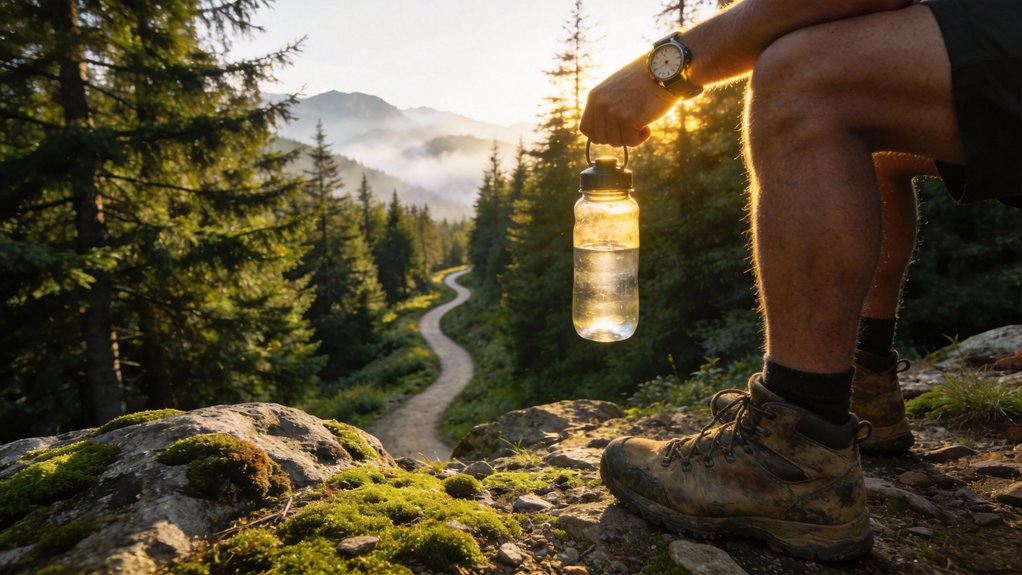
When you’re planning a hike, you probably think about the distance first.
Most hikers obsess over distance, but pace is what actually determines your success.
But here’s what actually matters: your pace. A controlled speed lets you go farther and feel better doing it.
Hiking efficiency depends on matching your speed to the terrain and your fitness level.
Slow down on steep sections: a 10% elevation increase cuts your speed by roughly 2.5%. This isn’t weakness; it’s smart energy management.
You’ll conserve fuel for the entire journey instead of burning out halfway. Your body knows the difference between pushing hard and pacing smart.
Building your stamina through progressive training helps you safely increase your hiking capacity without overwhelming your body.
Choose smart.
Find Your Sustainable Speed: The Nose-Breathing Test
How do you know if you’re hiking at the right speed? Try the nose-breathing test. Breathe through your nose only while hiking.
If you can’t maintain nose breathing, you’re pushing too hard. This simple check reveals your aerobic efficiency and sustainable pace.
Nose breathing benefits include preventing early fatigue and keeping you in your aerobic energy zone. Start with gentle walking, then gradually progress to loaded backpacks and elevation.
When you’re breathing through your nose comfortably while conversing, you’ve found your ideal speed.
Practice this technique regularly during training hikes to build skill and boost overall performance. This sustainable approach to hiking also provides stress relief and mental health benefits that extend beyond physical conditioning.
The Science Behind Strategic Rest Breaks
Your body’s recovery during rest breaks isn’t passive, it’s a precise physiological process that dramatically improves your hiking performance.
Taking 5-minute breaks every 55 minutes removes roughly 35% of accumulated lactic acid, directly enhancing your endurance.
Brief 5-minute breaks every 55 minutes eliminate roughly 35% of lactic acid buildup, directly boosting your endurance capacity.
These recovery strategies work best when you hydrate and stretch during short breaks.
For ambitious mileage, 20–25 miles, incorporate longer 60–90 minute breaks at noon to fully recharge.
Rest benefits compound when tailored to your fitness level and trail conditions.
You’re not wasting time stopping; you’re strategically investing in sustained performance and freedom on the trail.
Pacing Elevation: How to Climb Without Hitting the Wall
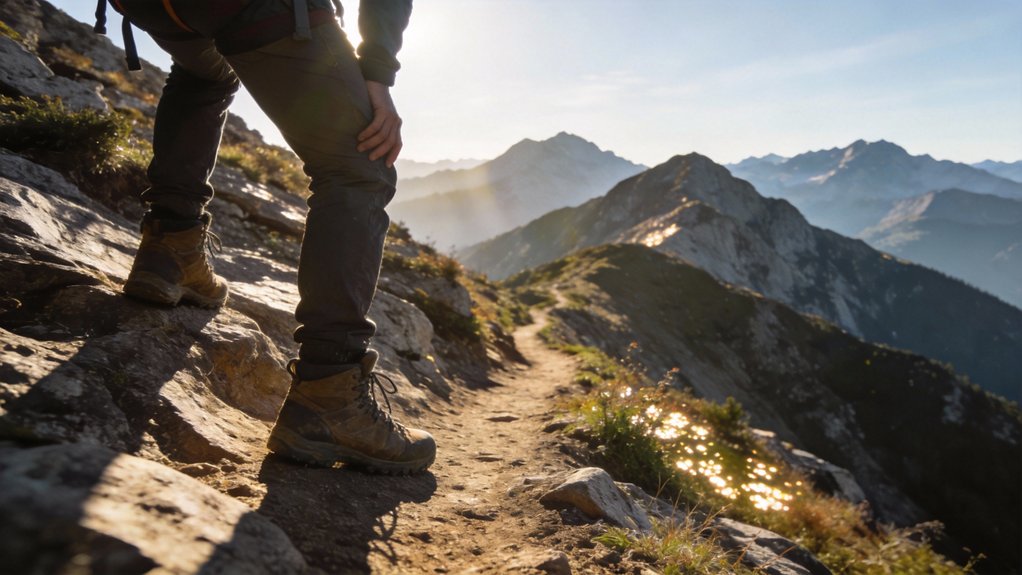
Elevation’s the real test on any trail, and that’s where your pacing strategy becomes everything.
You’ll want to slow down roughly 2.5% for every 1,000 feet you climb. This climbing technique prevents you from burning out halfway up.
Focus on nose breathing: it keeps your effort sustainable and stops you from hitting the anaerobic wall.
For endurance training, aim for 20 to 25 minutes of climbing at a maintainable pace weekly, gradually building your time.
Take five-minute breaks every hour to recover.
This approach lets you climb smart, not hard.
The Fatigue Warning Signs Every Hiker Should Know
Once you’re several miles into a hike, your body starts sending signals that shouldn’t be ignored. Heavy breathing, muscle soreness, and waning motivation are common fatigue indicators telling you it’s time to slow down.
Physical symptoms like dizziness, nausea, and excessive sweating demand immediate rest and water.
Mental fatigue shows up as trouble concentrating or making decisions.
These warning signs matter because ignoring them invites injury or exhaustion.
Smart recovery techniques include scheduled breaks every 30-45 minutes and honest pace adjustments.
Listen to your body early, and you’ll finish stronger.
Adjusting Your Pace for Group Hikes With Mixed Fitness
Group hikes bring their own set of challenges that solo hiking doesn’t throw at you.
You’ll need to manage group dynamics by matching everyone’s pace to the slowest member’s capability.
Aim for a conversational 2 mph pace during the first 10-15 minutes as a warm-up. Then maintain that speed while adjusting for terrain and elevation gain.
Take breaks every 45 minutes to an hour for hydration and snacks. These fitness adjustments matter.
Incorporate longer rest periods after significant climbs. You’re not racing, you’re ensuring everyone finishes strong and actually wants to hike together again.
Create Your Own Pace Benchmark for Future Hikes
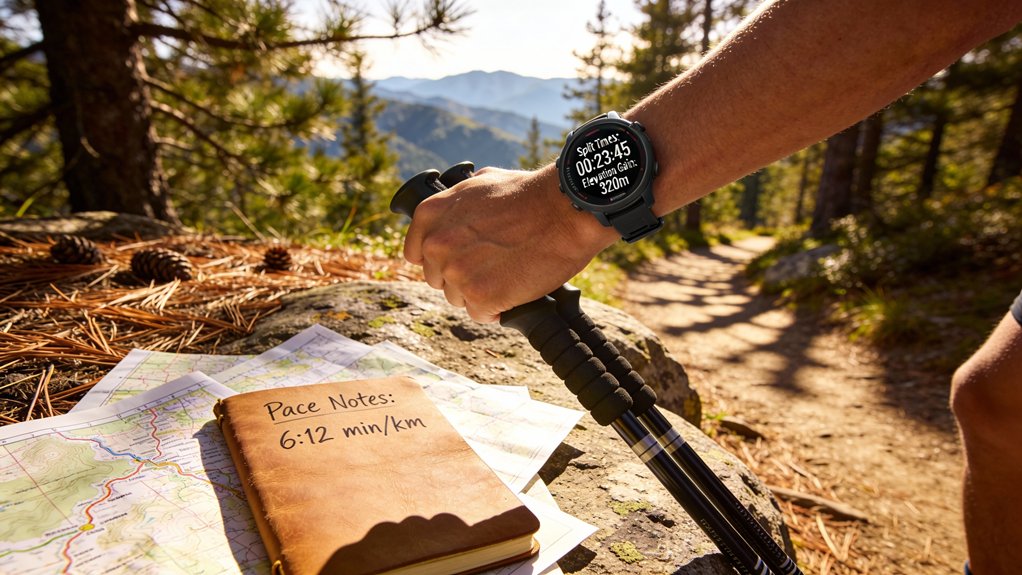
To hike smarter in the future, you’ll want to establish your own pace baseline by tracking your performance on various trails.
Document your speed on different terrain types: flat sections, steep climbs, rocky paths. Note elevation gain, pack weight, and conditions.
This pace tracking gives you real data instead of guesses. Terrain analysis helps you understand how specific factors affect your speed.
Record your average miles per hour on maintained trails at sea level. Compare results across multiple hikes.
You’re building a personal reference system that accounts for your actual capabilities, not generic guidelines.