
You’re hiking a ridge trail in Colorado when the path splits three ways. You spot a white rectangle painted on a tree ahead, then two more stacked above it. You pause.
That double blaze means something specific, and knowing what could save you from wandering miles off course. Trail markers aren’t just casual guideposts; they’re your conversation with the trail itself.
What Trail Markers Do and Why They Matter
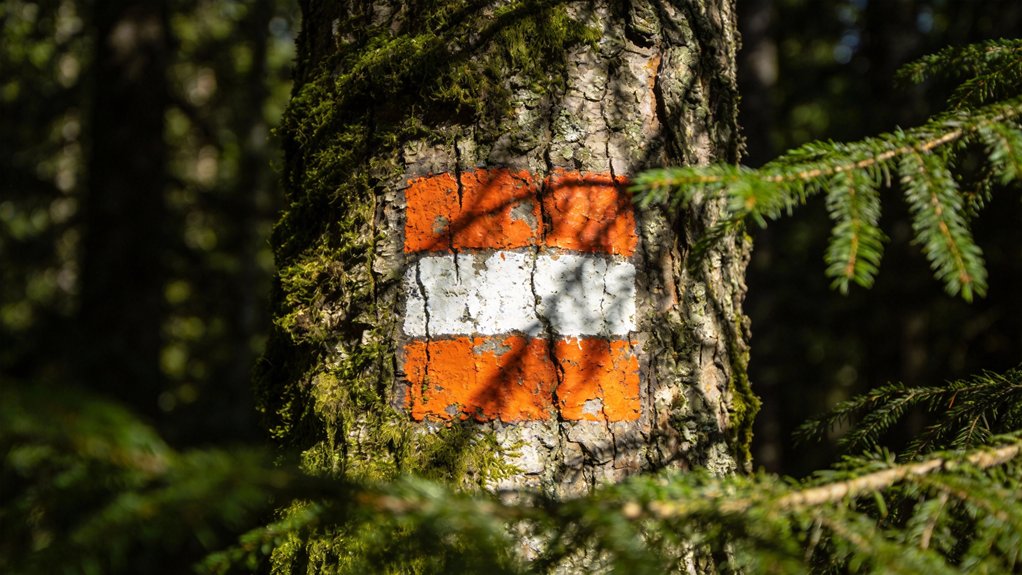
Trail markers, blazes, cairns, and signs, are your guides through the wilderness. You rely on them to stay on course and avoid getting lost.
These markers provide marker importance by showing you which direction to follow, especially where trails fade or split. They’re your navigation safety net when visibility drops or terrain becomes confusing.
Painted blazes on trees, stacked rocks, and wooden signs each serve specific purposes. You’ll find them at decision points, tricky sections, and regular intervals.
Without these markers, you’d waste time backtracking. They let you hike confidently, knowing you’re heading the right way. Proper trail navigation combined with appropriate hiking preparation ensures you stay safe and make the most of your wilderness experience.
Five Main Types of Trail Markers You’ll Encounter
Five distinct marker types guide you through the wilderness, each designed for specific terrain and conditions.
Paint blazes, rectangular strips two inches wide and six inches tall, remain the most common trail marker materials you’ll see.
Paint blazes—rectangular strips two inches wide and six inches tall—represent the most common trail marker you’ll encounter.
Cairns, stacked rocks, work best above treeline where trees don’t exist.
Posts appear in sparse tree areas, often holding attached signs for snowy regions.
Affixed markers use durable metal, plastic, or wood nailed to trees, providing lasting trail information.
Flagging tape, temporary and colorful, marks maintenance areas or trail reroutes.
Understanding these trail marker design variations helps you navigate confidently and stay on course.
How to Read Paint Blazes: Straight, Turns, and Intersections
Once you understand the basic paint blaze system, you’ll navigate trails with confidence.
Reading blazes means interpreting symbols that guide your direction.
A single rectangle tells you to continue straight ahead without deviation.
Two rectangles angled right signal an approaching right turn, while two angled left warn of a left turn coming.
Three rectangles forming an upward arrow mark your trail’s beginning.
An inverted pyramid shape indicates you’ve reached the end.
These simple, consistent markers keep you on track.
Pay attention to blaze placement and spacing as you hike.
Trust the system, and you’ll stay free to explore safely.
What Trail Marker Colors Actually Mean
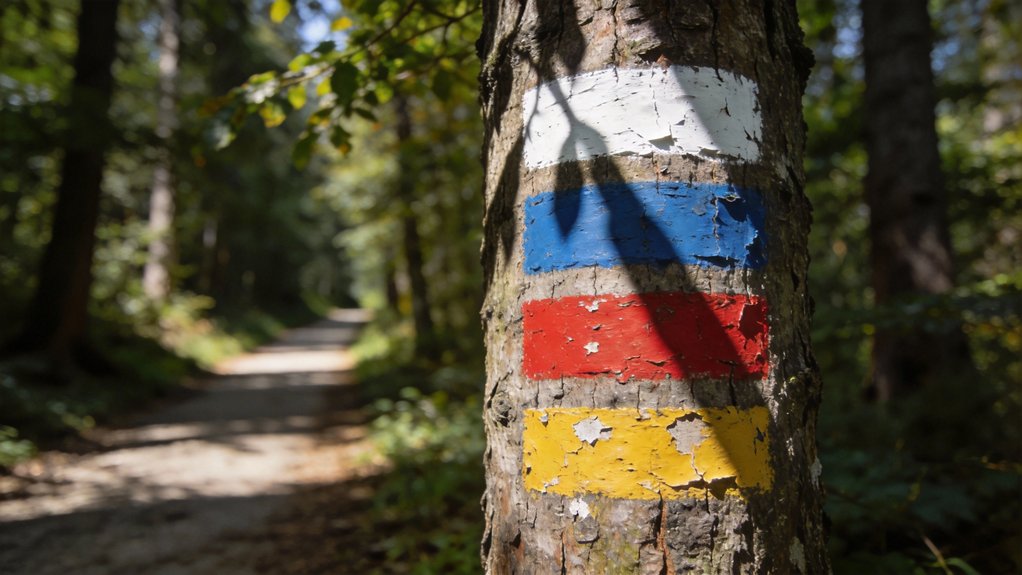
While paint blazes show you which direction to walk, the color of those blazes tells you something entirely different: they identify which trail you’re actually on.
Here’s what you need to know about trail color significance:
- Each trail gets its own single color from start to finish
- White blazes mean you’re on the Appalachian Trail
- Yellow marks the Pinhoti Trail’s path
- Multiple colors at junctions help you choose your route
Marker consistency importance can’t be overstated.
When you stick with one color, you won’t get lost at intersections where trails cross.
Colors don’t indicate directions or features: they’re simply your trail’s identity.
Understanding this distinction keeps your navigation sharp and your hike confident.
Beyond Paint: Cairns, Posts, and Rock Stacks
Paint blazes aren’t your only navigation tool on the trail. You’ll encounter cairns, rock stacks that mark safe passages through treeless terrain and above timberline.
Cairns and rock stacks serve as essential navigation markers across treeless terrain and high-altitude mountain passages.
Land management agencies build these carefully to prevent confusion. Trail posts guide you through heavy snow or poor visibility areas.
Affixed markers made from metal, plastic, or wood get nailed onto trees, offering durable marker materials that last years.
Flagging tape provides temporary guidance during trail maintenance.
Each method serves specific purposes. You’ll recognize them once you know what to look for, making navigation straightforward and reliable across varied landscapes.
Trail Marker Patterns at Forks and Junctions
When you’re hiking and the trail splits in multiple directions, the blaze patterns change to guide you clearly.
You’ll encounter specific markers that tell you exactly where to go:
- Double blazes indicate an upcoming turn at trail forks.
- Rectangle orientation shows whether you’re turning right or left.
- Three upward rectangles mark a brand-new trail beginning.
- Inverted pyramids signal where trails end completely.
You’ll find blazes painted on both tree sides for visibility from any direction.
In rocky areas without paint, cairns take over as your navigation guides.
Understanding these patterns keeps you moving confidently through the wilderness without second-guessing your route choices.
What to Do When Trail Markers Disappear
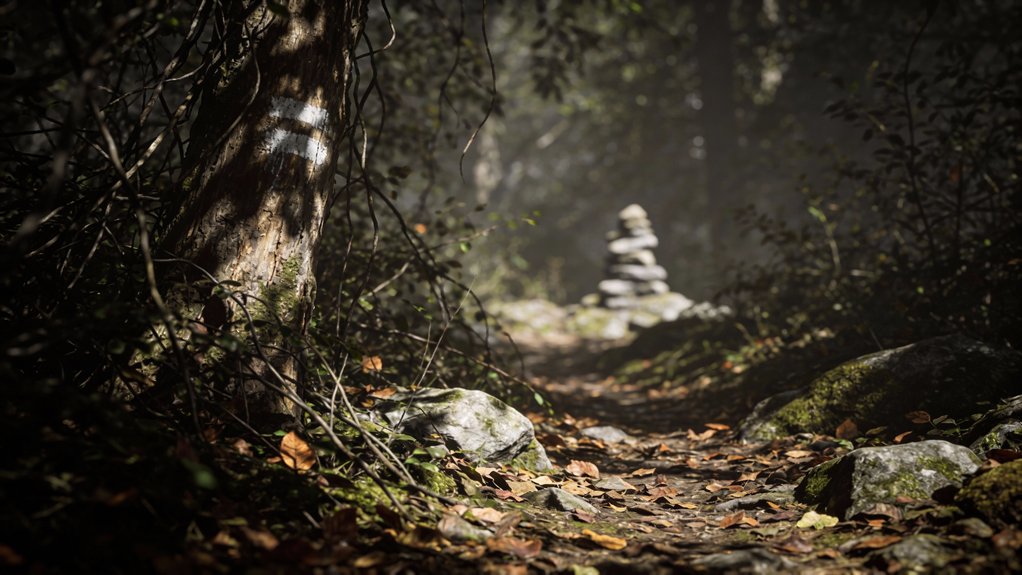
Even the best hikers occasionally lose sight of trail markers, and it’s not necessarily cause for alarm.
Stop and look around for recognizable landmarks like distinctive trees, rock formations, or ridge lines.
Scan your surroundings for distinctive trees, rock formations, and ridge lines to orient yourself on the trail.
Retrace your steps to the last visible marker you remember seeing. This confirms your route before moving forward.
Pull out your map or GPS device: these navigation tools reveal alternative paths and highlight the main trail.
Stay calm and think clearly about your disorientation strategies.
If you’re hiking with others, discuss what you’re observing together. Your combined perspective helps you navigate confidently back to familiar territory.
Respecting Trail Markers: What Not to Do
Knowing how to navigate back to the trail is one thing, but respecting the markers already there’s just as important.
You’ve got freedom on the trail, but that freedom comes with responsibility.
Here’s what you shouldn’t do:
- Don’t alter existing cairns or add rocks that confuse other hikers
- Never paint over, remove, or damage official trail blazes
- Refrain from placing temporary flagging tape near official markers
- Skip constructing new cairns that disrupt the natural landscape
Marker maintenance isn’t someone else’s job, it’s everyone’s.
Ignoring trail marker patterns puts hikers at risk.
Respect hiker etiquette by leaving markers untouched and letting official systems work.